
A yearly roof maintenance routine for a Huntsville home has four parts: a ground-level walk-around checking for missing or lifted shingles, streaking, and sagging; an attic check for damp insulation, decking stains, and musty odor; clearing gutters and valleys so water drains away quickly; and one professional inspection covering flashing, penetrations, ventilation, and decking. Add a check after every significant storm. Homeowners should not walk their own roof — nearly everything worth seeing is visible from the ground with binoculars or from inside the attic. Keeping dated reports and photographs protects both warranty coverage and future insurance claims.

Roof maintenance has a reputation for being vague. “Inspect your roof regularly” is advice nobody can act on, because it doesn’t say what you’re looking for or where you’d stand to see it.
So this checklist is organized by where you are: what you can see from the ground, what you check from inside the attic, what happens at the gutter line, and what genuinely requires someone else. That order also happens to run from safest to least safe.
The Whole Year at a Glance
| Task | How often | Who does it |
|---|---|---|
| Ground-level walk-around | Twice a year | You |
| Attic moisture check | Twice a year | You |
| Clear gutters and valleys | Twice a year, more with heavy tree cover | You or a service |
| Watch drainage during rain | Once a year | You |
| Trim overhanging branches | As needed | You or an arborist |
| Post-storm check | After every significant storm | You, then a roofer if anything looks off |
| Full professional inspection | Once a year | Roofing professional |
Total homeowner time: roughly two hours a year, split across two sessions.
1. From the Ground
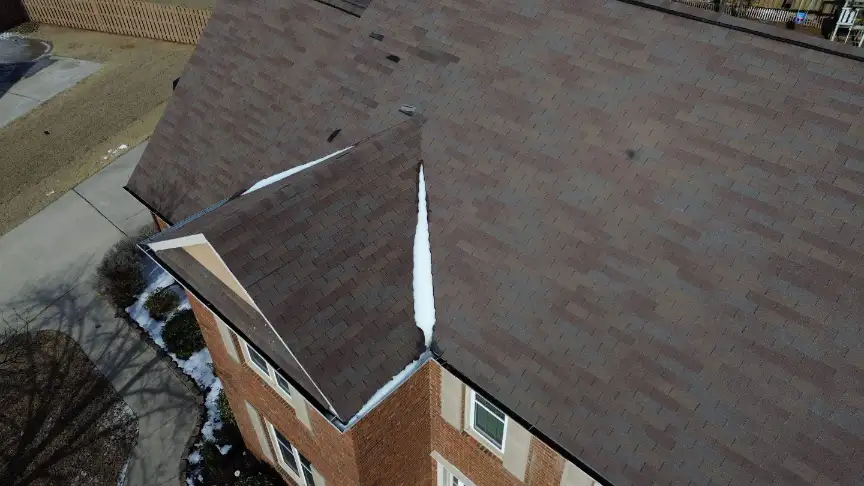
Grab binoculars and walk the full perimeter of the house. Look at every roof plane, not just the front.
- Missing, lifted, cracked, or curling shingles. Curling edges mean the shingle is losing flexibility, which is age rather than damage.
- Dark streaking on shaded and north-facing slopes. It’s algae, and it indicates a slope that isn’t drying properly.
- Sagging or dipping rooflines. A roof plane should read as a straight line. Any visible dip suggests a decking or structural issue and needs a professional promptly.
- Damaged, detached, or sagging gutters, and any section pulling away from the fascia.
- Debris piled in valleys. Valleys carry the most water on the roof, and anything sitting in one holds moisture there.
- Granules in the gutters or at the downspout outlet. A little is normal on a newer roof. Piles are not.
- Anything visibly off around chimneys, vents, and skylights.
Photograph anything that looks wrong, with the date. Comparing this year’s photo to last year’s tells you whether something is stable or getting worse — which is the single most useful thing a homeowner can know.
2. From the Attic
This is the most underused check available to homeowners, and it catches problems long before they reach a ceiling.
Go up on a bright day. Stay on the joists — attic flooring is often just drywall from below. Bring a flashlight and turn the attic light off.
- Daylight through the roof deck. If you can see light, water can get in.
- Dark staining on the underside of the decking, especially around nails, vents, and the chimney.
- Damp, matted, or discolored insulation. Insulation should look fluffy and uniform.
- Musty smell. Trust your nose. It’s a reliable early indicator of moisture that isn’t venting out.
- Standing water in the HVAC condensate pan, if your air handler is up there. A full pan means the drain line is clogged.
- Blocked soffit vents. Look along the eaves — insulation pushed into the vents stops attic airflow entirely, which is a common problem after an insulation upgrade.
On a hot afternoon, also notice the temperature. An attic that feels dramatically hotter than outside usually has a ventilation problem.
3. Gutters and Drainage
Gutters aren’t a roof accessory. They’re how water leaves, and water that doesn’t leave quickly is the root of most slow roof damage.
- Clear leaves and debris from gutters and downspouts. In heavily wooded areas, twice a year is a minimum.
- Confirm downspouts discharge away from the foundation, not straight down beside it.
- Check that gutters are still pitched correctly — standing water after rain means a sag.
- Watch the system during actual rain at least once a year. Overflow points are invisible on a dry day and obvious in a downpour.
- Look at the fascia behind the gutter for soft or discolored wood.
If yours clog constantly, guards may be worth it — see gutter services and how gutters protect the roof.

4. Trees and Surroundings
Two things matter here.
Branches touching the roof abrade shingles every time the wind blows, wearing granules off in exactly the places you can’t see. Trim back so nothing contacts the surface.
Overhanging limbs drop debris directly into valleys and gutters, and they shade the roof, which slows drying. You don’t need to remove the tree — you need the limbs off the roof plane.
5. After Every Significant Storm
This is the one item on the list with a deadline attached, because insurance claims have filing windows.
After hail or high wind:
- Look at the ground first. Granule accumulation at downspout outlets is a strong hail indicator.
- Check soft metal for dents — gutters, vents, flashing, and mailboxes. Metal dents before shingles show visible bruising.
- Scan for lifted or missing shingles from the ground.
- Photograph everything with the date recorded.
- Check the attic within a day or two for new moisture.
Hail damage is frequently invisible from the ground even when it’s real. If a storm was significant, a professional inspection is worth it regardless of what you can see. Documentation matters for the insurance claim process.
6. The Annual Professional Inspection
Everything above is the part you can do. This is the part you can’t, because it requires being on the roof and knowing what a failing detail looks like.
A thorough inspection should cover:
- Flashing at walls, chimneys, and roof-to-roof transitions — the most common leak origin on any roof
- Every penetration: pipe boots, vents, satellite mounts, skylights
- Valleys, including what’s underneath the surface layer
- Ridge, hip, and vent condition
- Ventilation balance — intake versus exhaust, not just whether vents exist
- Decking soundness where it can be assessed
- Attic moisture and insulation condition
- Sealant and fastener condition at exposed points
It should end with a written report and photographs. If it doesn’t, you have someone’s memory instead of a record.

7. Keep the Paperwork
This step takes ten minutes a year and is the one most homeowners skip.
Keep a folder — physical or digital — containing inspection reports, repair receipts, and dated photographs. It matters for two reasons.
Warranty. Many manufacturer and workmanship warranties require reasonable upkeep, and damage attributed to neglect may be excluded. Your records are what demonstrate upkeep happened.
Insurance. When you file a storm claim, an adjuster is deciding whether damage came from the storm or from years of wear. Photographs showing the roof in good condition before the storm make that a much shorter conversation.
What Not to Do
Four common mistakes, all of which cost more than doing nothing.
- Don’t walk your roof. Falls are the real risk, and foot traffic dislodges granules and cracks shingles in cold weather. Almost everything worth seeing is visible from the ground or the attic.
- Don’t pressure wash. It strips the granules protecting shingles from UV and can void your warranty. Low-pressure treatment or a professional only.
- Don’t caulk your way out of a leak. Sealant over a failed flashing detail hides the problem while water keeps moving. It also makes the eventual repair harder.
- Don’t ignore something because it’s small. A cracked pipe boot is inexpensive now and a decking replacement in three years.
When a check turns something up, the repair-stage warning signs guide helps judge urgency.
Adjusting for Your Situation
Heavy tree cover: increase debris clearing to three or four times a year. Gutters and valleys are your limiting factor, not the shingles.
Newer roof: the annual inspection is about protecting warranty coverage and catching installation issues while they’re still someone else’s responsibility.
Older roof: maintenance shifts from extending life to managing toward a planned replacement rather than an emergency one. That distinction is worth real money — see how maintenance prevents a surprise replacement.
Just bought the house: get a roofing inspection even if the home inspection passed. General home inspectors rarely assess flashing detail or ventilation balance, and you want a baseline record from day one.
Frequently Asked Questions
How often should I do roof maintenance?
A ground and attic check twice a year, a professional inspection annually, and an extra look after any significant storm. Heavy tree cover means more frequent debris clearing.
Should I walk on my roof?
No. It’s a fall risk and it damages shingles. Binoculars from the ground and a flashlight in the attic cover nearly everything.
What can I check without climbing anything?
Missing or lifted shingles, algae streaking, sagging rooflines, gutter damage, and valley debris from the ground. Damp insulation, decking stains, daylight, and musty odor from the attic.
Does maintenance affect my warranty?
It can. Many warranties require reasonable upkeep and exclude neglect. Dated reports and receipts are what prove upkeep occurred.
Is pressure washing safe?
No. It removes protective granules and can void warranties. Low-pressure or professional cleaning only.
What should a professional inspection cover?
Flashing, penetrations, valleys, ridge and vents, ventilation balance, drainage, decking, and attic moisture — with a written report and photos.
Is it too late for maintenance on an old roof?
Rarely. It shifts the goal from extending life to planning replacement on your schedule instead of during a leak.

The Part Worth Handing Off
The homeowner half of this list costs nothing but attention. The professional half is where problems actually get found, because flashing, ventilation balance, and decking condition aren’t visible from the ground.
Huntsville Roofing Solutions provides free inspections across Huntsville, Madison, Decatur, Athens, and the wider North Alabama service area. For homeowners who’d rather not track any of this themselves, our roof maintenance program handles the scheduling, inspection, and documentation on a set rhythm.
Schedule a free roof inspection and start this year’s record.

Jordan is the founder and owner of Huntsville Roofing Solutions, a locally owned, fully licensed and insured roofing company serving Huntsville and North Alabama. He and roofing supervisor Barry Minor have handled residential and commercial roofs across the region — replacements, repairs, storm damage, and insurance claims — earning a 4.9-star Google rating along the way.