
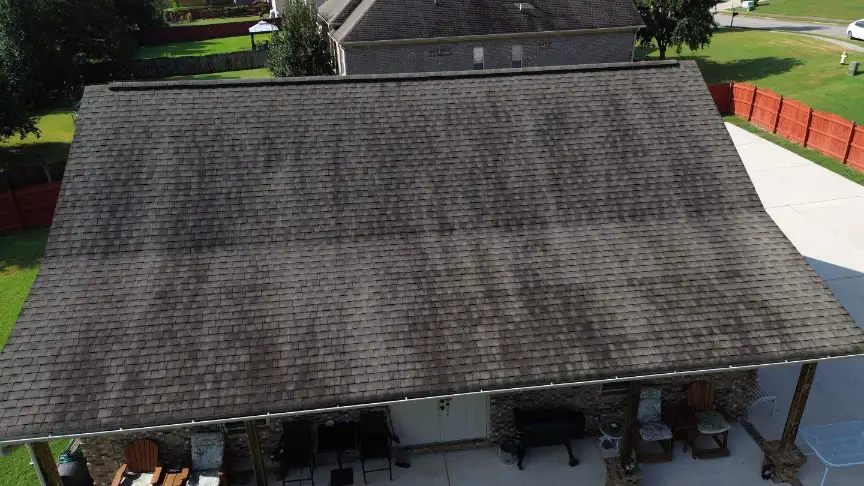
Of the two common roof cleaning methods for asphalt shingles, a manufacturer-approved low-pressure treatment—often marketed as soft washing—is generally the safer choice. Pressure washing is not recommended for asphalt shingles because the water force can loosen protective mineral granules and damage the roofing surface. Soft washing does not mean “anything low pressure is safe”: the cleaning solution, application pressure, dwell time and rinse must still follow the shingle manufacturer’s instructions. In North Alabama, where warm, humid conditions can encourage algae staining, the goal is to clean only when needed without trading a cosmetic problem for real shingle damage.
That last point is important.
A roof can look dramatically cleaner after an aggressive wash and still be worse off than it was before the cleaning.
The right question is therefore not:
“Which method makes the roof look cleanest today?”
It is:
“Which cleaning method removes the unwanted growth or staining without unnecessarily damaging the roofing material?”
For asphalt shingles, those are very different questions.
Soft Wash vs. Pressure Washing: What Is the Difference?
| Roof Cleaning Method | How It Works | Asphalt-Shingle Use | Main Concern |
|---|---|---|---|
| Soft washing / low-pressure treatment | Uses a cleaning solution and gentle application/rinsing rather than high mechanical force | Can be appropriate when it follows the shingle manufacturer’s instructions | Wrong chemistry, concentration, dwell time or runoff control can still cause problems |
| Pressure washing | Uses highly pressurized water to physically remove material from the surface | Not recommended for cleaning asphalt shingles | Can loosen mineral granules and damage the shingle surface |
| Scrubbing / brushing | Uses physical abrasion to remove staining or growth | Not appropriate for aggressively cleaning asphalt shingles | Friction can loosen granules and damage the surface |
The major difference is therefore not simply water pressure.
Pressure washing relies heavily on mechanical force.
A properly selected low-pressure treatment relies more on the cleaning process itself to loosen or kill the biological growth so that high-force water is unnecessary.
What Does “Soft Washing a Roof” Actually Mean?
“Soft wash” is commonly used by cleaning contractors to describe a low-pressure chemical cleaning process.
But the phrase deserves some skepticism.
Soft wash is a description of a cleaning approach, not proof that the process is safe for your roof.
Two contractors can both call their service soft washing while using different:
- Cleaning products.
- Chemical concentrations.
- Application pressures.
- Dwell times.
- Rinsing procedures.
- Landscape-protection methods.
For asphalt shingles, the manufacturer’s cleaning guidance should outrank the marketing name of the service.
The Asphalt Roofing Manufacturers Association recommends gently applying an appropriate cleaning solution and using gentle water application rather than high pressure. ARMA also advises homeowners to check the shingle manufacturer’s instructions because cleaning directions can vary between products.
So when a contractor says “we soft wash roofs,” the useful follow-up is:
“Is your process approved for my specific roofing material and shingle manufacturer?”
Why Pressure Washing Asphalt Shingles Is Different From Pressure Washing Concrete
A driveway and an asphalt-shingle roof are completely different surfaces.
Concrete is a hard mineral surface designed to tolerate substantially more mechanical cleaning.
An asphalt shingle has a protective exposed surface made from mineral granules embedded in asphalt.
Those granules are not decorative dust.
They form the weather-facing surface of the shingle and help shield the asphalt underneath from ultraviolet exposure and weathering.
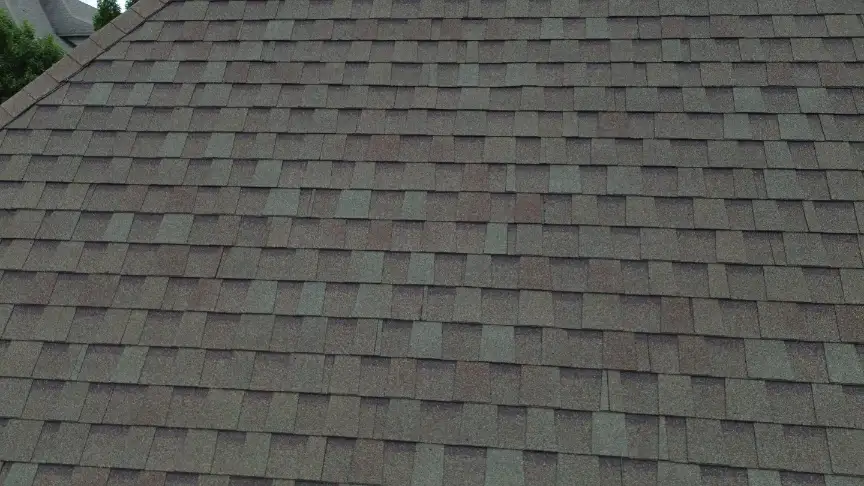
High-pressure water can disturb that granulated surface.
That is why ARMA specifically advises against using power washers to clean algae, stains or dirt from asphalt roofing.
If you want to understand why losing that surface matters, our guide to shingle granule loss explains the difference between normal shedding and meaningful surface deterioration.
What If the Pressure Washer Is Set to Low Pressure?
For asphalt shingles, “we turn the pressure washer down” is not the same as following an approved roof-cleaning procedure.
The equipment label matters less than what actually reaches the shingle.
A contractor should be able to explain:
- How the cleaning product is applied.
- How much pressure reaches the roof surface.
- Whether the shingle manufacturer permits the process.
- How the roof is rinsed.
- How surrounding materials and landscaping are protected.
ARMA’s guidance is stronger than simply “avoid very high pressure.” It says power-washing systems should not be used on asphalt roofing to remove algae or other stains.
That makes “low-pressure pressure washing” a poor shortcut for a homeowner deciding whether a contractor’s process is appropriate.
What Are You Actually Trying to Remove?
Before choosing a cleaning method, identify the condition.
Not everything that makes a roof look dirty needs the same treatment.
Black streaks
Dark brown or black streaks on asphalt shingles are commonly caused by blue-green algae.
Algae staining is primarily an appearance issue rather than proof that the roof is structurally failing.
That means a homeowner who does not care about the appearance may not need to rush into cleaning simply because streaks are visible.
Our dedicated guide to black streaks on asphalt shingles covers how to distinguish typical algae discoloration from moss, mold and actual roofing problems.
Moss
Moss is different.
It forms raised growth and can retain moisture around shingles and interfere with shingle edges.
It should not be attacked with aggressive scraping or high-pressure water.
Leaves and loose debris
Loose organic debris in valleys or drainage areas is a maintenance problem rather than the same type of cleaning problem as algae.
Debris should be removed without aggressively abrading the roof surface or driving material underneath shingle edges.
Actual shingle deterioration
No cleaning method repairs cracking, curling, missing shingles, failed flashing, exposed asphalt or deteriorated decking.
If the roof looks dirty because the surface itself is wearing away, cleaning cannot restore the roofing system.
Does Every Stained Roof Need to Be Cleaned?
No.
This is where roof-cleaning sales pitches often become more aggressive than the roofing problem justifies.
If the condition is ordinary algae staining and the shingles are otherwise functioning properly, cleaning may primarily be a curb-appeal decision.
That does not mean the stains are attractive.
It means cleaning a cosmetic condition should not be sold as though the roof is structurally failing.
There are stronger reasons to act when the roof has:
- Moss growth.
- Heavy debris restricting drainage.
- Tree material collecting in valleys.
- Blocked gutters and downspouts.
- A condition that needs closer inspection before cleaning.
Sometimes the correct answer after looking at a stained roof is simply:
“The roof is dirty, but it is otherwise fine.”
That is useful information too.
Why Roof Cleaning Comes Up So Often in North Alabama
Warm, humid conditions are favorable to the blue-green algae responsible for many dark roof streaks.
Shade makes the pattern more noticeable because shaded roof slopes can remain damp longer than slopes receiving direct sunlight.
Tree cover can add another layer by depositing leaves, pine needles and other organic debris onto roofs and into gutters.
Those conditions help explain why one side of a Huntsville home can show substantial streaking while another side of the same roof remains relatively clean.
For the wider relationship between moisture, shade, attic conditions and roof drying, see how Tennessee Valley humidity affects roofing systems.
Can Soft Washing Damage a Roof?
Yes, if it is done incorrectly.
Calling a service “soft washing” does not make every chemical or application technique harmless.
Potential problems include:
- Using a product the shingle manufacturer does not approve.
- Using an inappropriate concentration.
- Allowing cleaning solution to remain longer than instructed.
- Using more water pressure than the roofing material should receive.
- Aggressive brushing or scrubbing.
- Allowing runoff to damage landscaping or surrounding finishes.
- Walking unnecessarily on a wet, slippery roof.
The best contractor is therefore not necessarily the one advertising the gentlest-sounding name.
It is the one who can explain how the proposed process matches your actual roof.
Roof Cleaning Is Also a Fall-Risk Problem
A roof being treated with water and cleaning solution becomes extremely slippery.
That matters because many internet roof-cleaning tutorials focus almost entirely on chemistry and ignore access.
ARMA specifically encourages professional cleaning because the roof surface can become hazardous during treatment.
Even a homeowner who is comfortable using a pressure washer on a driveway should not assume that experience transfers to a sloped asphalt-shingle roof.
The safest homeowner role is usually diagnosis from the ground, choosing the right contractor and understanding the proposed method—not standing on a wet roof with cleaning equipment.
Soft Washing vs. Pressure Washing: Which Gives Faster Results?
Pressure washing can create an immediate visual change because mechanical force physically removes material from a surface.
That speed is precisely why it can be inappropriate for asphalt shingles.
A manufacturer-appropriate low-pressure treatment may behave differently. Biological staining or moss may continue changing after treatment rather than disappearing under a high-pressure jet in one dramatic pass.
The visual result should therefore be judged alongside what happened to the roofing material.
A roof that looks spotless immediately but has lost unnecessary surface granules has not received better maintenance.
How Often Should an Asphalt-Shingle Roof Be Cleaned?
There is no universal schedule saying every asphalt-shingle roof must be washed every one, two or three years.
Cleaning should respond to the actual roof condition.
A sunny roof on an open property may show little biological staining for years.
A shaded roof beneath mature trees may develop visible algae or collect debris sooner.
Other factors include:
- Roof orientation.
- Tree cover.
- Shingle type.
- Algae-resistant roofing technology.
- Drainage.
- Local moisture conditions.
Routine inspection is therefore more useful than putting the roof on an arbitrary washing schedule.
For the broader maintenance routine, see the year-round roof maintenance checklist.
When Cleaning an Old Roof May Not Be Worth the Money
Cleaning does not reset a roof’s structural age.
If asphalt shingles are already brittle, cracked, badly curled, extensively bald or approaching the point where replacement is justified, spending heavily on cosmetic cleaning may provide little value.
There is also a practical concern.
An older, fragile roof deserves more careful assessment before anyone introduces additional roof traffic, water or cleaning chemicals.
In that situation, the order should be:
Inspect first. Decide whether the roof is still serviceable. Clean only if cleaning still makes sense.
A contractor should be willing to tell you when cleaning is unnecessary or when the roof condition makes cleaning a poor investment.
Does the Same Rule Apply to Metal, Tile and Flat Roofs?
No. Roof material matters.
The recommendation against pressure washing in this article is specifically important for asphalt shingles.
Metal panels, tile systems, commercial membranes and roof coatings have their own manufacturer-specific cleaning procedures.
Some non-shingle roofing systems may permit forms of controlled pressure rinsing under defined conditions, while other surfaces or coatings may require different treatment.
That is why a contractor should identify the roof system before choosing the cleaning equipment.
A method that is acceptable for one roofing product should not automatically be transferred to another.
Questions to Ask Before Hiring Someone to Clean Your Roof
You do not need to become a roof-cleaning technician to ask useful questions.
Ask:
- What roofing material do I have?
- What exactly are you trying to remove?
- Do you use a pressure washer on asphalt shingles?
- What pressure reaches the shingle surface?
- What cleaning product will you apply?
- Does that process follow the shingle manufacturer’s instructions?
- Will you scrub or brush the shingles?
- How will you protect plants, siding, gutters and other surfaces from runoff?
- What happens if you discover loose, damaged or deteriorated shingles before cleaning?
- How do you handle fall protection and roof access?
A contractor who cannot explain the process beyond “we pressure wash it carefully” has not really answered the question.
Frequently Asked Questions About Roof Cleaning Methods
Is soft washing better than pressure washing for asphalt shingles?
Generally, yes—when “soft washing” means a manufacturer-approved low-pressure cleaning process. Asphalt roofing manufacturers advise against high-pressure washing because it can disturb the protective granulated shingle surface.
Can I pressure wash asphalt shingles on a low setting?
Pressure washing is not recommended for asphalt shingles simply because the machine is turned down. ARMA specifically advises against power-washing systems for cleaning algae, dirt or other stains from asphalt roofing.
Can soft washing damage asphalt shingles?
It can if the wrong cleaning product, concentration, pressure, dwell time or application technique is used. The term “soft wash” alone does not guarantee that a process is appropriate. Follow the shingle manufacturer’s cleaning instructions.
Do black roof streaks have to be cleaned?
Not necessarily. Typical blue-green algae streaking is primarily cosmetic. Cleaning may make sense for appearance, while moss, restricted drainage or actual roofing defects deserve separate evaluation.
How often should a roof be professionally cleaned?
There is no universal cleaning interval for every asphalt-shingle roof. Clean according to actual conditions and manufacturer guidance rather than automatically washing the roof on a fixed schedule.
Will roof cleaning repair damaged shingles?
No. Cleaning can remove or reduce certain stains and biological growth, but it cannot repair cracked shingles, missing granules, failed flashing, leaks, deteriorated decking or other physical roofing defects.
Can pressure washing remove shingle granules?
Yes. High-pressure washing can loosen and remove mineral granules from asphalt shingles, which is one reason roofing-industry guidance advises against using power washers on asphalt-shingle roofs.
The Bottom Line
For asphalt shingles, the best roof cleaning method is not the one that uses the most force. It is the one that follows the roofing manufacturer’s instructions while using as little mechanical abrasion as necessary.
Pressure washing is not recommended for asphalt shingles.
A low-pressure treatment commonly marketed as soft washing can be appropriate, but the label alone is not enough. The chemistry, pressure, application method, runoff management and roof condition all matter.
And sometimes the roof does not need cleaning at all.
If the problem is ordinary algae staining and appearance does not bother you, cleaning may be optional. If the roof has moss, debris, drainage problems or physical deterioration, identify the actual condition before deciding how to treat it.
Huntsville Roofing Solutions can evaluate cleaning as part of its roof maintenance and roof cleaning services in Huntsville, with the cleaning method selected for the roofing material rather than treating every roof like a concrete driveway.

Jordan is the founder and owner of Huntsville Roofing Solutions, a locally owned, fully licensed and insured roofing company serving Huntsville and North Alabama. He and roofing supervisor Barry Minor have handled residential and commercial roofs across the region — replacements, repairs, storm damage, and insurance claims — earning a 4.9-star Google rating along the way.