
Granule Loss on Shingles: Normal Wear or a Problem?
Some shingle granule loss is normal, but widespread bald areas or exposed asphalt can signal a roofing problem. New asphalt shingles often shed loose excess granules left from manufacturing, while older shingles gradually lose some granules through normal weathering. The condition becomes more concerning when granule loss is heavy, continues to worsen, is concentrated around physical damage, or leaves dark, smooth or bare patches across the roof. Finding granules in a gutter alone is not enough to determine whether you need a repair or a new roof.
The most useful question is not simply “How many granules are in the gutter?” It is “What does the shingle surface look like, where is the loss occurring, and what else is happening to the roof?”
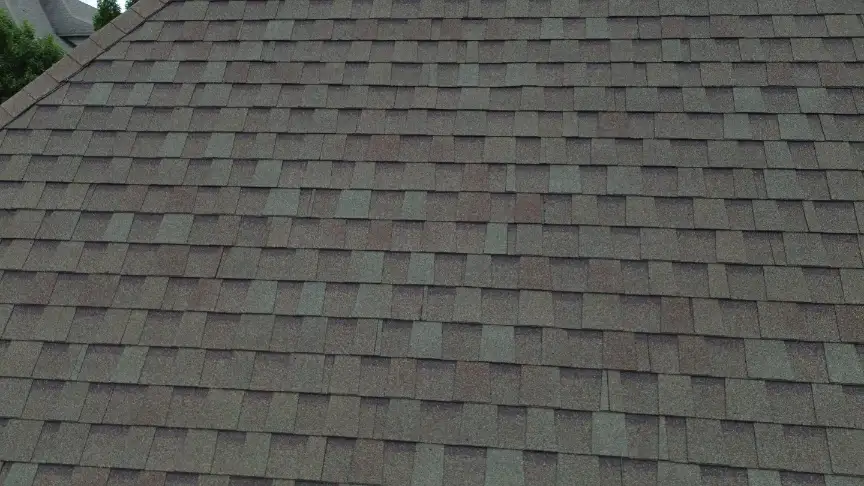
What Are the Granules on Asphalt Shingles For?
An asphalt shingle is a layered roofing product rather than a simple sheet of asphalt.
The Asphalt Roofing Manufacturers Association describes the main components as a fiberglass reinforcing mat, asphalt coating, mineral stabilizers and ceramic-coated mineral granules.
The granules form the exposed surface you see from outside.
They serve several important purposes:
- They protect the asphalt coating from prolonged ultraviolet exposure.
- They provide the roof’s visible color and appearance.
- They shield the asphalt surface from direct weather exposure.
That means granule loss is not purely a cosmetic issue once enough material has disappeared to expose the asphalt underneath.
As protective surface coverage decreases, the asphalt becomes more directly exposed to sunlight and weathering.
Is Shingle Granule Loss Normal?
Yes, within limits.
Granules can loosen for several reasons, and not all of them indicate roof failure.
The context matters most.
| Granule-Loss Pattern | What It May Mean | Level of Concern |
|---|---|---|
| Loose granules shortly after a new roof is installed | Excess manufacturing granules washing away | Often normal |
| Small amounts appearing gradually as a roof ages | Natural weathering | Expected to some degree |
| Localized loss where people regularly walk | Mechanical abrasion / foot traffic | Needs context |
| Localized spots after hail | Possible impact damage | Worth professional inspection |
| Large bald or dark areas | Protective surface substantially worn away | Concerning |
| Widespread loss across several slopes on an aging roof | Systemic shingle deterioration | Replacement evaluation may be appropriate |
| Heavy continuing loss on a relatively new roof | Requires installer / manufacturer evaluation | Not something to ignore |
Why Does a New Roof Shed Granules?
One of the easiest ways to become concerned unnecessarily is to install a new roof and then find what looks like sand in the gutters after the first few rains.
Manufacturers intentionally apply more granules during production than will ultimately remain embedded in the shingle.
IKO describes some of the loosely held excess material as “hitchhiker” granules. They help ensure complete coverage during manufacturing, but not every particle becomes firmly embedded in the asphalt coating.
Some of those loose granules can therefore come off during:
- Packaging.
- Transportation.
- Installation.
- The first periods of rain and weather exposure.
GAF similarly explains that granule shedding can be most noticeable soon after installation and normally decreases with time.
So if your roof is relatively new, granules at the bottom of a downspout are not automatically evidence that the shingles are defective.
When Granule Loss on a New Roof Deserves Attention
Normal initial shedding should not progress into widespread exposed asphalt.
If a relatively new roof continues losing significant quantities of granules and you also notice visible changes to the roof surface, further evaluation makes sense.
Watch for:
- Areas becoming noticeably different in color.
- Large dark or bare patches.
- Uneven deterioration between shingles.
- Continued heavy shedding rather than a gradual reduction.
- Cracks, tears or other physical damage accompanying the granule loss.
If the shingles are still within a manufacturer warranty period, document the condition and contact the installing contractor or manufacturer as appropriate.
Do not assume the cause is a product defect before the roof is evaluated. Installation conditions, storm impact, roof traffic and other physical causes also need to be considered.
Granule Loss Is Also Part of Normal Roof Aging
Asphalt shingles spend their entire service life exposed to sun, rain, temperature changes, wind and other weather.
Some gradual surface wear is therefore expected.
The important distinction is between normal aging and loss severe enough to compromise substantial areas of the protective surface.
An older roof with a small amount of grit appearing in the gutter can still have useful life remaining.
An older roof with large bald areas, brittle shingles, cracking, curling and repeated repairs tells a different story.
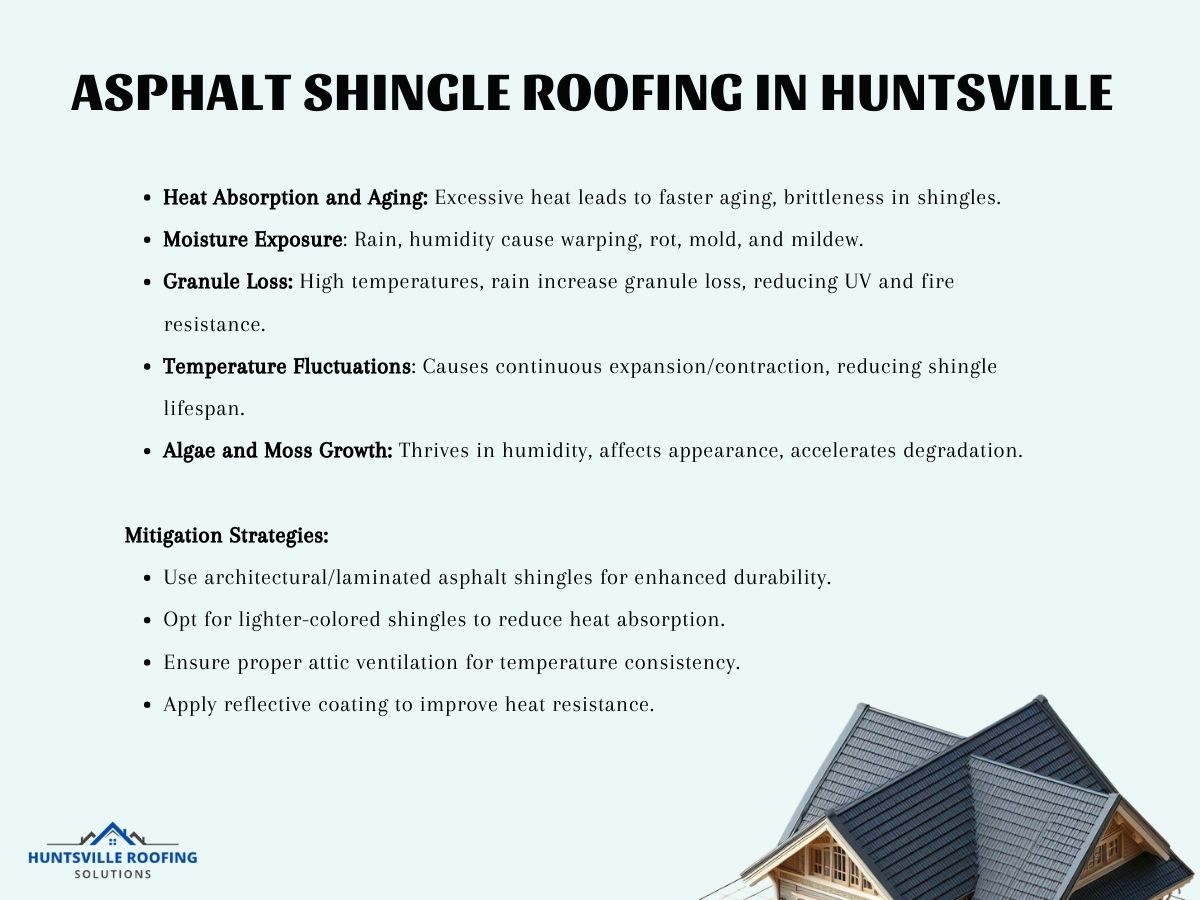
If you are trying to judge the roof in the context of its age, see our guide to how long roofs typically last in Alabama.
What Does Excessive Shingle Granule Loss Look Like?
There is no useful universal rule such as “one cup of granules means the roof is bad.”
Gutter size, roof area, recent rainfall, roof age and how long it has been since the gutter was cleaned can all change how much material you find.
The surface of the roof is more informative than the amount collected in one gutter cleaning.
More concerning signs include:
- Bare spots: Areas where much of the mineral surfacing is gone.
- Exposed asphalt: Darker underlying asphalt becomes clearly visible.
- Patchy color changes: Some areas appear substantially darker or smoother than surrounding shingles.
- Widespread loss: The same deterioration appears across several roof slopes rather than one isolated location.
- Other aging symptoms: Granule loss appears with curling, cracking, brittleness or repeated shingle failure.
IKO’s technical guidance uses exposed asphalt as an important distinction: loose excess granules can be normal, while bare coating asphalt indicates that protective surfacing has actually been lost.
Are Granules in the Gutter a Problem?
Not necessarily.
Gutters and downspouts naturally collect whatever washes from the roof, making them one of the easiest places to notice loose granules.
But a gutter cannot tell you why the granules came loose.
They may represent:
- Loose excess granules from a newer roof.
- Gradual weathering on an older roof.
- Material loosened during a recent storm.
- Abrasion or mechanical damage.
Use the accumulation as a reason to look at the broader roof condition rather than treating it as a diagnosis.
A useful comparison is whether the amount has changed significantly from what you normally see.
A sudden increase after a major storm deserves more attention than a small, fairly consistent amount collected during routine gutter cleaning.
Can Hail Cause Granule Loss?
Yes.
Hail can knock granules away at points of impact.
GAF’s technical hail guidance identifies granule loss at impact points as one possible type of hail-related shingle damage. Impact may also create depressions, cracks or damage to the shingle material beneath the visible surface.
The key word is localized.
Storm-related granule displacement may appear in individual impact areas rather than as the broad, gradual weathering seen across an aging roof.

That distinction is important because granule loss by itself does not prove hail damage.
Natural aging, foot traffic and abrasion can also remove granules.
If a recent storm is the concern, use our separate guide to hail damage roof identification. That article owns the hail-versus-wear question so this page does not duplicate it.
Can Walking on the Roof Remove Granules?
Yes.
Roof traffic can mechanically disturb the granulated surface.
GAF identifies foot traffic as one cause of granule loss, particularly when roofing conditions make the surface more susceptible to abrasion.
This creates two practical problems.
First, localized wear along frequently traveled areas may not represent normal weathering across the whole roof.
Second, repeatedly walking around the roof to inspect granule loss can contribute to the very surface disturbance you are trying to evaluate.
Homeowners should therefore avoid walking the roof simply to check whether shingles feel rough or smooth.
Can Tree Branches and Other Abrasion Cause Granule Loss?
Yes. Physical contact can wear the surface of a shingle independently of natural aging.
Branches that repeatedly rub against one portion of a roof can produce a localized pattern that looks different from widespread weathering.
Mechanical damage may also appear around areas where contractors, satellite installers or other trades have repeatedly walked.
Again, pattern matters.
A single worn path or branch-contact area is different from multiple roof planes gradually losing their protective surface at the same time.
Does Alabama Weather Make Granule Loss More Important?
North Alabama asphalt roofs are regularly exposed to strong sunlight, heat, humidity, heavy rain and severe thunderstorms.
Those conditions do not create a special Alabama-only type of granule loss, but they make the condition of the protective shingle surface important.
ARMA explains that the granules help shield the underlying asphalt from ultraviolet degradation.
If significant portions of asphalt become exposed, the roofing material no longer has the same complete surface coverage it had when new.
This is why widespread bare areas deserve more attention than a few loose particles collected during a gutter cleaning.
Can Lost Granules Be Put Back on the Shingle?
Not as a durable field repair.
Once the factory-applied mineral surfacing has been substantially lost, sprinkling loose granules over the damaged area does not recreate the original manufactured shingle.
GAF specifically warns against treating loose granules added back to storm-damaged shingles as a permanent repair.
If one or several shingles have suffered significant localized physical damage, replacing the affected shingles may be possible.
If deterioration is widespread, the appropriate discussion shifts from replacing a few shingles to evaluating the remaining roof system.
When Is Granule Loss a Roof Repair Problem?
Granule loss is more likely to fit a repair conversation when the damage is limited to a small, identifiable area and the surrounding roof remains in good condition.
Examples can include:
- A few shingles damaged by isolated impact.
- Localized abrasion.
- A limited group of physically damaged shingles.
- A repair area surrounded by shingles that remain flexible and serviceable.
The repair still needs to address the actual cause.
Replacing several damaged shingles makes little sense if an overhanging branch continues rubbing the same roof area.
If the condition appears localized, see Huntsville Roofing Solutions’ roof repair service for the repair side of the decision.
When Does Granule Loss Point Toward Roof Replacement?
Replacement becomes more relevant when the granule loss is part of systemic roof aging rather than one isolated defect.
Look at the combination of symptoms.
A replacement evaluation becomes more reasonable when:
- Large bald areas appear across multiple slopes.
- Substantial areas of asphalt are visibly exposed.
- The shingles have also become brittle or cracked.
- Curling or distortion is widespread.
- Repair work repeatedly disturbs surrounding aged shingles.
- The roof has a history of recurring problems.
- Granule loss is progressing across a roof already near the expected end of its useful service life.
The distinction is important because a few loose granules should not be used to sell an unnecessary replacement.
Likewise, repeatedly patching individual shingles may not make economic sense when the entire roof covering is deteriorating together.
For system-wide deterioration, review our roof replacement service.
How to Check Shingle Granule Loss Safely
You can gather useful information without climbing onto the roof.
From the ground and other safe locations:
- Check downspout outlets. Look for unusual accumulations of gritty roofing material.
- Look into safely accessible gutters. Note whether granule accumulation appears significantly different from past cleanings.
- Look across the roof surface from the ground. Use binoculars if necessary to look for obvious dark, smooth or patchy areas.
- Compare roof slopes. Notice whether one area looks substantially different from the others.
- Consider timing. Ask whether the change followed installation, normal aging or a specific storm.
- Check for other symptoms. Cracking, curling, missing shingles and repeated leaks change the significance of granule loss.
ARMA specifically recommends ground-level inspection rather than climbing onto the roof. Walking on roofing presents a fall hazard and can damage the roof surface.
What Should a Roofer Look for?
A professional inspection should go beyond saying, “There are granules in the gutter.”
The useful questions include:
- Is the loss localized or widespread?
- Is asphalt visibly exposed?
- Does the pattern look like natural aging or physical abrasion?
- Are there signs of storm impact?
- Are the shingles brittle, curled or cracked?
- How old is the roofing system?
- Are only a few shingles affected?
- Can damaged shingles be replaced without breaking surrounding material?
- Is the roof showing deterioration on one slope or across the entire system?
Those observations determine whether granule loss is simply something to monitor, a localized repair issue or part of a larger replacement decision.
Normal vs Concerning Shingle Granule Loss
| What You See | More Likely Interpretation | What to Do |
|---|---|---|
| Loose granules after a new roof installation | Potentially normal excess manufacturing granules | Monitor whether shedding decreases |
| Small amount in gutters on an older roof | May be normal weathering | Check overall shingle condition |
| Large bare patches with exposed asphalt | Significant protective-surface loss | Schedule an inspection |
| Localized marks after hail | Possible impact-related loss | Evaluate storm pattern and collateral evidence |
| Loss concentrated along walking areas | Possible foot-traffic abrasion | Limit unnecessary roof traffic and inspect damage |
| Widespread loss plus curling and cracking | Broader roof deterioration | Evaluate replacement rather than repeated patching |
| Persistent heavy shedding on newer shingles | Needs further evaluation | Document condition and contact installer/manufacturer if appropriate |
Frequently Asked Questions About Shingle Granule Loss
Is Shingle Granule Loss Normal?
Some granule loss is normal. New asphalt shingles can shed loose excess granules left from manufacturing, and shingles gradually lose some granules through natural weathering. Granule loss becomes more concerning when bare asphalt, obvious bald areas or widespread uneven deterioration appears.
Are Granules in My Gutters a Bad Sign?
Not necessarily. Loose manufacturing granules and normal weathering can put granules into gutters and downspouts. The better indicator is the condition of the shingles themselves, especially whether large bare or dark areas are developing.
How Much Shingle Granule Loss Is Too Much?
There is no useful universal handful or weight that defines excessive loss. Look instead for exposed asphalt, visibly bald shingles, strong color changes, concentrated damaged areas or widespread loss across multiple roof slopes.
Can Hail Cause Shingle Granule Loss?
Yes. Hail can displace granules at impact points, sometimes creating darker localized marks or depressions. Granule loss alone does not prove hail because aging, foot traffic and other abrasion can also remove granules.
Can Shingle Granule Loss Be Repaired?
If significant granule loss is confined to a few physically damaged shingles, targeted shingle replacement may be possible. Widespread loss across an aging roof is usually a broader deterioration issue rather than something that can be permanently fixed by adding granules back to the shingles.
Does Granule Loss Mean I Need a New Roof?
Not by itself. Replacement becomes more likely when granule loss is widespread, bare asphalt is visible across multiple areas and the roof also has other age-related problems such as brittleness, cracking, curling or repeated repairs.
Why Is My New Roof Losing Granules?
Manufacturers apply excess granules during production so the asphalt receives complete surface coverage. Some loosely attached excess granules can wash off after installation. The amount should generally decline over time rather than progress into widespread bare spots.
The Bottom Line
Shingle granule loss is a problem when the roof is losing meaningful portions of its protective surface—not simply because you found some grit in the gutter.
Loose manufacturing granules on a new roof can be normal. Gradual loss also occurs as asphalt shingles weather.
What deserves closer attention is the pattern: exposed asphalt, large bald areas, continuing heavy shedding, localized physical damage or widespread loss accompanied by cracking, curling and brittleness.
If the problem is limited to several otherwise repairable shingles, a targeted roof repair may be appropriate.
If granule loss is widespread across multiple slopes and the rest of the roofing system is deteriorating with it, evaluate the roof as a whole through Huntsville Roofing Solutions’ roof replacement service.

Jordan is the founder and owner of Huntsville Roofing Solutions, a locally owned, fully licensed and insured roofing company serving Huntsville and North Alabama. He and roofing supervisor Barry Minor have handled residential and commercial roofs across the region — replacements, repairs, storm damage, and insurance claims — earning a 4.9-star Google rating along the way.