
Tennessee Valley humidity does not usually damage a roof in one dramatic event. The risk comes from repeated moisture exposure and slow drying. Shaded roof areas can stay wet longer, leaves and debris can hold moisture in valleys and gutters, and humid indoor air can condense on roof decking when attic airflow is poor. Blue-green algae may create dark streaks, but typical algae staining is primarily cosmetic; moss and persistent attic moisture are more concerning because they can interfere with shingles or affect decking. In North Alabama, the practical defenses are drainage, ventilation, debris control and finding moisture problems before they spread.

A roof is supposed to get wet.
The important second half of that cycle is drying.
Shingles shed rainfall, gutters and valleys move water away, sunlight and airflow dry the exterior surface, and attic ventilation helps manage moisture beneath the roof deck.
Problems become more likely when one of those drying or drainage mechanisms is interrupted.
What Humidity Physically Does to a Roof
Humidity by itself is not the same thing as a roof leak.
It does, however, influence how quickly moisture evaporates and how long damp conditions persist around the roofing system.
Three property conditions are especially important.
High moisture in the surrounding air
When the surrounding air already contains substantial moisture, evaporation can occur more slowly than under dry conditions.
That matters after rainfall, overnight dew and periods when roof surfaces stay shaded.
Shade and tree cover
A shaded roof plane receives less direct solar energy than a fully exposed one. That can mean slower drying after rain, particularly on slopes beneath mature trees.
Tree cover can also add leaves, needles, seeds and twigs to valleys and gutters.
Indoor moisture reaching the attic
Moisture problems are not limited to the outside roof surface.
Humid air from the home can reach the attic through gaps and openings. If that moisture encounters cooler surfaces and cannot be removed effectively, condensation can develop on roof decking, framing, ducts or other attic materials.
This distinction matters because replacing shingles will not solve an attic-condensation problem caused by airflow or indoor moisture.
Four Moisture-Related Roof Problems Worth Understanding
1. Algae discoloration
Dark brown or black streaks on asphalt shingles are commonly associated with blue-green algae, including Gloeocapsa magma.
Warm, humid conditions can favor algae growth, particularly on roof areas that remain damp longer.
But algae staining should not automatically be treated as structural roof damage. Roofing-industry guidance describes typical blue-green algae streaking primarily as an appearance issue.
That is why this page does not use black streaking as proof that shingles are failing or that a roof needs replacement.
For the dedicated diagnosis, including algae versus moss, mold and actual shingle deterioration, see our guide to black streaks on roof shingles.
2. Moss
Moss is different from flat algae staining.
It forms visible plant growth, can hold water around the roof surface and may grow around or beneath shingle edges.
That makes moss more important to evaluate physically rather than treating it as an appearance problem.
Do not aggressively scrape, brush or pressure wash asphalt shingles to remove biological growth. Cleaning methods should follow the roofing manufacturer’s instructions.
3. Attic condensation and roof-deck moisture
This is the moisture problem homeowners are least likely to see from the driveway.
Warm, moisture-laden air can enter an attic and condense when it contacts a sufficiently cool surface.
If that happens repeatedly and the moisture cannot dry, roof decking, framing and insulation can remain damp.
Persistent moisture can contribute to deterioration of wood-based sheathing and create conditions favorable to mold growth.
That is why attic moisture should never automatically be diagnosed as an exterior roof leak. The source may be:
- A roofing leak.
- Condensation.
- Blocked or inadequate ventilation.
- An exhaust fan terminating inside the attic.
- Air leakage from the conditioned space below.
- HVAC-related moisture.
The correct repair depends on the source.
4. Wet debris and restricted drainage
Leaves, pine needles and other organic debris can collect in roof valleys and gutters.
The problem is not simply that the roof looks untidy.
Debris can obstruct drainage and remain wet after the surrounding shingles have begun drying.

Valleys deserve particular attention because they receive runoff from adjoining roof planes.
Gutters and downspouts then have to carry that water away from the roof edge and structure.
For the drainage system itself, see our explanation of how gutters contribute to roof health.
Humidity Damage vs a Roof Leak: They Are Not the Same Thing
A roof leak is water entering from outside through a defect or opening in the roofing system.
Humidity-related moisture can develop differently.
| Condition | Possible Source | What Matters |
|---|---|---|
| Ceiling stain after heavy rain | Roofing or flashing leak | Find the exterior water-entry point |
| Damp roof decking without rain | Attic condensation | Check moisture sources and ventilation |
| Dark exterior roof streaks | Often algae discoloration | Do not assume physical roof failure |
| Raised green growth | Moss | Evaluate growth around shingle edges |
| Wet debris in a valley | Blocked or slowed drainage | Restore a clear water path safely |
The distinction prevents expensive mistakes.
If attic condensation is the problem, replacing perfectly serviceable shingles may not solve it.
If failed flashing is allowing rainwater inside, adding more attic ventilation will not repair the flashing.
Diagnosis comes before the solution.
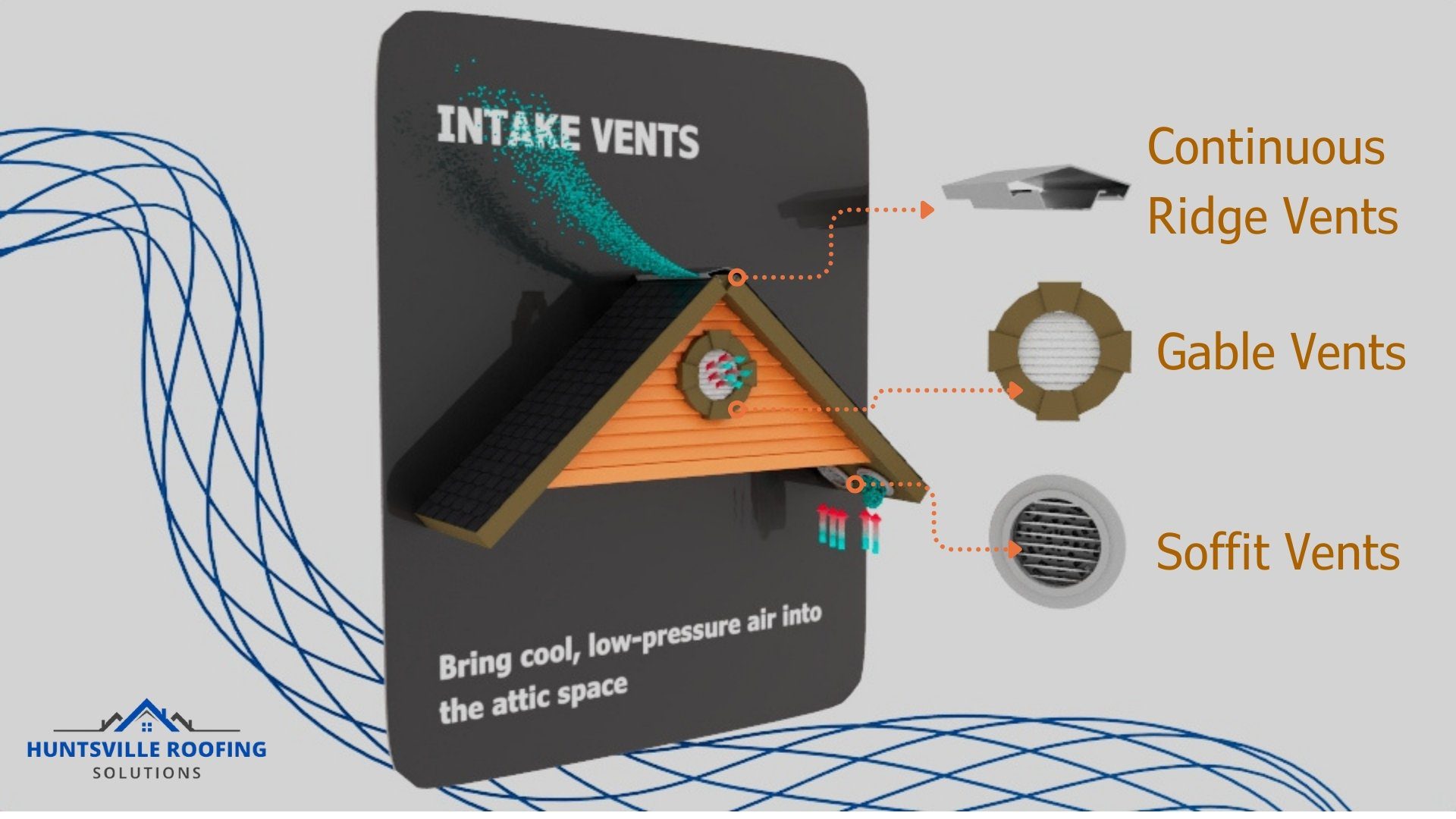
Ventilation Matters Because Moisture Needs a Way Out
Attic ventilation is one part of controlling roof-system moisture.
A conventional balanced system uses intake ventilation near the lower roof edge and exhaust ventilation higher on the roof.
The goal is not simply to install as many vents as possible.
Intake and exhaust have to work together.
Common problems include:
- Insulation blocking soffit intake vents.
- Exhaust vents without enough intake air.
- Bathroom exhaust fans releasing humid air into the attic.
- Disconnected or leaking ducts.
- Multiple exhaust systems interfering with intended airflow.
Ventilation is also not a cure for every moisture issue.
A leaking roof still needs the leak corrected. A bathroom fan dumping into the attic should be routed properly. Air leakage from the home may require building-envelope work rather than another roof vent.
Why Two North Alabama Homes Can Have Very Different Moisture Problems
Regional climate is only one part of the equation.
Two homes on the same street can experience different roof-drying conditions because of:
- Roof orientation.
- Amount of direct sunlight.
- Tree canopy.
- Roof pitch and complexity.
- Debris accumulation.
- Gutter condition.
- Attic ventilation.
- Indoor humidity.
- Previous leaks or repairs.
A shaded property
Large trees may protect parts of a home from direct sunlight, but they can also slow roof drying and increase the amount of organic debris reaching the roofing and gutters.
An open, sunny property
A roof with little tree cover may dry faster after rain but still face other aging mechanisms such as sunlight, heat and wind exposure.
A home with an attic moisture problem
Exterior shingles may look normal while moisture develops underneath the roof deck.
This is why the condition of a roof cannot always be judged solely by its appearance from the street.
When Humidity-Related Roof Checks Matter Most
This page does not need to own a complete seasonal maintenance calendar. Different URLs on the site handle those tasks in more detail.
Spring
Spring is the time to deal with winter carryover, drainage, new tree growth and storm-related changes. Use the dedicated Spring Roof Maintenance Checklist for North Alabama for the full seasonal routine.
Summer
Pay particular attention to attic conditions. Musty odors, visibly damp materials, blocked soffit vents or condensation around ducts deserve investigation.
Fall
Leaf and pine-needle accumulation becomes the obvious concern. Once major leaf drop has occurred, confirm valleys, gutters and downspouts are not holding organic material that will remain wet through repeated rain events.
After significant storms or new symptoms
Do not wait for the calendar if you develop a leak, see missing shingles or know the roof experienced significant wind, hail or impact.
For the broader question of annual, seasonal and event-triggered inspection timing, see how often a roof should be inspected.
What Homeowners Can Check Safely
A homeowner can gather useful information without walking the roof.
From the ground:
- Look for missing or visibly displaced shingles.
- Look for debris collected in accessible valleys.
- Watch gutters and downspouts during rain.
- Look for branches touching the roofing surface.
- Note changes in visible staining or biological growth.
From a safely accessible attic:
- Look for water staining.
- Check for damp or matted insulation.
- Notice persistent musty odors.
- Look for visibly blocked soffit ventilation.
- Check whether exhaust ducts appear to terminate inside the attic.
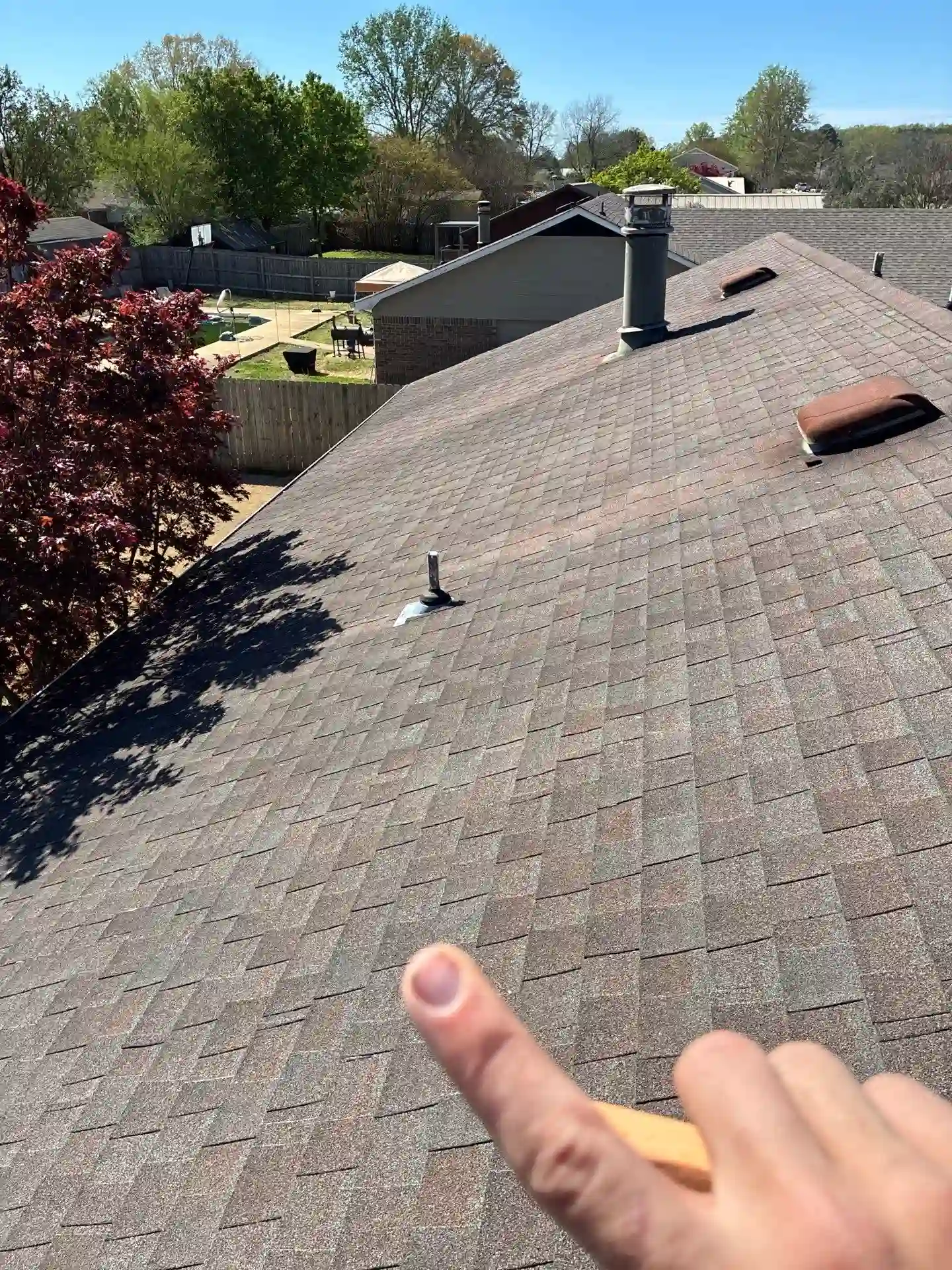
Roof-level diagnosis is different.
Flashing, penetrations, moss removal, ventilation modifications and physical roofing repairs are better handled by someone who can access the roof safely and identify the actual failure mechanism.
What Humidity Does Not Automatically Mean
A humid climate does not mean every roof will fail early.
It does not mean every dark stain is roof damage.
It does not mean every attic moisture problem requires new shingles.
And it does not mean a house surrounded by trees automatically has a bad roof.
Humidity is a condition that changes how moisture behaves around the building. Whether that becomes damage depends on drainage, drying, ventilation, material condition, installation quality and whether small problems are corrected before they spread.
Frequently Asked Questions About Tennessee Valley Humidity and Roofs
How does Tennessee Valley humidity affect a roof?
Humidity can slow drying after rain or dew and can contribute to moisture accumulation when combined with shade, debris, drainage problems or inadequate attic moisture control. The risk comes from materials remaining damp repeatedly or for extended periods rather than humidity instantly damaging shingles.
Can humidity damage roof decking?
Humidity can contribute indirectly. When moisture-laden air repeatedly condenses on roof decking and the material cannot dry, wood-based sheathing can deteriorate over time. Exterior roof leaks can also wet decking, so the moisture source should be identified before repairs are recommended.
Why does my attic smell musty in summer?
A persistent musty odor can indicate excess moisture. Possible sources include attic condensation, inadequate airflow, indoor air leaking into the attic, improperly terminated exhaust ducts or an exterior roof leak. The odor alone does not identify which source is responsible.
Does tree cover make roof moisture problems worse?
It can. Heavy shade may slow drying, while leaves, pine needles and twigs can accumulate in roof valleys and gutters. However, nearby trees do not automatically damage a roof; the more important issues are branch contact, debris accumulation, drainage and how long roof surfaces remain damp.
Does high humidity mean I need a new roof?
No. Humidity by itself is not a reason to replace a roof. Replacement should be based on the actual condition of the roofing system, including widespread deterioration, recurring leaks, damaged decking, storm damage and remaining service life.
The Bottom Line
The main roofing problem with Tennessee Valley humidity is not that moisture exists. It is that some parts of a roof or attic may stay damp longer than they should.
Good drainage helps exterior surfaces shed water. Clear valleys and gutters prevent debris from holding moisture. Proper attic moisture control and ventilation reduce condensation risk. Regular observation catches changes before they turn into larger repairs.
Just as importantly, not every moisture-related sign means the roof is failing. Algae staining can be cosmetic. Attic condensation may originate inside the house. A clogged gutter may simply need maintenance.
The right response starts by identifying the actual moisture path.
For homeowners who want roof condition, drainage, flashing, ventilation and other preventive items checked on a recurring schedule, Huntsville Roofing Solutions offers a roof maintenance program for North Alabama homes.

Jordan is the founder and owner of Huntsville Roofing Solutions, a locally owned, fully licensed and insured roofing company serving Huntsville and North Alabama. He and roofing supervisor Barry Minor have handled residential and commercial roofs across the region — replacements, repairs, storm damage, and insurance claims — earning a 4.9-star Google rating along the way.