
“`html
Does Homeowners Insurance Cover a Roof Leak?
Does insurance cover roof leak damage? Sometimes—the answer usually depends on what caused the roof to leak, not simply on the fact that water entered the house. If wind, hail, a falling tree or another covered peril suddenly damages the roof and creates an opening for rain, homeowners insurance may cover some or all of the resulting covered damage, subject to the policy and deductible. If the roof has been leaking because shingles, flashing or other materials gradually wore out or maintenance was neglected, insurance generally is not intended to pay for ordinary deterioration. Your insurer—not the roofing contractor—makes the final coverage decision.
For Alabama homeowners, that cause-of-loss distinction is especially important. The Alabama Department of Insurance explains that an insurer is generally responsible for repairing the portion of a roof damaged by a covered peril, while additional replacement needed because of normal wear and tear remains the homeowner’s responsibility.

The Leak Is the Symptom. Insurance Looks at the Cause.
This is the simplest way to understand roof-leak coverage.
Two Huntsville homeowners can both have water dripping through a ceiling during a storm and receive completely different insurance decisions.
In the first home, strong wind may have removed shingles only hours earlier, allowing rain through the newly exposed roof.
In the second home, deteriorated flashing may have been allowing water into the roof assembly for months before heavy rain finally made the problem visible indoors.
The interior symptom is similar.
The cause is different.
Homeowners insurance is designed around covered causes of loss, often called perils. According to the National Association of Insurance Commissioners, common homeowners-policy perils can include windstorm, hail, fire, lightning and falling objects, although the exact coverage depends on the policy.
When a Roof Leak May Be Covered
A roof leak has a stronger potential insurance connection when there is evidence that a sudden covered event physically changed the roof.
Common examples include:
- Wind removes or creases shingles and rain enters through the damaged area.
- Hail physically damages roofing materials and the affected area begins leaking.
- A tree limb or other falling object punctures the roof.
- A covered fire damages the roofing assembly and subsequent rain enters.
- A severe storm damages flashing, vents or another roof component and creates a new entry point.
This does not mean each example is automatically covered.
The insurer still considers the policy terms, exclusions, deductible, physical evidence and scope of the loss.
Example: Wind Damages the Roof and Rain Enters
Imagine a North Alabama thunderstorm produces strong wind overnight.
The next morning, several shingles are missing and water is staining the ceiling beneath that section of the house.
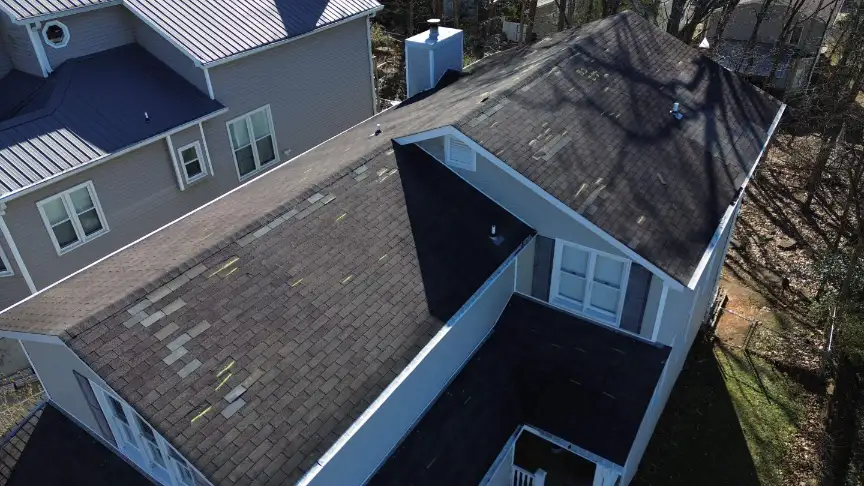
In that situation, there is a sequence that can be investigated:
- A weather event occurred.
- The roofing material physically changed.
- The change created or contributed to an opening.
- Water entered after the damage occurred.
That is very different from discovering that a 20-year-old roof has gradually lost granules, developed brittle shingles and leaked around deteriorated flashing for several seasons.
For a deeper explanation of that distinction, see our guide to wind damage vs. roof wear and tear.
When a Roof Leak Is Usually a Maintenance Issue Instead
Homeowners insurance is not normally a roof-maintenance plan.
Conditions more commonly associated with maintenance or gradual deterioration include:
- Shingles that have worn out with age.
- Long-term granule loss.
- Old flashing that has gradually deteriorated.
- Sealants that have failed over time.
- Known leaks that were left unrepaired.
- Rot caused by persistent moisture.
- Roofing components that have simply reached the end of their useful life.
The NAIC’s consumer guidance makes this distinction directly: homeowners insurance protects against covered losses, but it is not intended to pay for components that simply wear out through ordinary use and deterioration.
That is why the question should not be:
“Is my roof leaking?”
It should be:
“Why is my roof leaking, and what physically caused that condition?”
Does Insurance Cover a Roof Leak on an Older Roof?
An older roof is not automatically an uncovered roof.
A 17-year-old asphalt roof can still sustain legitimate new wind or hail damage.
At the same time, a storm does not convert all existing deterioration into storm damage.
An inspection might find both:
- Fresh missing shingles from the reported storm.
- Widespread age-related granule loss elsewhere.
- Old repairs around a chimney.
- New water intrusion beneath the storm-damaged slope.
Those conditions can exist together.
The insurer may therefore distinguish between damage connected to a covered event and work needed because of the roof’s pre-existing age or condition.
Will Insurance Replace the Entire Roof Because It Leaks?
Not automatically.
A ceiling leak does not by itself establish that the entire roofing system requires replacement.
The Alabama Department of Insurance gives homeowners a particularly useful example. If only part of a roof was damaged by a covered peril, the insurer is generally obligated to pay for repairing that damaged portion. If the remainder of the roof needs replacement because it is simply worn out, the homeowner may be responsible for that additional work.
Actual claim scope can still depend on:
- The extent of physical damage.
- Repairability.
- Policy provisions.
- Applicable building requirements.
- The roofing material.
- The roof’s existing condition.
- The insurer’s evaluation.
A contractor can explain what is physically repairable and document the roofing condition. The contractor does not decide what the policy covers.
What About Interior Water Damage?
The roof itself and the damage inside the house should not automatically be treated as one identical coverage question.
A roof leak can affect:
- Drywall.
- Ceilings.
- Paint.
- Insulation.
- Flooring.
- Furniture and personal belongings.
- Electrical components.
Whether those items are covered depends on the cause of the loss and the terms that apply to each part of the policy.
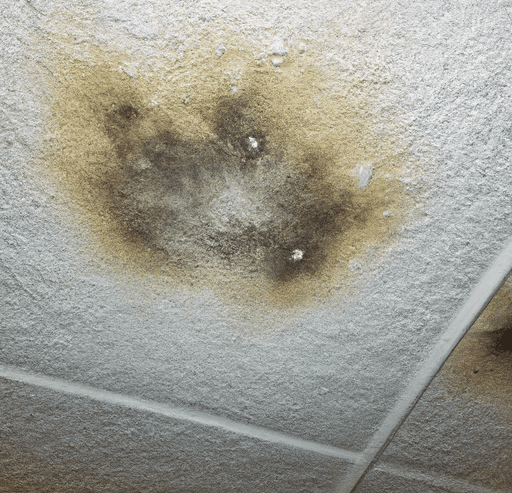
This distinction is especially important when a leak has been occurring for a long time.
If water entered suddenly because a covered storm damaged the roof, that creates a different fact pattern from gradual seepage through a deteriorated roofing component that the homeowner knew needed repair.
Mold also requires special caution. Do not assume that because a leak or water damage is covered, every later mold-remediation expense is automatically covered. Policy language, timing, cause and available endorsements can matter.
Does Insurance Cover a Roof Leak Caused by Hail?
Hail is commonly listed among the perils covered by homeowners policies, but the physical roof damage still needs to be established.
Not every mark on an older shingle is hail damage.
Granule loss may come from aging, abrasion or foot traffic. Blistering has different causes. Wind can lift and crease shingles without hail being responsible.
If hail is suspected, document the roof condition accurately instead of assuming every imperfection came from the storm.
Our separate guide explains what hail damage on a roof can look like and what it isn’t.
What If the Roof Only Leaks During Heavy Rain?
A leak that appears only during intense or wind-driven rain does not tell you whether insurance applies.
It tells you something about the conditions required for water to enter.
Heavy rain may expose:
- Weak flashing.
- A failed pipe boot.
- A damaged vent.
- Wind-lifted shingles.
- Poor drainage.
- A defect created by an earlier storm.
The cause still has to be diagnosed.
That diagnostic intent belongs to our separate article on why roofs leak only during heavy rain.
Flood Water Is a Different Insurance Question
Homeowners should also distinguish a leaking roof from flooding.
Rain entering through a roof opening created by wind damage is not the same scenario as floodwater rising around a home or entering from the ground.
The Alabama Department of Insurance notes that standard homeowners policies generally do not provide flood coverage. Flood insurance is typically handled separately.
Because water losses can have different causes, avoid describing all storm-related water damage simply as a “roof leak” when communicating with an inspector or insurer.
Describe what actually happened.
How Roof Age Can Affect the Claim Payment
Even when the cause of damage is covered, the payment method can vary.
Some policies settle roof losses using replacement cost value. Others may use actual cash value, particularly for older roofing or under specific roof endorsements.
Actual cash value generally incorporates depreciation.
Replacement cost coverage operates differently and may also involve a staged payment process.
This is a separate issue from whether the loss itself is covered.
For that reason, we explain the settlement side separately in our guide to ACV vs. RCV roof insurance.
Covered Roof Leak vs Maintenance Leak: Quick Comparison
| Situation | Coverage Potential | Why |
|---|---|---|
| Wind removes shingles and rain immediately enters | May be covered | Wind is commonly an insured peril, subject to policy terms |
| Hail physically damages roofing and creates water intrusion | May be covered | Hail is commonly an insured peril, but damage must be established |
| Tree limb falls onto and punctures roof | May be covered | Falling objects may be covered under homeowners policies |
| Old flashing slowly deteriorates and begins leaking | Often maintenance-related | Gradual wear is different from sudden covered damage |
| Worn shingles leak after reaching end of service life | Often maintenance-related | Insurance is generally not a maintenance or replacement plan |
| Old roof plus new storm damage | Requires separation of causes | Covered storm damage and pre-existing wear can exist together |
| Interior ceiling damage after roof leak | Policy-specific | Resulting interior damage may need separate coverage evaluation |
This table is a general explanation, not a coverage determination for any individual claim.
What Should You Document When a Roof Starts Leaking?
If a leak may be connected to a storm, documentation can help establish the timeline and physical condition.
When it is safe to do so:
- Record the date and approximate time you first noticed the leak.
- Photograph water stains, dripping water and damaged interior materials.
- Photograph visible exterior damage from the ground.
- Record whether wind, hail, falling limbs or other severe weather occurred.
- Keep any photographs showing the roof’s condition before the event.
- Save invoices for prior roof repairs or inspections.
- Keep receipts for reasonable temporary protective work.
Do not climb onto a wet or storm-damaged roof to obtain better photographs.
A roofing contractor can inspect areas that are unsafe or difficult for a homeowner to access.
Can You Tarp the Roof Before the Adjuster Arrives?
If water is actively entering the home, preventing additional damage can be important.
The NAIC recommends documenting losses first when possible and then making reasonable temporary repairs such as covering an opening in the roof.

Keep receipts and photographs of the condition before and after the temporary work.
Temporary mitigation is different from proceeding immediately with an unnecessary permanent roof replacement before the condition has been documented.
Should You Call a Roofer or the Insurance Company First?
The two parties have different jobs.
A roofing contractor evaluates the physical roof.
The contractor can document:
- Missing or damaged roofing.
- Flashing failures.
- Roof penetrations.
- Decking concerns.
- Repairability.
- Likely source of water intrusion.
- Scope and cost of roofing work.
The insurance company evaluates coverage under the policy.
The insurer considers:
- The reported cause of loss.
- The physical evidence.
- Policy provisions.
- Exclusions.
- Deductibles.
- Settlement terms.
- The covered scope.
Neither role should be confused with the other.
If you have documented storm damage and need information about the broader process, use our roof insurance claim assistance guide.
Should You File a Claim for Every Roof Leak?
Not necessarily.
First determine what caused the leak and understand the likely repair scope.
A minor maintenance repair costing less than the applicable deductible may be a very different situation from widespread wind damage across several roof slopes.
The NAIC recommends knowing your deductible and considering the amount of damage when deciding whether to report a homeowners claim.
That does not mean delaying action on an active leak.
Water intrusion should still be addressed promptly because allowing additional damage to accumulate can create a larger problem.
What If the Roof Just Needs a Repair?
An insurance question and a roofing-scope question are separate.
A leak does not automatically mean the roof needs complete replacement.
Some problems are localized:
- A damaged pipe boot.
- A limited flashing failure.
- A small number of missing shingles.
- Localized wind damage.
- A damaged vent or penetration.
If the roof can be safely and properly repaired, a targeted repair may be the appropriate roofing solution regardless of whether an insurance claim is involved.
For repair-specific information, see our roof repair services in Huntsville.
Frequently Asked Questions About Roof Leaks and Insurance
Does Homeowners Insurance Cover a Roof Leak?
It may if the leak resulted from a covered peril such as wind, hail or a falling object. A leak caused primarily by normal wear, neglected maintenance or gradual deterioration is generally different. The insurer applies the specific policy and determines coverage.
Does Homeowners Insurance Cover a Roof Leak Caused by Wind?
Wind is commonly a covered peril under homeowners policies, so a leak caused by documented wind damage may qualify for coverage subject to the policy, deductible and insurer’s determination.
Does Insurance Cover an Old Leaking Roof?
Age alone does not establish whether a claim is covered. An older roof can sustain new covered storm damage, but insurance generally does not pay simply to replace roofing that has reached the end of its service life through normal deterioration.
Does Insurance Cover Water Damage Inside the House From a Roof Leak?
It can depend on the cause of the loss and the policy terms. Roof damage and resulting interior water damage may need to be evaluated separately, so homeowners should not assume that every affected component receives the same coverage determination.
Will Insurance Replace the Entire Roof Because of One Leak?
Not automatically. Alabama Department of Insurance guidance states that an insurer is generally responsible for the part of a roof damaged by a covered peril. Additional replacement required only because of normal wear and tear may remain the homeowner’s responsibility.
Should I Repair a Leaking Roof Before the Insurance Adjuster Arrives?
Document the damage first when it is safe to do so. Reasonable temporary measures to prevent additional damage may then be appropriate. Keep photographs and receipts and contact the insurer for claim-specific instructions before making unnecessary permanent changes.
The Bottom Line
Whether homeowners insurance covers a roof leak depends primarily on what caused the leak.
A sudden covered event such as wind, hail or a falling object can create a legitimate insurance loss. Gradual shingle deterioration, old flashing and neglected maintenance are fundamentally different.
An older roof can also contain both conditions at the same time: normal wear in one area and new storm damage in another.
That is why the strongest approach is to document the physical roof condition, identify the likely cause of the water entry and let the insurer apply the individual policy to the documented facts.
If the leak appears connected to storm damage and you need to understand inspections, documentation, adjusters and the next stages of the process, continue to Huntsville Roofing Solutions’ roof insurance claim assistance page.
“`

Jordan is the founder and owner of Huntsville Roofing Solutions, a locally owned, fully licensed and insured roofing company serving Huntsville and North Alabama. He and roofing supervisor Barry Minor have handled residential and commercial roofs across the region — replacements, repairs, storm damage, and insurance claims — earning a 4.9-star Google rating along the way.