
ACV vs RCV roof insurance changes how depreciation affects what your insurer may pay on a covered roof claim. Actual Cash Value (ACV) generally pays the covered repair or replacement amount after subtracting depreciation and your deductible. Replacement Cost Value (RCV) generally covers like-kind-and-quality repair or replacement without a final depreciation deduction, up to policy limits and subject to the policy’s terms. However, many RCV claims are paid in stages: an initial ACV-type payment may be issued first, with recoverable depreciation released after qualifying repairs are completed. Your roof can also have different settlement terms than the rest of your home, so check the declarations, roof endorsements, deductible, limits, and claim estimate before assuming what insurance will pay.
That difference can create thousands of dollars of additional homeowner responsibility on the same physical roof damage. It can also create a temporary cash-flow gap on an RCV claim if depreciation is withheld until the work is completed. The policy—not the roofing contractor—controls coverage, claim valuation, depreciation, deductibles, payment timing, and whether withheld depreciation is recoverable.
If you are dealing with storm damage and need the broader claim process, use Huntsville Roofing Solutions’ roof insurance claim assistance page. This article stays focused on one narrower question: how ACV and RCV settlement methods change the numbers on a roof claim.
What Is the Difference Between ACV and RCV on a Roof?
Actual Cash Value is commonly described as replacement or repair cost minus depreciation. Depreciation reflects age, wear, condition, and other factors the insurer uses under the policy and applicable claim rules. If a roof has substantial depreciation, an ACV settlement may leave a meaningful gap between the approved replacement cost and the insurer’s payment.
Replacement Cost Value generally covers the cost to repair or replace covered damage with materials of like kind and quality without making depreciation the final reduction, subject to policy limits and other terms. RCV is not the market value of the house, and it does not mean every dollar on a contractor’s proposal is automatically covered.
The Alabama Department of Insurance explains the same basic distinction: replacement cost is the amount needed to repair or rebuild with similar-kind-and-quality materials without deducting depreciation, while actual cash value reflects repair or replacement after depreciation. Homeowners should still read the actual policy because endorsements can change how a roof is settled.
Official consumer references:
- Alabama Department of Insurance: Actual Cash Value vs. Replacement Cost
- NAIC: Actual Cash Value vs. Replacement Cost Coverage
What Can ACV vs. RCV Cost You on the Same Roof Claim?
Consider a simplified example. Assume an insurer approves $18,000 as the replacement cost for covered roof damage. The policy has a $2,000 deductible, and the insurer calculates $6,000 in depreciation. These numbers are only an illustration; real depreciation and covered amounts depend on the policy, roof, claim, and insurer.
| Claim Item | ACV Example | RCV Example |
|---|---|---|
| Approved replacement cost | $18,000 | $18,000 |
| Depreciation | -$6,000 | Potentially recoverable under qualifying RCV terms |
| Deductible | -$2,000 | -$2,000 |
| Illustrative insurer payment | $10,000 | Up to $16,000 total for covered work, subject to policy terms |
| Potential homeowner gap before upgrades/non-covered items | $8,000 | $2,000 deductible, though timing can create a temporary cash-flow gap |
Under the ACV example, depreciation remains part of the homeowner’s gap. Under a qualifying RCV example, the policy may ultimately reimburse the covered replacement amount less the deductible, but the insurer may not pay the full RCV amount initially.
This is why the phrase “insurance is paying for the roof” is too vague to be useful. You need to know the settlement basis, approved scope, depreciation, deductible, coverage limits, and whether any part of the estimate is excluded or limited.
Why an RCV Claim May Still Start With an ACV Payment
Many homeowners first see an insurance estimate with an RCV amount at the top, depreciation somewhere below it, and a smaller first payment. That does not necessarily mean the policy is ACV-only.
Many replacement-cost policies pay an initial amount based on actual cash value, then make additional replacement-cost benefits available after the insured repairs or replaces the damaged property and satisfies the policy’s documentation and timing requirements. The withheld amount is commonly called recoverable depreciation when the policy allows it to be recovered.
Using the simplified example above, an RCV claim could initially look similar to the $10,000 ACV payment after depreciation and deductible. If the policy allows the $6,000 depreciation to be recovered and the homeowner completes the qualifying work, the insurer may later release additional funds, bringing the total covered payment up to the RCV amount less the deductible.
Do not assume every depreciation line is recoverable. The estimate or claim documents may distinguish recoverable from nonrecoverable depreciation, and policy conditions can control how and when additional payment is available. Ask the insurer or adjuster to explain any withheld depreciation in writing.
What Makes the ACV of an Older Roof Lower?
The larger the depreciation deduction, the larger the difference between an ACV settlement and the cost of a new roof. Insurers may consider factors such as the age and condition of the property, expected useful life, and the cost of comparable replacement materials when determining depreciation under the policy.
For a roof, age can therefore matter financially even when the covered storm damage itself is recent. Two neighboring homes can experience similar wind or hail damage but receive different ACV calculations if the roofs differ in age, condition, material, prior deterioration, or applicable policy terms.
That does not mean ordinary wear becomes storm damage. The cause and scope of damage still have to be documented separately. If you are trying to determine whether marks on the shingles are actually consistent with hail, use the site’s hail damage identification guide rather than treating this ACV/RCV article as a damage-diagnosis page.
Can Your Roof Be ACV Even If the Rest of the House Is RCV?
Yes, depending on the policy and endorsements. NAIC consumer guidance specifically warns that a homeowners policy may provide replacement-cost coverage generally while settling certain surfaces, including a roof, differently. Some policies or endorsements can change the roof settlement basis because of age, material, condition, or other underwriting terms.
That is why the label “replacement-cost homeowners policy” is not enough by itself. Check the declarations page and endorsements for roof-specific language. Useful questions include:
- Is the dwelling covered at ACV or RCV?
- Is the roof subject to a separate roof settlement schedule or endorsement?
- Is depreciation recoverable after repairs?
- Is there a separate wind or hail deductible?
- Is the deductible a fixed dollar amount or a percentage?
- Are there roof age or material restrictions?
- Are ordinance-and-law or code-upgrade costs handled separately?
- What documentation is required before withheld replacement-cost benefits are released?
For the broader insurance workflow—inspection, documentation, claim coordination, and working through the roofing scope—see the insurance claim assistance hub.
Deductible vs. Depreciation: They Are Not the Same Thing
A deductible and depreciation can both reduce the first claim payment, but they are different.
The deductible is the amount of an otherwise covered loss that the policy makes the homeowner responsible for. Depending on the policy, it may be a fixed dollar amount or a percentage-based deductible for certain causes of loss.
Depreciation is a reduction used to reflect age, condition, wear, or remaining value when a claim is settled on an ACV basis. On some RCV claims, depreciation may be withheld initially and later recoverable after qualifying repairs. On an ACV-only roof settlement, the depreciation generally remains part of the gap rather than becoming a later replacement-cost payment.
So if a claim estimate shows both a deductible and depreciation, do not combine them mentally as one charge. Ask which amount is your contractual deductible, which amount is depreciation, and whether the depreciation is recoverable.
How to Read an Insurance Roof Estimate Without Getting Lost
Insurance estimates can be dense, but five numbers usually deserve immediate attention:
- Replacement Cost Value (RCV): the insurer’s estimated covered cost before depreciation.
- Depreciation: the amount being deducted based on the applicable valuation method.
- Actual Cash Value (ACV): the value after depreciation, before or after other adjustments depending on how the estimate is formatted.
- Deductible: the policyholder responsibility applied to the covered loss.
- Net claim/payment amount: the amount the insurer is currently issuing after applicable deductions.
Then look for wording that says whether depreciation is recoverable. Also compare the line-item roofing scope with what the contractor sees physically. A roofing contractor can explain the construction scope and document roofing conditions, but coverage interpretation and claim payment decisions belong to the insurance company and the policy.
Why RCV Can Still Create a Short-Term Cash-Flow Problem
RCV usually offers stronger protection against depreciation than ACV, but staged payments can still matter during a roof replacement. If the insurer issues an ACV-based first payment and holds recoverable depreciation until work is completed, the homeowner may need to coordinate the deductible, insurance funds, contractor payment schedule, mortgage-company endorsement requirements, and any uncovered upgrades or supplements.
The important distinction is between final covered responsibility and timing. An RCV claim may ultimately provide more insurance proceeds than an ACV claim while still requiring careful planning between the first check and the final depreciation payment.
If a covered claim leaves a legitimate homeowner balance and you are considering financing that portion, keep the financing decision separate from the coverage question. The insurer determines covered benefits; the lender determines financing approval and terms.
Why ACV vs. RCV Matters for North Alabama Roof Claims
North Alabama homeowners regularly deal with wind, hail, heavy rain, falling limbs, and other storm conditions that can damage roofing. When a covered event leads to a repair or replacement estimate, the settlement basis can have as much impact on the homeowner’s budget as the physical scope of damage.
For example, an older Huntsville-area roof may still suffer legitimate storm damage, but an ACV endorsement can make depreciation a major part of the homeowner’s share. A homeowner with RCV may have a different final result on similar damage, but still needs to understand the deductible and any temporarily withheld depreciation.
Cause still comes first. Insurance coverage is not created by the age of the roof, and normal wear should not be represented as storm damage. A professional roof inspection should document what is physically present; the carrier then applies the policy to determine coverage and payment.
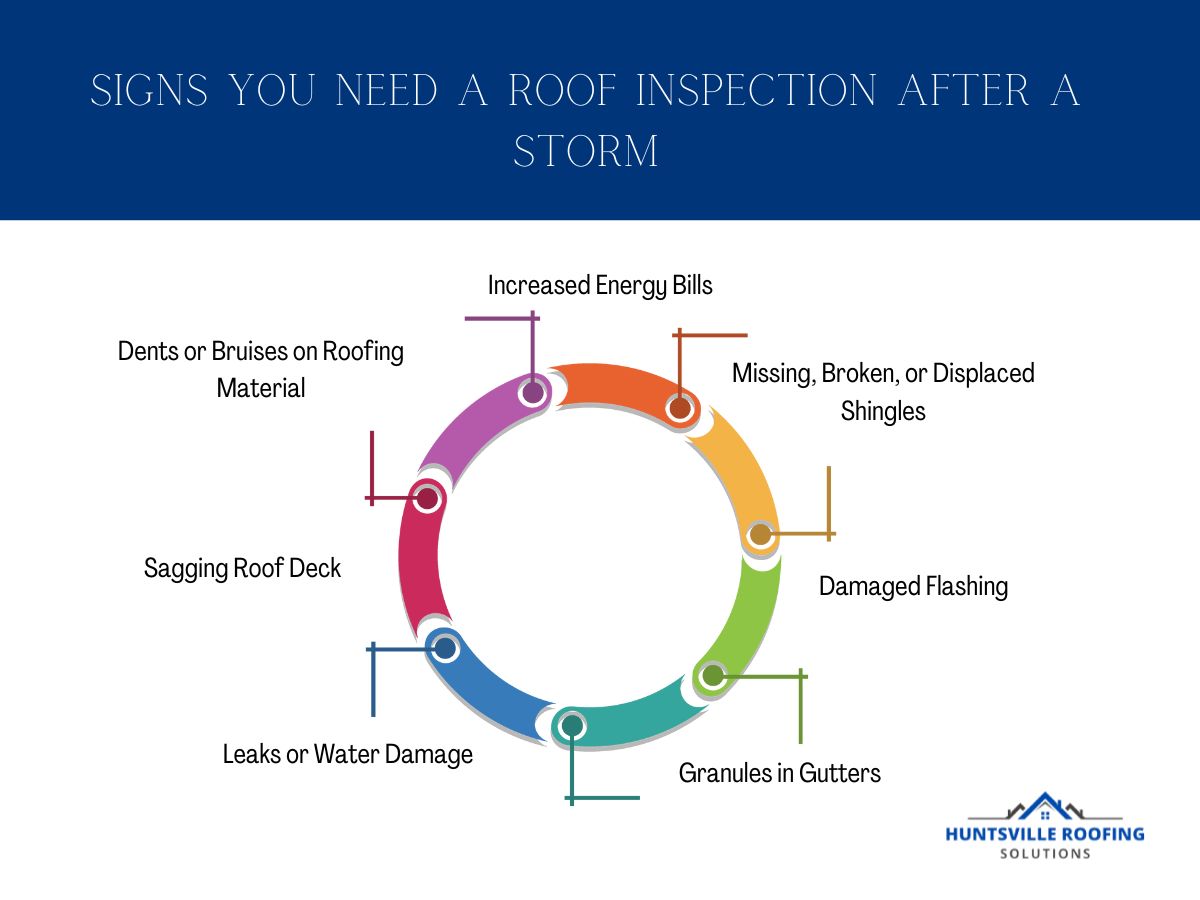
What Should You Check Before a Roof Claim Becomes a Payment Surprise?
- Read the declarations page. Look for the dwelling loss-settlement basis and deductible.
- Read roof-specific endorsements. Do not assume the roof is treated exactly like the rest of the dwelling.
- Ask whether depreciation is recoverable. Get the answer from the insurer or adjuster and confirm any deadlines or proof requirements.
- Separate deductible from depreciation. They affect the math differently.
- Compare the insurer’s scope with the roofing scope. Missing construction items should be documented rather than assumed.
- Keep invoices, photos, estimates, and completion records. These may be required for claim administration or replacement-cost payment.
- Ask about policy limits and exclusions. RCV never means unlimited payment.
If storm damage has already occurred and you need help organizing the roofing side of the claim, visit Huntsville Roofing Solutions’ roof insurance claims page. The insurer remains responsible for interpreting your policy and deciding coverage.
Frequently Asked Questions About ACV vs. RCV Roof Insurance
Is RCV always better than ACV for a roof?
RCV generally provides stronger protection against depreciation because qualifying replacement-cost coverage does not make depreciation the final reduction in the same way ACV does. However, premiums, policy limits, roof endorsements, deductibles, exclusions, and payment conditions all matter. The best comparison is the actual policy language and cost, not the acronym alone.
Does an RCV policy pay the full roof replacement cost immediately?
Not always. Many replacement-cost policies initially pay an amount based on actual cash value and make withheld depreciation available after repair or replacement requirements are satisfied. Check the claim estimate and policy to see whether depreciation is recoverable and what documentation is required.
What is recoverable depreciation on a roof claim?
Recoverable depreciation is depreciation that may be paid later under qualifying replacement-cost coverage after the insured completes the required repair or replacement and satisfies the policy conditions. Not every depreciation amount is necessarily recoverable.
Can my house have RCV coverage while my roof has ACV coverage?
Yes. A policy or endorsement can apply a different settlement basis to the roof or certain surfaces. Review the declarations and endorsements or ask your insurer specifically how roof losses are settled.
Is my deductible recoverable like depreciation?
No. The deductible is the policyholder’s contractual share of an otherwise covered loss. Recoverable depreciation, when available, is a separate part of an RCV claim payment structure.
Does RCV mean insurance will pay for every roofing upgrade?
No. RCV is still subject to the covered scope, policy limits, exclusions, endorsements, like-kind-and-quality provisions, and other policy terms. Optional upgrades or non-covered work may remain the homeowner’s responsibility.
Who decides whether my roof claim is ACV or RCV?
The policy language and insurer determine the applicable settlement basis. A roofing contractor can document damage and explain roofing scope, but the contractor does not decide insurance coverage or rewrite policy terms.
The Bottom Line
ACV vs. RCV roof insurance is fundamentally a depreciation question, but the practical impact is both total cost and payment timing. ACV can leave the homeowner responsible for the deductible plus depreciation and any other non-covered amounts. RCV can reduce or eliminate depreciation as a final covered cost when policy conditions are met, although part of the money may be withheld until repair or replacement is completed. Before making assumptions from the size of the first check, identify the roof’s settlement basis, deductible, recoverable depreciation, limits, endorsements, and approved scope.
For help with the roofing documentation and project side of a storm claim in Huntsville and North Alabama, start with the Huntsville Roofing Solutions insurance claim assistance page.

Jordan is the founder and owner of Huntsville Roofing Solutions, a locally owned, fully licensed and insured roofing company serving Huntsville and North Alabama. He and roofing supervisor Barry Minor have handled residential and commercial roofs across the region — replacements, repairs, storm damage, and insurance claims — earning a 4.9-star Google rating along the way.