
How Much Does a Commercial Roof Cost Per Square Foot?
For a complete commercial reroof requiring removal of the existing roofing system, approximately $10 to $16+ per square foot is a useful preliminary budgeting range rather than a guaranteed price.
Current 2026 national published cost data spans an even wider range depending on system and scope. TPO estimates can stretch from roughly the mid-$4 range to $16 per square foot, while EPDM and PVC also show wide installed-price ranges.
Those broad numbers are useful because they demonstrate something important: “price per square foot” only becomes meaningful after the contractor defines what is actually included in that square foot.
For example, does the quote include:
- Removal of the existing membrane?
- Removal and disposal of insulation?
- Replacement polyiso insulation?
- A cover board?
- Tapered insulation for drainage?
- Deck repairs?
- New perimeter metal?
- Flashing around HVAC curbs and penetrations?
- Drain or scupper work?
- Manufacturer warranty requirements?
A low square-foot number that excludes several of those items cannot be compared directly with a more complete roof-system proposal.
Commercial Roof Replacement Cost by Building Size
The examples below use an illustrative $10-$16 per square foot planning range for complete replacement. They are intended for initial capital budgeting only.
| Approximate Roof Area | Illustrative Planning Range |
|---|---|
| 5,000 sq. ft. | $50,000-$80,000+ |
| 10,000 sq. ft. | $100,000-$160,000+ |
| 20,000 sq. ft. | $200,000-$320,000+ |
| 25,000 sq. ft. | $250,000-$400,000+ |
| 50,000 sq. ft. | $500,000-$800,000+ |
These totals are examples, not Huntsville Roofing Solutions quotes. A project can fall below or above them depending on its actual design and condition.
Large uncomplicated roofs can sometimes achieve efficiencies that smaller, highly detailed roofs cannot. Conversely, large facilities with extensive equipment, difficult access or major moisture problems can exceed simple square-foot assumptions quickly.
What Determines Commercial Roof Replacement Cost?
Seven factors usually matter more than the roof’s raw square footage.
1. Whether the Existing Roof Must Be Torn Off
A full tear-off adds labor, hauling and disposal and exposes the contractor to conditions that may not be visible from the roof surface.
If the existing assembly is wet, deteriorated or otherwise unsuitable to remain, removing it may be necessary before the new system can be installed properly.
A structurally sound roof may sometimes qualify for a recover instead. GAF notes that a commercial recover can retain much of an existing suitable roof assembly, reducing material, labor, waste and disruption compared with complete tear-off.
That does not mean every old roof should be recovered.
If moisture is widespread or the underlying system is failing, covering the problem does not repair it. The site’s guide to roof coating versus full replacement covers that decision separately.
2. The Commercial Roofing System
TPO, EPDM, PVC, modified bitumen, built-up roofing and metal systems do not carry identical material and installation costs.
Even within one membrane category, pricing can change with membrane thickness, reinforcement, attachment method, manufacturer requirements and warranty specification.
A building owner comparing TPO, EPDM and PVC should therefore compare complete assemblies rather than only the price of the membrane roll.
For the material-selection side of that decision, see the detailed TPO vs EPDM vs PVC comparison.
3. Insulation Requirements
Insulation can represent a significant part of a commercial reroof budget.
A replacement project may involve:
- Removing wet insulation.
- Installing new polyiso insulation.
- Adding layers to reach the required thermal performance.
- Installing tapered insulation to improve drainage.
- Adding a high-density cover board.
A quote for “new TPO” tells you very little if it does not explain what happens below the TPO.
That matters because the membrane is only the weathering surface of a larger roof assembly.
4. Wet Insulation and Hidden Damage
Hidden moisture can change a reroof from a straightforward installation into a more extensive reconstruction project.
If water has moved beneath the membrane, insulation can lose performance and other components may deteriorate.
The amount and location of wet material should therefore be investigated before finalizing the replacement strategy.
If you are still determining whether your roof has reached replacement-level deterioration, review the site’s guide to commercial flat roof failure signs rather than assuming that every leak means replacement.
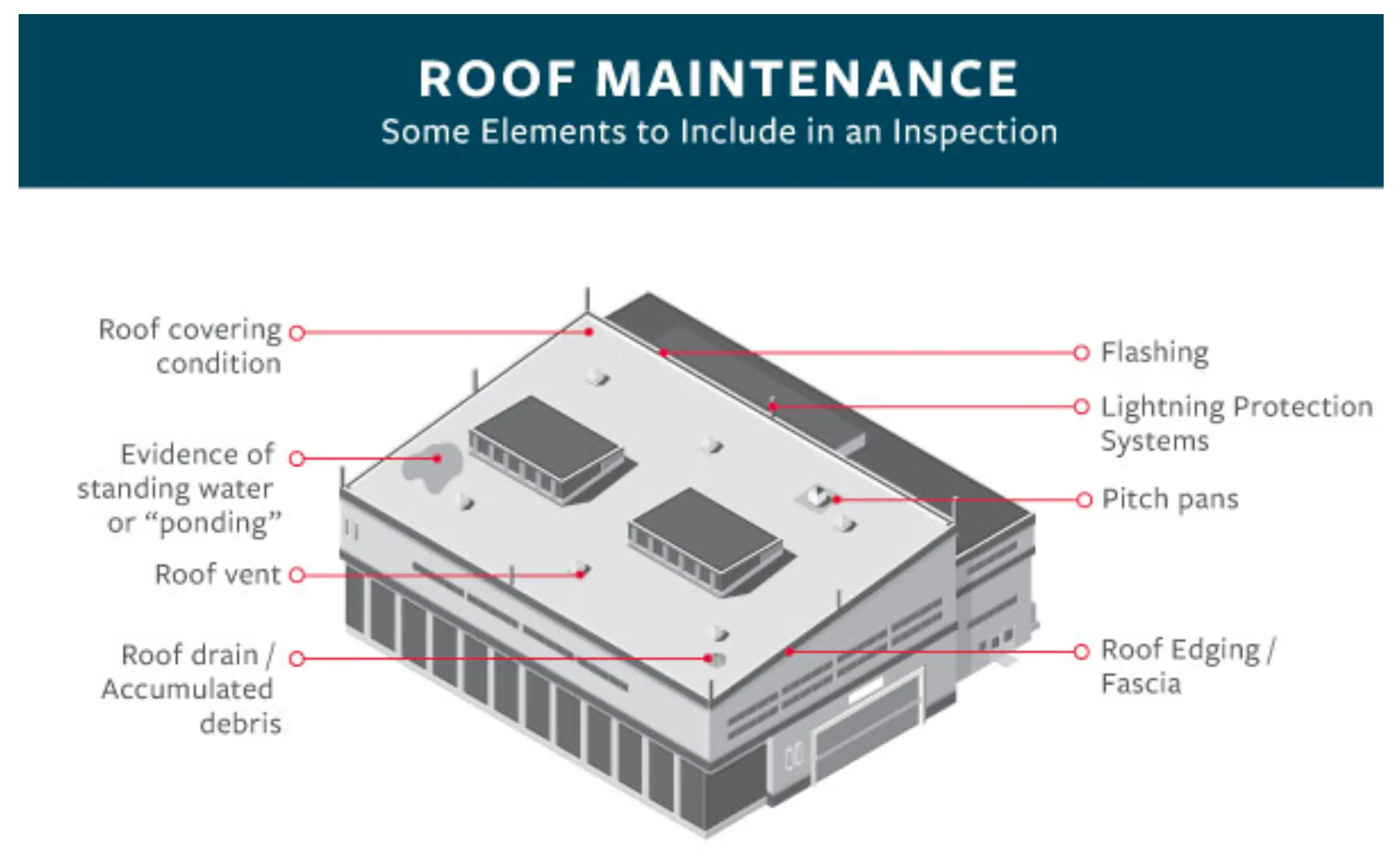
5. Rooftop HVAC Units and Penetrations
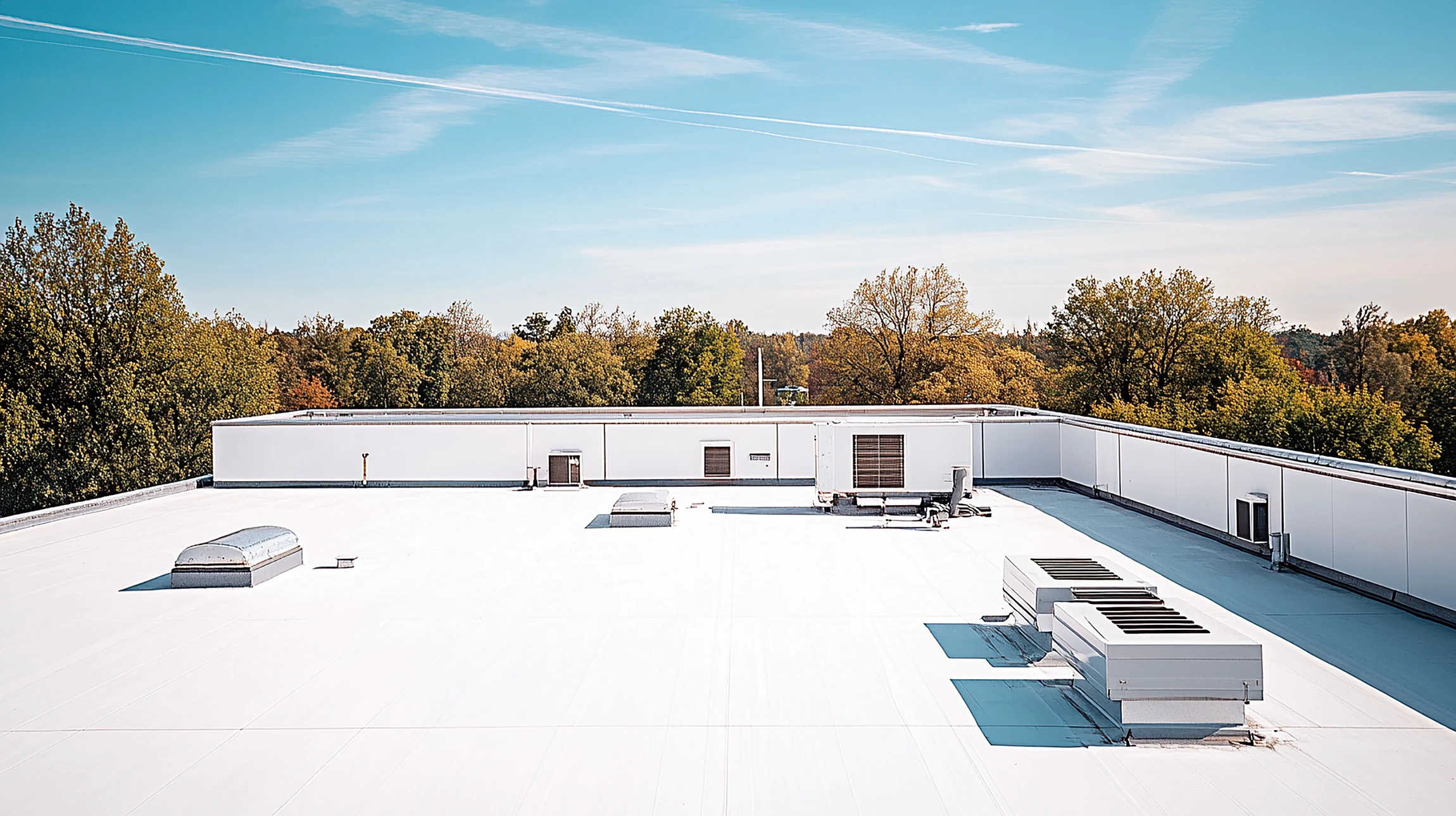
A 20,000-square-foot open warehouse roof with relatively few penetrations is typically simpler to reroof than a 20,000-square-foot building covered with HVAC units, vents, pipes, skylights, equipment supports and other penetrations.
Every penetration can require:
- Cutting and fitting.
- Flashing.
- Membrane detailing.
- Sealants or accessories.
- Additional labor.
- Coordination with mechanical equipment.
The roof can therefore remain the same size while labor requirements increase materially.
6. Building Height and Access
Roof access affects production.
A low-rise warehouse with open staging space around the building creates a different installation environment from a multi-story commercial property with restricted parking and limited crane access.
Cost can be affected by:
- Material-loading requirements.
- Crane or lift use.
- Debris removal.
- Safety systems.
- Street or parking restrictions.
- Limited staging space.
- Building occupancy.
NRCA technical guidance notes that building height, roof congestion and access can materially increase the complexity and cost of roof-system replacement.
7. Drainage and Tapered Insulation
Replacing a membrane without addressing a known drainage problem can simply place a new surface over the same underlying geometry.
If water consistently collects in low areas, the replacement scope may require tapered insulation, drain modifications or other drainage improvements.
Those changes increase initial cost but may be necessary for the replacement system to perform as intended.
How Much Do TPO, EPDM and PVC Commercial Roofs Cost?
Published 2026 pricing sources show broad installed ranges rather than one universal commercial rate.
| Roof System | Broad Published Installed Range | Important Cost Variables |
|---|---|---|
| TPO | About $4.50-$16/sq. ft. | Thickness, attachment, insulation, tear-off, roof complexity |
| EPDM | About $4.25-$12/sq. ft. | Thickness, attachment, insulation, access, preparation |
| PVC | About $5-$15+/sq. ft. | Membrane thickness, attachment, chemical requirements, details |
Those are broad national references. They are not a North Alabama bid sheet, and the low end of a membrane-installation range should not automatically be treated as the price of a complete tear-off and replacement.
That distinction is critical.
A membrane price and a complete commercial roof replacement price are not necessarily the same thing.
Why Can Two Commercial Roofing Quotes Be So Different?
Suppose one contractor proposes $135,000 and another proposes $205,000 for what appears to be the same building.
The difference does not automatically mean the higher proposal is overpriced or the lower one is a bargain.
First compare the scope.
Ask whether both proposals include the same:
- Roof area.
- Tear-off.
- Number of existing layers.
- Membrane manufacturer and thickness.
- Attachment method.
- Insulation thickness.
- Cover board.
- Tapered insulation.
- Drainage work.
- Perimeter metal.
- Flashing details.
- Deck-repair allowance.
- Warranty.
- Cleanup and disposal.
A commercial roofing proposal should be compared as a roof assembly and scope of work, not merely as a final number.
Is Recovering a Commercial Roof Cheaper Than Replacement?
Usually, when the existing roof is genuinely suitable for recovery.
A recover can avoid portions of the demolition, disposal and replacement work required during complete tear-off.
GAF describes roof recovery as an option for certain structurally sound commercial roofs without significant moisture or deterioration problems.
But cost should not be the only qualification test.
A cheaper recover is poor value if wet insulation, deteriorated decking or widespread system failure is left underneath it.
The building should first be evaluated to determine whether the existing assembly is suitable to remain.
How Much Should a North Alabama Business Budget?
For preliminary budgeting, a commercial property owner considering full roof replacement can start with three numbers:
- Roof area: How many actual roofing square feet are involved?
- Planning rate: Use roughly $10-$16+ per square foot as an early tear-off/replacement planning range.
- Contingency: Leave room for conditions that cannot be fully confirmed until inspection, testing or tear-off.
For example:
Illustrative 20,000-square-foot project
- 20,000 × $10 = $200,000
- 20,000 × $16 = $320,000
An owner might therefore begin capital planning around $200,000-$320,000+ before obtaining a project-specific inspection and proposal.
That does not mean the final project will cost that amount.
A suitable recover could cost materially less. A highly complex tear-off involving wet insulation, tapered systems, structural work or extensive rooftop equipment could cost more.
What Should Be Included in a Commercial Roof Replacement Estimate?
A useful estimate should allow the building owner to understand what is being purchased.
Look for clarity around:
- Measured roof area.
- Existing roofing system.
- Removal scope.
- Disposal.
- Deck condition and repair allowances.
- Insulation type and thickness.
- Cover board.
- Membrane type and thickness.
- Attachment method.
- Flashing and penetrations.
- Roof drains and scuppers.
- Perimeter details.
- Warranty terms.
- Project scheduling.
- How occupied areas will be protected.
The lowest bid is not automatically the lowest-cost roof over its service life if major components were omitted to create that number.
At the same time, a higher price does not automatically mean better workmanship or a better system. The scope needs to justify the difference.
Can a Commercial Roof Be Repaired Instead of Replaced?
Sometimes.
A localized puncture, flashing issue, isolated open seam or small wet area does not automatically mean an entire commercial roof should be replaced.
Replacement becomes more reasonable when the problem is systemic: widespread deterioration, large areas of wet insulation, repeated failures in different locations, extensive membrane breakdown or an assembly that can no longer be restored reliably.
This distinction matters because replacing a repairable roof early can waste capital, while continuing to patch a system that is failing everywhere can produce years of repeated emergency expense.
Does a More Expensive Commercial Roof Always Last Longer?
No.
Cost and service life are related only indirectly.
Commercial roof performance also depends on:
- Roof design.
- Drainage.
- Installation quality.
- Membrane thickness.
- Insulation and substrate.
- Building use.
- Foot traffic.
- Weather exposure.
- Maintenance.
GAF’s 2026 commercial roofing guidance notes that commercial roof lifespans vary significantly by material, climate, drainage, installation and maintenance rather than being determined by material name alone.
Paying more for the wrong assembly does not solve the underlying design problem.
Frequently Asked Questions About Commercial Roof Cost
What is the average commercial roof cost per square foot?
There is no dependable single average for every commercial roof. For early planning, roughly $10-$16+ per square foot is a reasonable conservative range for many complete tear-off and replacement projects, but actual projects can fall below or above it. Membrane, insulation, access, existing roof condition, drainage, penetrations and warranty requirements all affect the final number.
How much does a 10,000-square-foot commercial roof cost?
Using an illustrative $10-$16 per square foot full-replacement planning range, a 10,000-square-foot roof would budget at approximately $100,000-$160,000+. This is not a quote; the actual scope must be inspected and specified.
How much does a 20,000-square-foot commercial roof cost?
At the same illustrative planning range, approximately $200,000-$320,000+. A roof recover may cost less when appropriate, while significant moisture, decking work, insulation replacement or complex rooftop equipment may push a project higher.
Is TPO cheaper than PVC?
TPO often appears at a lower price point in published cost data, but that does not guarantee it will be cheaper on every project. Membrane thickness, attachment system, insulation, roof details, labor and warranty requirements can have more impact on the final proposal than the membrane name alone.
Can I replace only the membrane?
Sometimes, but only when the rest of the assembly is suitable to remain. Wet insulation, deteriorated cover board, damaged decking or drainage deficiencies may require additional work. The existing roof should be investigated before assuming a membrane-only replacement is appropriate.
Why is commercial roof replacement so expensive?
A commercial roof is more than a waterproof sheet. A complete replacement can involve demolition, disposal, insulation, cover board, membrane, fasteners or adhesives, flashings, perimeter metal, drainage, rooftop penetrations, safety systems, equipment access and warranty requirements. Large roof areas multiply each of those costs.
The Bottom Line
Commercial roof cost in North Alabama should be budgeted around the complete roofing system, not a generic membrane price.
For a preliminary full-replacement budget, roughly $10-$16+ per square foot is a useful conservative starting point, making a 10,000-square-foot project roughly $100,000-$160,000+ and a 25,000-square-foot project roughly $250,000-$400,000+ in illustrative planning terms.
But square footage only starts the calculation.
The real price depends on tear-off, existing moisture, insulation, decking, membrane choice, attachment, drainage, building height, access, rooftop equipment and warranty specifications.
A building that qualifies for a recover may require substantially less work. A building with wet insulation and hidden deck deterioration may require substantially more.
For a project-specific inspection, replacement scope and estimate, see Huntsville Roofing Solutions’ commercial roofing services in Huntsville and North Alabama.
Pricing and Technical References
Jordan is the founder and owner of Huntsville Roofing Solutions, a locally owned, fully licensed and insured roofing company serving Huntsville and North Alabama. He and roofing supervisor Barry Minor have handled residential and commercial roofs across the region — replacements, repairs, storm damage, and insurance claims — earning a 4.9-star Google rating along the way.