
Signs Your Commercial Flat Roof Is Failing
Common commercial flat roof problems that can signal failure include recurring leaks, ponding water that does not drain properly, open or deteriorated membrane seams, damaged flashing, punctures, blisters, cracks, clogged drains, wet insulation and repeated repairs in multiple areas. One defect does not automatically mean the entire roof needs replacement. A localized puncture or flashing failure may still be repairable. The concern becomes greater when several warning signs appear together, moisture has spread beneath the membrane, or repairs keep failing. For a commercial building owner, the goal is to identify deterioration before water reaches insulation, decking, ceilings, equipment, inventory or occupied space.
What Does a Failing Commercial Flat Roof Actually Look Like?
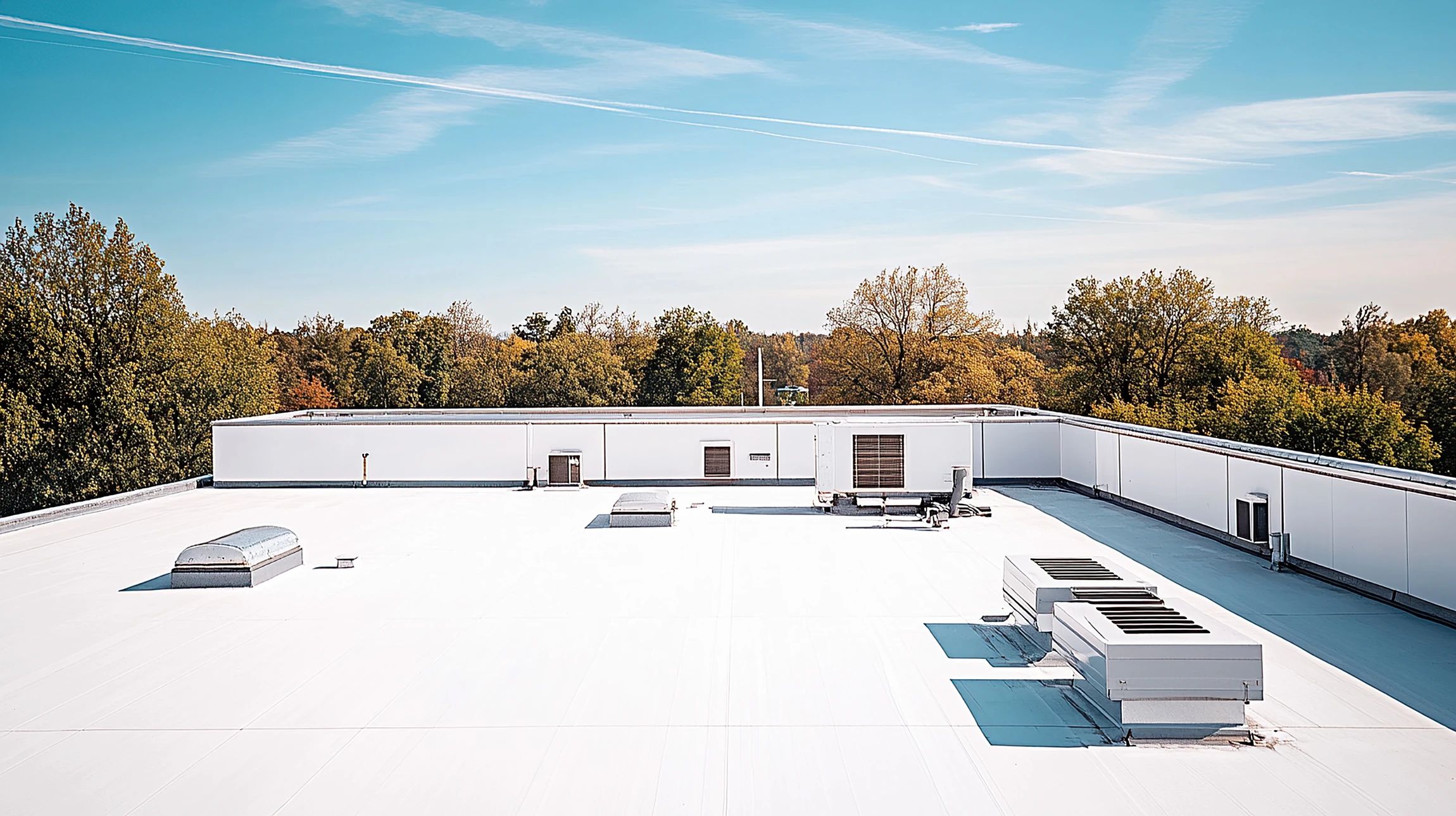
Commercial flat roofs rarely fail all at once without warning.
More often, deterioration develops gradually. A seam starts separating. Water sits in the same low area after storms. Sealant around an HVAC curb begins cracking. A drain becomes partially blocked. A small puncture repeatedly wets insulation beneath the membrane.
From inside the building, the first obvious symptom may be a ceiling stain or leak. On the roof, however, the problem may have existed for much longer.
It is also worth clarifying that most commercial “flat” roofs are actually low-slope roofs designed to move water toward drains, scuppers or other drainage points. A roof should not depend on perfectly flat geometry to dispose of rainfall.
The warning signs below help separate an isolated maintenance issue from a pattern that may indicate broader commercial roof deterioration.
1. Water Continues Ponding in the Same Areas
Standing water is one of the most recognizable commercial flat roof problems.
Water immediately after a storm is not necessarily evidence of failure. The concern is water that repeatedly remains in depressions or areas that do not drain as intended.
Ponding can occur because drains are blocked, the roof surface has developed low areas, insulation has compressed, structural members have deflected, drainage was poorly designed, or rooftop equipment interferes with the intended water path.
The International Institute of Building Enclosure Consultants’ guidance on roof ponding explains that sustained ponding on low-slope roofs can contribute to premature deterioration and, in more serious circumstances, increased loading and deflection.
Ponding matters because water is spending more time in contact with the roofing system.
That puts more pressure on seams, flashings, penetrations and any small defect in the membrane.
A recurring ponding area should therefore be investigated for both why water is collecting and whether the roofing materials underneath have already been affected.
2. Roof Membrane Seams Are Opening or Separating
Single-ply commercial roof systems are installed in sheets, which means the seams between those sheets are critical waterproofing details.
Different membrane systems use different seam methods. Thermoplastic membranes such as TPO commonly rely on heat-welded seams, while other roof systems use adhesives, tapes or system-specific detailing.
Over time, a vulnerable seam may show:
- Visible separation.
- Loose edges.
- Failed patches.
- Cracked repair material.
- Open T-joints or transitions.
- Water staining near the seam.
The GAF commercial roof inspection guidance specifically identifies seams as an important inspection point because they can loosen or deteriorate and previous repairs may reveal earlier failures.
A single failed seam may be repairable.
Numerous failing seams distributed across an aging roof are more concerning because they can indicate that the membrane system is losing reliability in multiple locations.
If your building uses TPO specifically, our TPO roofing guide explains how that commercial membrane system is designed and installed.
3. Flashing Around Curbs and Penetrations Is Deteriorating
Commercial roofs rarely consist of one uninterrupted field of membrane.
They often contain HVAC units, exhaust fans, plumbing vents, pipes, roof hatches, skylights, equipment supports and other penetrations.
Every one of those details creates a transition that has to remain watertight.
Warning signs around rooftop equipment and penetrations include:
- Cracked or shrinking sealant.
- Loose flashing.
- Open corners.
- Separated membrane at a curb.
- Failed previous patches.
- Rust or deterioration around metal components.
- Water staining beneath the penetration inside the building.
These details deserve attention because a large commercial roof may have many penetrations even when the main field membrane remains in relatively good condition.
That means a leak around one rooftop unit does not automatically mean the entire commercial roof has failed.
But widespread flashing deterioration at many penetrations can indicate an aging system that is becoming increasingly difficult to keep watertight through isolated repairs.
4. The Membrane Has Blisters, Bubbles, Wrinkles or Splits
A commercial roof surface should be evaluated for changes in the membrane itself.
Depending on the roofing system, visible warning signs can include:
- Blisters or bubbles.
- Wrinkling.
- Splits.
- Cracks.
- Delamination.
- Loose membrane.
- Deteriorated coatings.
- Areas pulling away from adjoining details.
These conditions do not all have the same cause.
For example, a blister may involve trapped moisture or air. A split may be associated with movement or deterioration. Wrinkles can have installation or movement-related causes. A coating may deteriorate differently from a single-ply membrane.
The correct response is therefore diagnosis rather than assuming every raised or cracked area requires the same repair.
When membrane deterioration is isolated, repair or restoration may still be practical. When the same deterioration is widespread over large sections of the roof, the economics and reliability of repeated repairs begin to change.
5. Punctures or Traffic Damage Keep Appearing
Commercial roofs often support equipment that requires routine maintenance.
HVAC technicians, electricians, plumbers, telecommunications contractors and other service providers may need roof access throughout the year.
That makes foot traffic a larger concern than it is on many residential roofs.
Dropped tools, sharp equipment edges, displaced supports or repeated walking outside designated paths can damage a membrane.
Look for:
- Cuts.
- Tears.
- Punctures.
- Scuffs exposing lower layers.
- Membrane damage around equipment.
- Supports resting directly on or cutting into the roof surface.
A small puncture can appear insignificant from above while allowing water into insulation beneath the membrane.
This is one reason commercial roof inspections should consider not only age and weather exposure but also what work has been performed on the rooftop since the previous inspection.
6. Drains and Scuppers Are Not Clearing Water Properly
A commercial flat roof depends heavily on its drainage system.
Leaves, packaging, dirt, vegetation and other debris can collect around drains and scuppers and restrict water flow.
Sometimes the problem is obvious: debris is physically covering the drain.
Other times, the warning sign is the pattern of water itself. If one section continually ponds while surrounding areas drain normally, the drainage path should be investigated.
GAF’s building-science guidance on managing water on low-slope roofs notes that these roofs drain more slowly than steep-slope systems and that penetrations, equipment and irregularities can complicate positive drainage.
A blocked drain is not necessarily roof failure.
Ignoring the drainage problem, however, can expose weak seams, flashings and membrane defects to standing water repeatedly.
7. Interior Leaks Keep Returning
One leak does not automatically mean a commercial roof needs replacement.
A leak may originate from one failed penetration, puncture, seam or flashing detail that can be repaired.
The pattern becomes more concerning when:
- The same leak returns after multiple repairs.
- New leaks begin appearing in unrelated areas.
- Several tenants report water intrusion.
- Ceiling stains expand after each major storm.
- Interior repairs are being made without solving the roof source.
Commercial leaks can also be difficult to trace because water does not always fall directly beneath the point where it entered.
Water may travel across the roof assembly, along decking, within insulation or around structural components before becoming visible inside.
For that reason, repeatedly applying sealant near an interior stain without identifying the actual entry point can turn into an expensive cycle.
8. Insulation or Materials Beneath the Membrane Are Wet
This is one of the most important warning signs because the roof may look much better from above than it actually is below the surface.
Water entering through a small membrane defect can migrate into insulation and other parts of the assembly.
Possible clues include:
- Soft or spongy areas underfoot.
- Recurring interior moisture.
- Staining beneath the deck.
- Evidence from moisture surveys or test cuts.
- Insulation that has lost integrity.
Do not deliberately walk across a suspiciously soft roof area to test it yourself. Commercial rooftop access involves fall hazards, fragile areas, skylights, equipment and other safety risks.
Wet insulation matters because repairing the surface membrane alone may not address moisture already trapped in the assembly.
Your existing commercial roofing service also makes this distinction: roofs with structural damage, saturated insulation or advanced deterioration may require a larger scope than a simple coating or localized repair.
9. The Roof Needs Repairs in More and More Areas
The number and distribution of repairs often tells a more useful story than any one defect.
One puncture on an otherwise healthy roof is a localized problem.
One failed flashing detail around an HVAC curb may also be localized.
But a roof that has open seams in one area, repeated ponding in another, deteriorated flashing at several curbs and multiple recurring leaks is showing a different pattern.
The question becomes:
Are you still repairing isolated defects, or are you managing widespread deterioration across the system?
As repair locations multiply, property owners should compare the remaining expected service of the roof with the cost and reliability of continuing repairs.
This does not mean an older roof automatically needs replacement. Age should provide context, not substitute for inspection.
Commercial Flat Roof Inspection: What Should Be Checked?
A useful commercial roof inspection should evaluate the whole water-management system rather than simply looking for a hole.
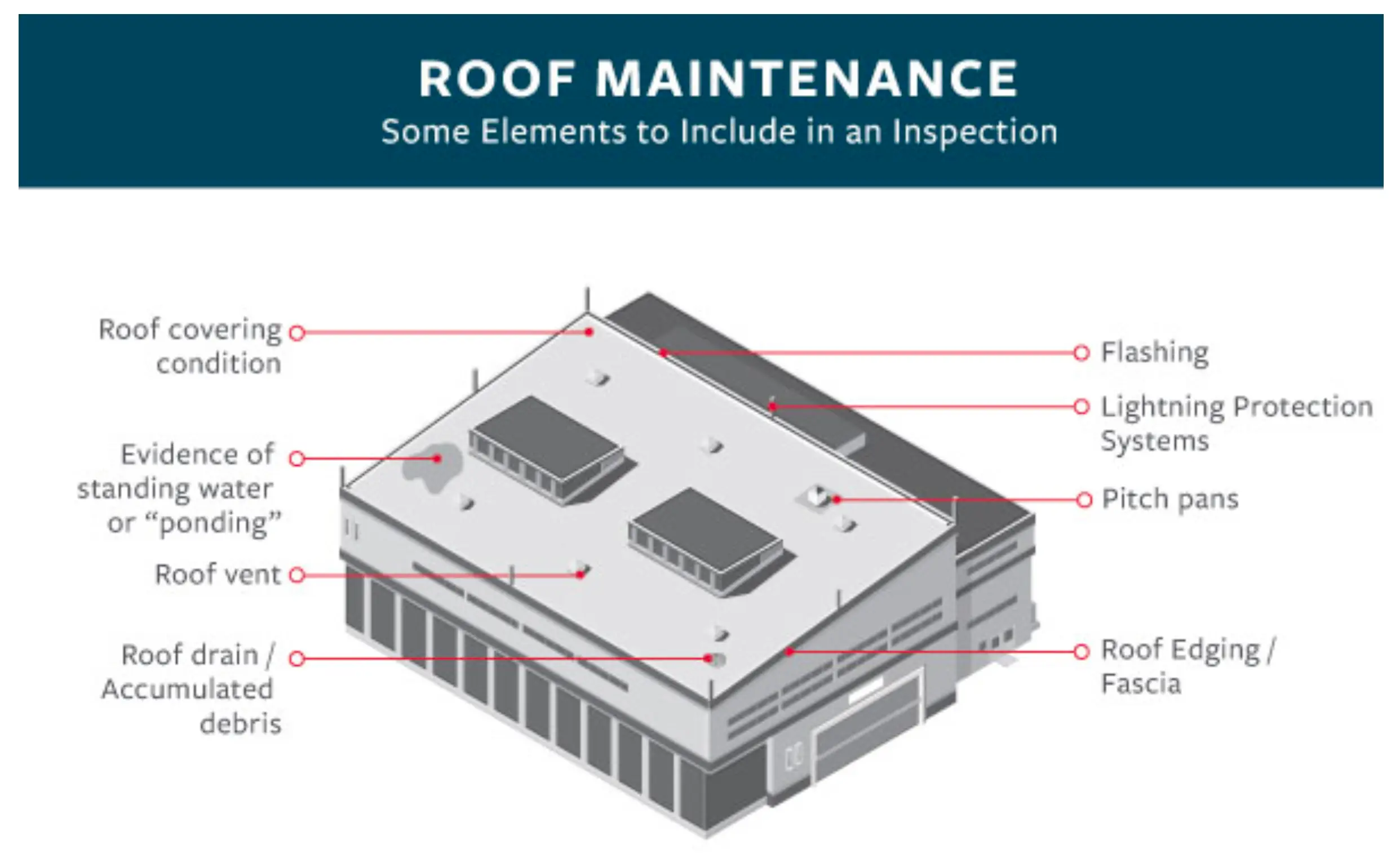
Important areas include:
- Overall membrane condition.
- Seams and previous patches.
- Roof drains and scuppers.
- Recurring ponding areas.
- HVAC curbs and other penetrations.
- Flashing and pitch-pan details where applicable.
- Roof edges and perimeter components.
- Punctures and mechanical damage.
- Rooftop equipment supports.
- Debris accumulation.
- Interior evidence of water intrusion.
- Possible wet insulation or underlying materials.
The goal should be to document not just what is damaged but also how widespread the damage is and why it developed.
Can a Failing Commercial Flat Roof Still Be Repaired?
Yes.
A commercial roof can show a problem without being beyond repair.
Localized repairs can make sense when the roof still has useful service life, the membrane remains generally sound, moisture has not spread through large areas of insulation, and the failure can be tied to a specific detail.
Examples may include:
- One membrane puncture.
- An isolated seam defect.
- One leaking penetration.
- Localized flashing deterioration.
- A small damaged area created by rooftop work.
Repair becomes less attractive when defects are widespread or when fixing one area simply moves the next leak somewhere else.
When Is Roof Restoration Worth Considering?
Some commercial roofs fall between a small repair and a full tear-off.
If the existing assembly remains structurally suitable and moisture damage is limited, a properly specified restoration or coating system may sometimes extend the usable life of the roof.
But a coating should not be treated as paint that can simply be rolled over any failing roof.
Active leaks, wet insulation, damaged membrane, failed flashing and drainage problems need to be evaluated and addressed as part of the preparation process.
A roof with extensive trapped moisture or structural deterioration may not be an appropriate restoration candidate.
When Does Commercial Roof Replacement Make More Sense?
Replacement becomes a stronger consideration when the problem is no longer isolated.
Examples include:
- Recurring leaks across multiple roof areas.
- Extensive wet or deteriorated insulation.
- Widespread seam deterioration.
- Large areas of membrane failure.
- Repeated repairs that no longer provide dependable results.
- Significant deterioration around numerous penetrations and flashings.
- Drainage or substrate problems requiring major reconstruction.
- An aging roof where expensive repairs would provide only limited additional service.
The decision should be based on roof condition, moisture extent, system type, repair history and expected value—not simply the fact that one leak occurred.
For Huntsville property owners who need the repair, restoration and replacement options evaluated together, see our commercial roofing services in Huntsville, Alabama.
Why Commercial Flat Roof Problems Matter in Huntsville
Commercial roofs in Huntsville and North Alabama have to manage intense summer sun, heat, humidity, periods of heavy rain, thunderstorms and wind.
Those conditions do not automatically cause a properly designed commercial roof to fail.
They do, however, make unresolved weaknesses more important.
A partially blocked drain matters more when heavy rain arrives quickly. A deteriorated flashing detail can become an entry point during wind-driven rain. UV exposure and temperature cycling continue aging exposed membranes and sealants over time.
This is why a commercial roof should be managed as a building asset rather than ignored until water begins falling into occupied space.
Do Not Wait for an Interior Leak to Be the First Inspection
Commercial roof failure is more expensive once water has moved beyond the membrane.
At that point, the scope may include insulation, decking, ceiling systems, tenant areas, equipment, finishes or inventory in addition to the original roofing defect.
Scheduled inspections provide an opportunity to identify drainage restrictions, damaged flashing, punctures, seam deterioration and other problems before they become interior emergencies.
If your roof is currently in service and you want a structured preventive approach rather than waiting for leaks, Huntsville Roofing Solutions also offers a commercial roof protection plan built around scheduled inspections and documentation.
What Should You Do If You Notice Several Warning Signs?
Start by documenting what you know.
- Record where leaks or stains appear. Note which tenant spaces, rooms or ceiling areas are affected.
- Record when they appear. Heavy rain, wind direction and recent storms can provide useful diagnostic clues.
- Review previous repairs. Repeated work in the same area is important information.
- Note recent rooftop activity. HVAC installation, mechanical servicing or other trade work may coincide with membrane damage.
- Have the roof professionally inspected. The inspection should evaluate membrane condition, seams, drains, penetrations, flashing and potential moisture beneath the surface.
- Ask for the problem to be classified. Is it localized, restorable, or widespread enough that replacement should be considered?
A good commercial roof recommendation should connect the proposed work to observable conditions rather than simply say, “The roof is old.”
The Bottom Line
The clearest signs of commercial flat roof failure are not one isolated stain or one small puncture, but a pattern: persistent ponding, recurring leaks, failing seams, deteriorated flashing, widespread membrane damage, wet insulation and repairs multiplying across the roof.
Some commercial flat roof problems remain repairable when they are caught early and confined to one area.
Others can be addressed through a properly designed restoration system when the underlying roof remains suitable.
Replacement becomes more reasonable when deterioration is widespread, moisture has entered large portions of the assembly, or repeated repairs no longer provide dependable performance.
For building owners and property managers in North Alabama, the most useful next step is an inspection that documents the condition of the entire roof system and clearly separates repairable defects from replacement-level deterioration.
Huntsville Roofing Solutions provides commercial roof repair, restoration, maintenance and replacement in Huntsville for flat, low-slope, membrane and other commercial roofing systems.
Frequently Asked Questions About Commercial Flat Roof Problems
What are the most common signs a commercial flat roof is failing?
Common warning signs include recurring leaks, persistent ponding water, open or deteriorated seams, damaged flashing, membrane cracks or blisters, punctures, blocked drainage, wet insulation and repairs becoming necessary in several different areas of the roof.
Does ponding water mean a commercial flat roof needs replacement?
No. Ponding water is a warning sign that the drainage system, roof slope, substrate or another component should be investigated. A localized drainage problem may be correctable. Replacement becomes more likely when ponding is associated with widespread deterioration, structural concerns or extensive moisture inside the roof assembly.
Can a commercial flat roof be repaired instead of replaced?
Yes. Localized punctures, individual seam failures, isolated flashing problems and other confined defects can often be repaired when the surrounding roof remains in serviceable condition. Replacement deserves closer consideration when deterioration is widespread or repairs repeatedly fail.
Are open seams serious on a commercial membrane roof?
They can be. Seams are part of the waterproofing system, so an open or deteriorated seam can create a path for water intrusion. One localized seam defect may be repairable, while numerous failing seams can indicate broader membrane deterioration.
Why does my commercial roof keep leaking after repairs?
Repeated leaks can occur when the original water-entry point was not correctly identified, moisture has spread beneath the membrane, several defects exist at once, or the roofing system has deteriorated beyond what isolated patches can reliably address.
Can wet insulation be left under a commercial flat roof?
Wet insulation should be properly evaluated rather than simply covered by a surface repair. The extent and source of moisture matter because trapped water can affect roof-system performance and may change whether repair, restoration or replacement is appropriate.
Is every commercial flat roof actually flat?
No. Most roofs commonly described as flat are low-slope systems designed to move water toward drains, scuppers or other drainage points. Recurring standing water can indicate that the intended drainage path is not functioning properly.

Jordan is the founder and owner of Huntsville Roofing Solutions, a locally owned, fully licensed and insured roofing company serving Huntsville and North Alabama. He and roofing supervisor Barry Minor have handled residential and commercial roofs across the region — replacements, repairs, storm damage, and insurance claims — earning a 4.9-star Google rating along the way.