
Roof decking damage often looks like dark water stains, swollen or uneven plywood or OSB, peeling plywood layers, cracked or crumbling wood, holes, and sections that sag or feel soft. You may notice damp areas or discoloration on the underside of the roof sheathing from a safely accessible attic. However, a stain or slightly swollen OSB edge does not automatically mean the wood has lost its strength. A roofer needs to identify the moisture source, inspect the decking’s condition, and determine whether a localized repair or panel replacement is necessary. Avoid walking on a roof that may be structurally unsound.
For Huntsville and North Alabama homeowners, the difficult part is that decking sits beneath the shingles and underlayment. Much of it cannot be evaluated from the ground, and some damage is discovered only when the roof covering is removed.

7 Signs of Roof Decking Damage You May Be Able to See
Roof decking—also called roof sheathing—is the wood panel or board layer secured to rafters or trusses that supports the roofing system. On many homes it is plywood or oriented strand board (OSB). Look for patterns and combinations of the following signs, not just a single color change.
1. Dark or Ring-Shaped Water Stains
Brown, gray or nearly black patches on the underside of roof sheathing may mark a current or older moisture path. Staining around a chimney, plumbing vent, roof valley or roof edge deserves attention, especially if it changes after rain.
Important: Dry, solid wood with an old stain is not the same as actively wet or rotted decking. A professional may check moisture content and surrounding material before recommending replacement.
2. Soft, Crumbly or Splitting Wood
Wood that has become soft, breaks apart, flakes deeply or will no longer hold fasteners can indicate substantial deterioration. Rot can be associated with persistent moisture and wood-decay fungi; it is more serious than discoloration alone. Homeowners should not try to test questionable roof decking by standing on it or pushing through it from below.
3. Swollen, Raised or Rough OSB Edges
OSB is made from bonded wood strands. After moisture exposure, its panel edges may appear thickened, lifted or rough. This can leave a visible line or ridge, particularly when roofing materials have been stripped away.
Not every swollen edge requires replacement. APA—The Engineered Wood Association notes that some moisture-related swelling or flaking can be a serviceability or appearance issue rather than proof of lost panel strength. The extent, dryness, flatness and fastening performance still need evaluation.
4. Peeling or Separating Plywood Layers
Plywood is manufactured in bonded layers, or veneers. Layers that visibly separate, lift or come apart are a warning sign that merits closer examination. Delamination should not be confused with an ordinary surface stain or intact panel grain.
5. A Wavy Roof Surface or Localized Dip
A small dip between supports, sagging at an eave or a visibly wavy roofline can sometimes reflect damaged sheathing. It can also come from installation problems, inadequate spacing, or movement in the framing below. Decking damage is therefore one possible explanation, not a diagnosis from the street. For broader structural causes, see our guide to why a roof sags and when it is dangerous.
6. Holes, Broken Panel Edges or Damaged Fastener Areas
Open holes, broken corners, torn fastener locations or widespread deterioration around nail holes mean the deck may no longer provide a dependable substrate for roofing attachment. Shingle nails must be secured into suitable decking in accordance with the roofing system’s installation requirements.
7. Persistent Dampness, Growth or a Musty Attic Odor
Repeated wetting or visible growth on sheathing suggests a moisture problem that should be investigated. Mold is not automatically wood rot: mold can appear without a major loss of wood strength, while prolonged dampness can also create conditions for decay. This distinction is important before deciding to remove panels.
What Is Cosmetic Discoloration Versus Serious Decking Damage?
| What you see | What it may mean | What should be checked |
|---|---|---|
| Old, dry water stain | A past leak; not proof of rot | Whether the leak persists and the wood is sound |
| Raised OSB edge | Moisture expansion or panel movement | Dryness, flatness, integrity and installation requirements |
| Separated plywood veneers | Possible delamination | Extent of separation and panel serviceability |
| Crumbly wood or failing fasteners | Potential decay or loss of reliable fastening | Moisture source, supporting framing and replacement area |
| Repeated roof dip or sag | Decking or framing problem | Professional structural assessment, especially if widespread |
APA’s guidance on plywood and OSB after excessive moisture exposure helps explain why the appearance of water-exposed wood must be evaluated in context. A visual clue starts the inspection; it does not finish it.
Where Can You See Damaged Roof Decking Without Removing Shingles?
The underside of the decking may be visible from an accessible attic. From a safe, stable access point, a homeowner can look upward for fresh water trails, streaks around penetrations, unusual panel shape, or daylight through an opening. Ceiling stains can provide another clue, although they do not identify the exact source.
Do not step between ceiling joists, walk onto insulated ceiling surfaces, move through a dark or hazardous attic, or touch suspect electrical wiring. A roofer can assess the upper surface where access requires removal of roofing materials. The GAF roof-damage inspection guidance also recommends looking for attic leaks, dark spots and sagging sheathing.
What Causes Roof Decking to Deteriorate?
Persistent moisture is a major contributor to deterioration, but where the moisture originates matters. Potential sources include:
- Leaking flashing and roof penetrations: water entering around chimneys, vent pipes, skylights and other junctions.
- Damaged or missing shingles: exposure that allows rainwater to reach the layers below.
- Roof valleys and edges: vulnerable areas where drainage details or roof-edge components have failed.
- Attic condensation: indoor moisture reaching cold surfaces when air sealing and ventilation are inadequate for the assembly.
- Repeated wetting: a leak that has been patched at the surface without its underlying source being corrected.
- Installation or support problems: inadequate fastening, incorrect panel selection or spacing, or framing issues that may create movement without necessarily causing rot.
APA explains that ventilation and moisture control help sheathing dry and reduce deterioration risk. For the more detailed distinction between condensation, mold and fungal issues, read our roof mold and moisture guide.
Can Damaged Roof Decking Be Repaired Without Replacing the Whole Roof?
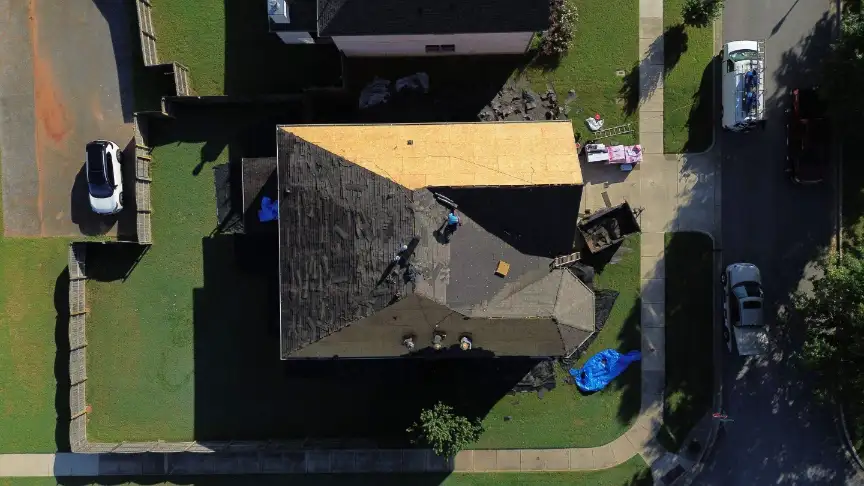
Often, yes—if the damage is localized and the surrounding roof is serviceable. A roofing contractor may remove the covering over the affected section, expose the full extent of damage, address the leak or moisture source, and replace unsuitable sheathing with code- and system-compliant panels secured to sound framing.
For a confined defect, a targeted roof repair assessment may be the sensible next step. If damage is extensive, widespread sheathing replacement is needed, or the existing roof is already near the end of its useful life, a more comprehensive roof replacement evaluation may be appropriate.
Neither a stain nor a small amount of swollen OSB automatically justifies a whole-roof replacement. Conversely, putting fresh shingles over rotten sheathing does not fix the underlying problem. The Asphalt Roofing Manufacturers Association advises that rotten, warped or otherwise damaged decking be replaced before new shingles are installed.
What Happens When a Roofer Finds Bad Decking During Tear-Off?
- Document the condition. Take clear photographs and identify where the suspect panels are located.
- Find the cause. Check flashing, underlayment details, penetrations, condensation sources and roof-edge drainage as applicable.
- Confirm the extent. Inspect adjacent panels and the support members before deciding where replacement begins and ends.
- Replace unsuitable material. Install appropriately rated decking, fasteners and panel support in accordance with applicable code, design, and manufacturer requirements.
- Rebuild the roofing layers. Once the deck is suitable, install underlayment, flashing and roofing materials to the specified system.
- Explain any added work. Provide photos, quantities and written approval for work that was not included in the original scope.
As an illustration—not a pricing estimate—a standard 4-by-8-foot sheet covers 32 square feet before cuts and waste. Actual replacement quantities depend on panel layout, support spacing and the boundaries of sound material. If a quote mentions additional decking charges, ask whether they are priced by sheet, square foot or a separately agreed unit. Our explanation of unexpected roof replacement charges covers that budgeting question in more detail.
Does the Type of Decking Change What Damage Looks Like?
Plywood
Look for peeling veneers, cracks, holes and areas weakened by repeated wetting. Surface discoloration alone does not prove plywood has delaminated.
OSB
Look for raised or swollen edges, unusual strand separation, roughness, crumbling and areas that no longer hold fasteners reliably. APA cautions against treating every example of OSB edge swelling as an automatic structural failure.
Older Board or Plank Decking
Older houses may have individual boards instead of modern sheet panels. Look for split, loose, rotted or warped boards and gaps that do not meet the new roofing system’s requirements. A contractor should check whether the existing deck is suitable for the proposed roofing material and fastening pattern.
The decking is also different from the rafters and trusses that support it. If the framing itself is compromised, the repair scope may require structural expertise rather than sheathing replacement alone.
When Should Huntsville Homeowners Schedule an Inspection?
Arrange a professional inspection promptly if you see active attic dripping, new stains after heavy rain, an expanding roof dip, visibly broken sheathing, or repeated leaks near the same penetration. If a roof looks unstable or has significant sagging, stay off it and keep others away from the affected area. Urgent leaking near electrical systems warrants additional safety precautions and appropriate professional help.
Ask the roofer to explain the difference between a stain, moisture exposure, decay, and an unsound panel. Request annotated photographs and a written scope identifying exactly what decking would be repaired or replaced. The best recommendation may be a small repair, a larger decking project, or no replacement after the moisture source is corrected and panel condition is verified.
Frequently Asked Questions About Roof Decking Damage
What does rotted roof plywood look like?
Rotted plywood may show dark discoloration, soft or crumbly wood, cracks, splitting, or weakened areas. Color alone is not enough to diagnose rot; an inspection must confirm its condition.
Can roof decking be damaged without a visible ceiling leak?
Yes. Moisture can affect the decking before water reaches finished ceilings, and some deterioration is concealed by underlayment and shingles. An attic check or professional inspection may reveal clues sooner.
Does black staining on roof decking mean it must be replaced?
No. A dark stain can reflect prior wetting or surface growth without proving that the wood has lost strength. An inspector should identify the source, current moisture and whether the panel remains sound.
Is swollen OSB roof decking always bad?
No. Some OSB swelling is a moisture-related appearance or serviceability issue rather than automatic structural failure. Severe distortion, deterioration or unreliable fastening requires professional assessment.
Can new shingles be installed over rotten roof decking?
No. Unsuitable, rotten or otherwise damaged decking should be corrected before new shingles are installed so the roofing system has an adequate substrate.
Does finding damaged decking mean the entire roof must be replaced?
Not necessarily. Isolated damage may be repairable by opening and rebuilding that roof section. Widespread damage, compromised framing or an aging roof may make a broader replacement more appropriate.
Bottom line: The appearance of roof decking damage is a useful warning, not a stand-alone verdict. Identify the moisture source, verify whether the wood is sound, and decide on the smallest safe repair that meets the roofing system’s requirements.

Jordan is the founder and owner of Huntsville Roofing Solutions, a locally owned, fully licensed and insured roofing company serving Huntsville and North Alabama. He and roofing supervisor Barry Minor have handled residential and commercial roofs across the region — replacements, repairs, storm damage, and insurance claims — earning a 4.9-star Google rating along the way.