
Hidden Roof Replacement Costs: Decking, Permits, Disposal & More
Hidden roof replacement costs usually come from work that cannot be fully confirmed until the old roof is removed: damaged decking, extra tear-off, permit fees, debris hauling, flashing repairs, ventilation corrections, and difficult access. In Huntsville, roof decking can be one of the biggest variables because soft or deteriorated sheathing may stay concealed beneath shingles and underlayment until tear-off begins. A good estimate should separate the known replacement price from conditional items and explain how every additional charge will be calculated. For baseline pricing by roof size and material, see our Roof Replacement Cost in Huntsville, AL 2026 Pricing Guide. The goal is not to make a roof replacement sound unpredictable. Most of the project should be priced before work starts. The important part is identifying the few conditions that genuinely cannot be confirmed in advance and agreeing on how they will be handled before the crew exposes them.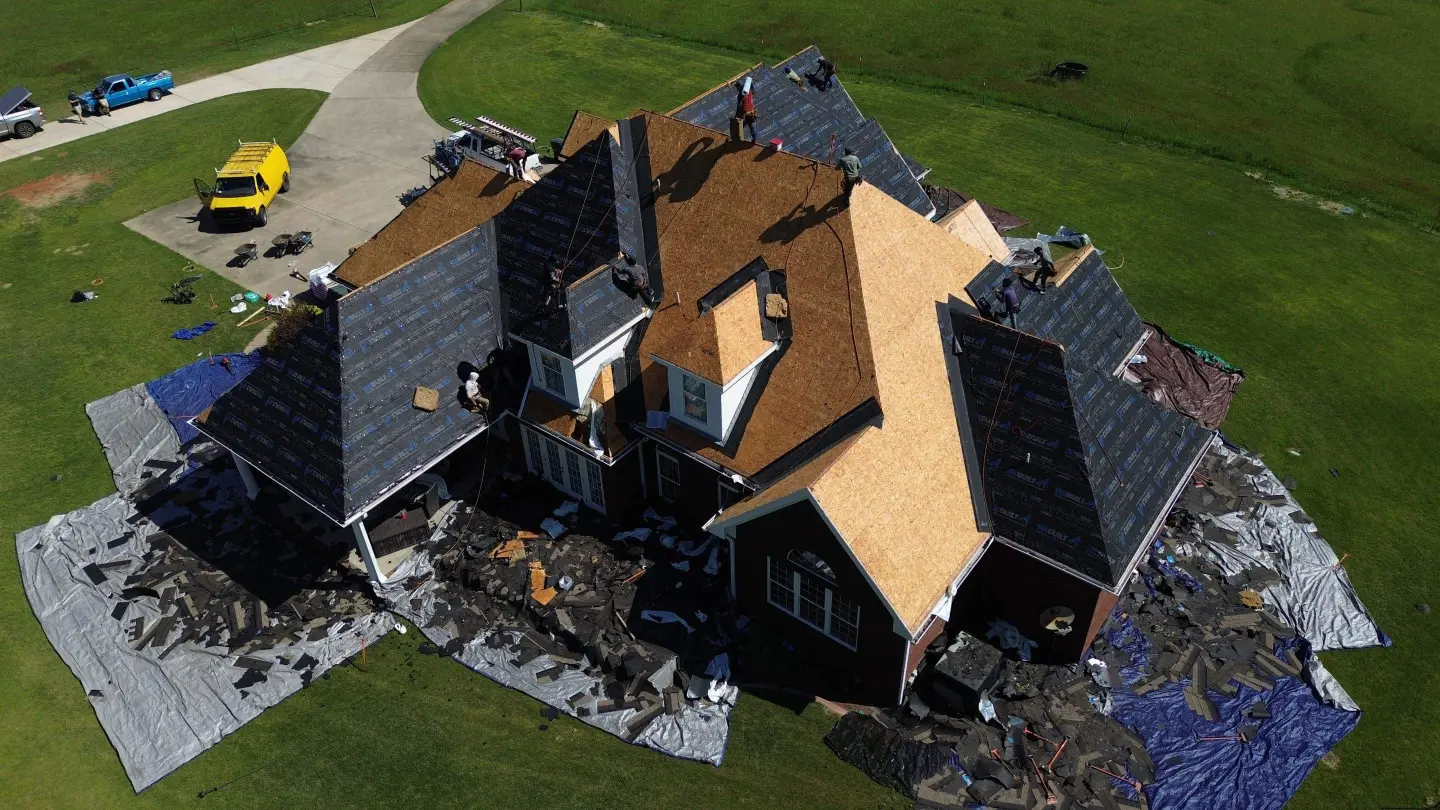
What Counts as Hidden Roof Replacement Costs?
A hidden cost should be a condition that was genuinely concealed or dependent on the final scope, not something a contractor simply forgot to include.| Potential Cost | Why It Appears | What a Good Quote Should Explain |
|---|---|---|
| Roof decking | Rotten, soft, delaminated, or damaged sheathing becomes visible after tear-off | Replacement rate per sheet or other agreed unit |
| Extra roof layers | More shingles or roofing material must be removed than expected | How many tear-off layers are included |
| Permits | The local jurisdiction requires a permit or additional review | Whether fees are included and who obtains the permit |
| Disposal | Old shingles, nails, underlayment, and damaged decking require hauling | Tear-off, hauling, and disposal inclusions |
| Flashing | Existing chimney, wall, or valley flashing cannot be reused | Whether standard replacement is included |
| Pipe boots and penetrations | Worn components become obvious once surrounding roofing is removed | Which accessories are included in the roofing system |
| Ventilation | Existing intake or exhaust ventilation is inadequate or damaged | Whether corrections are included or optional |
| Fascia or soffit repairs | Water damage is uncovered along roof edges | Unit pricing or the change-order process |
| Access and safety | Steep slopes or limited equipment access add labor | Any known access surcharge before work begins |
Decking Is Usually the Biggest Unknown
Roof decking, typically plywood or OSB, is the structural surface beneath the roofing system. Shingles, underlayment, and other materials are installed above it, which means the full condition of the deck cannot always be seen during an exterior inspection. A roof can look reasonably solid from the outside while sections underneath have been weakened by a long-term leak, condensation, repeated storm exposure, or an older flashing failure.
- Soft or rotten decking that will not securely hold roofing fasteners.
- Delaminated plywood with separating layers.
- Water-damaged sheathing around valleys, chimneys, vents, or roof edges.
- Previous patches that are no longer structurally sound.
- Sections with extensive fastener damage or deterioration.
How Hidden Roof Replacement Costs From Decking Should Be Handled
The uncertainty is unavoidable, but the pricing does not have to be. Before signing the contract, ask for the decking replacement rate to be written into the estimate. The agreement should also explain what qualifies as damaged decking, whether photographs will be provided, how much work can proceed without additional authorization, and how larger discoveries will be approved. For example, if several sheets are uncovered around an old valley leak, you should already know how those sheets will be priced. You should not be negotiating the rate while the roof is open to the weather. A contractor may also be able to identify warning signs beforehand by inspecting accessible attic areas, roof edges, and known leak locations. That can reduce uncertainty, although it cannot guarantee that every damaged section will be visible before tear-off.Roof Replacement Permit Costs in Huntsville
Permits are a relatively small part of many roof replacement budgets, but they are easy to overlook when homeowners compare quotes. For properties within the City of Huntsville, the City’s published building permit cost guidance states that building permits other than new single-family dwelling permits are generally calculated using the total contracting price multiplied by 0.0055. Using that published formula, a qualifying project with a contract value of $15,000 would produce an $82.50 permit calculation before any additional project-specific requirements. However, do not assume every Huntsville-area address follows exactly the same schedule. Properties outside Huntsville city limits may fall under Madison County or another municipality, while certain site or project conditions may involve different requirements. Your roofing quote should therefore answer three questions clearly: Is a permit required for this address and scope? Who is responsible for obtaining it? Is the permit fee already included in the contract price? A permit should be an identified project cost, not a surprise added after installation has started.Tear-Off and Disposal Can Change More Than Expected
Removing the existing roof creates a significant amount of material. Shingles, underlayment, nails, flashing, vents, and damaged decking all have to be collected, loaded, transported, and properly disposed of. The biggest variable is often the number of existing roofing layers. A quote may be based on removing one layer of asphalt shingles. If tear-off reveals another roofing layer underneath, the crew suddenly has more material to remove, more labor to perform, and more weight to haul away. That does not automatically make an additional charge unreasonable. What matters is whether the contract explained in advance how an extra layer would be handled. Disposal itself can include several components:- Ground and landscaping protection.
- Collection of removed roofing materials.
- Loading debris into trailers or containers.
- Transportation.
- Disposal charges.
- Magnetic nail cleanup.
- Final site cleanup.
Underlayment, Flashing and Roof Accessories
A roof replacement is a system, not just a new layer of shingles. Under the visible roofing are components that help control water entry and move moisture safely away from vulnerable areas. Depending on the roof and existing installation, the project may involve underlayment, drip edge, valley protection, chimney flashing, wall flashing, pipe boots, ridge ventilation, and other penetrations.
Ventilation Can Become Part of the Scope
Poor attic ventilation does not always require a major roofing change, but a roof replacement is an appropriate time to evaluate it. A new roofing system installed over an attic with inadequate intake or exhaust ventilation can leave existing heat and moisture problems unresolved. Damaged ridge vents, blocked soffit intake, or an incorrectly balanced ventilation system can therefore create additional scope. The key is diagnosis. A homeowner should not be sold ventilation upgrades simply because the roof is being replaced. The contractor should be able to explain what is wrong with the existing configuration and why a correction is appropriate. If ventilation work is recommended during the estimate, it belongs in the original scope rather than appearing as an unexplained final-invoice addition.Chimneys, Skylights and Other Roof Penetrations
Anything that interrupts the roof surface creates additional detailing. Chimneys, skylights, plumbing vents, exhaust vents, wall intersections, and satellite equipment can require additional flashing or labor compared with an uninterrupted roof slope.
Fascia, Soffit and Roof Edge Damage
Water does not always stop at the decking. Long-term gutter overflow, failed drip edge, deteriorated flashing, or a roof leak near the eave can damage fascia boards or soffit material. Those components are adjacent to the roof but may not automatically be included in a standard roof replacement. If visible damage already exists, it should normally be discussed before the project begins. If concealed deterioration is discovered during tear-off, the contractor should photograph the problem and explain whether the repair is necessary for the roofing installation or is an optional carpentry improvement. Clear separation between roofing scope and related carpentry prevents confusion when the final invoice arrives.Steep Roofs and Difficult Access
Some cost drivers are not truly hidden because they can be identified before the job. Roof pitch, multiple stories, tight property access, extensive landscaping, retaining walls, pools, solar equipment, and limited space for material delivery can all increase labor or equipment requirements. Those conditions should normally be reflected in the original estimate. If a contractor can see a steep three-story roof during the inspection, the associated safety and access requirements should not suddenly appear as a surprise charge after the agreement is signed. A hidden condition is different from a visible condition that was simply not priced correctly.How to Compare Roof Replacement Quotes Without Being Surprised Later
The cheapest roof estimate is not automatically the least expensive project. Imagine two contractors quoting the same home. One number is several hundred dollars lower, but it excludes permit fees, allows only one layer of tear-off, does not state a decking replacement rate, and uses vague wording around disposal. The other estimate costs slightly more but clearly defines those items. The second quote may give the homeowner far better cost certainty. When reviewing an estimate, ask one question that exposes most potential problems:What can change this price after tear-off begins, and exactly how will each change be calculated?The answer should be specific. A professional estimate should make it possible to distinguish the contracted roofing system from genuinely conditional work. If you are still deciding what type of replacement your home needs, review our roof replacement services before comparing proposals.
A Simple Huntsville Roof Replacement Example
Consider a homeowner who accepts a quote that includes one shingle tear-off layer, architectural shingles, standard underlayment, normal accessories, haul-off, and cleanup. Once tear-off begins, two unexpected conditions are uncovered: several damaged decking sheets around an old leak and a second roofing layer on one section of the home. A transparent project should handle those discoveries in a predictable sequence.- The contractor documents the concealed condition.
- The homeowner receives an explanation of why additional work is needed.
- The previously agreed unit price or change-order terms are applied.
- Any required authorization is obtained.
- The adjustment is documented on the final invoice.
Can You Avoid Every Roof Replacement Surprise?
No inspection can reveal everything beneath an existing roofing system, but homeowners can dramatically reduce uncertainty. Start by making the contractor define conditional costs before the project begins. Ask whether attic access allows the underside of the decking to be inspected. Discuss previous leaks and repairs. Find out whether the home has multiple roof layers. Confirm permit responsibility, tear-off assumptions, debris disposal, flashing, ventilation, and the procedure for approving extra work. Older roofs and homes with a history of leaks generally deserve more attention because there has been more time for moisture to affect concealed materials. If additional scope would make a project difficult to fund immediately, review available roof financing options before installation rather than waiting until an unexpected repair is uncovered.Budget for Scope, Not Vague Extras
The best way to manage hidden roof replacement costs is not to guess one arbitrary contingency percentage. It is to identify the specific conditions that could change your project and agree on their pricing before work begins. Decking should have a defined unit rate. Tear-off assumptions should be stated. Disposal should be included or clearly separated. Permits should be assigned to the responsible party. Flashing, ventilation, and accessories should be defined. Then, when the roof is opened, genuine surprises can be handled as documented scope changes instead of pricing disputes. For the broader cost of replacing a roof, including 2026 Huntsville pricing by roof size and material, use our complete Huntsville roof replacement cost guide. If you want an address-specific inspection and written estimate, contact Huntsville Roofing Solutions or call 256-617-6671.Frequently Asked Questions About Hidden Roof Replacement Costs
What Is the Most Common Unexpected Cost During a Roof Replacement?
Damaged decking is one of the most common surprises because much of the roof deck is concealed until shingles and underlayment are removed. A written per-sheet replacement rate makes this easier to manage.Can a Roofer Know Exactly How Much Decking Will Need Replacement Beforehand?
Usually not. Attic inspections, roof-edge inspections, and known leak locations can reveal warning signs, but some damage remains hidden until tear-off exposes the entire deck.Are Roofing Permits Required in Huntsville?
Permit requirements depend on the property’s jurisdiction and project scope. For a Huntsville address, the contractor should verify the applicable City requirements before work begins and state whether permit costs are included in the proposal.Should Roof Disposal Be Included in the Quote?
It should be clearly addressed. The estimate should state whether tear-off, hauling, disposal, ground protection, nail cleanup, and final site cleanup are included.Why Can Two Roof Replacement Quotes Differ So Much?
The contractors may be pricing different scopes. Compare the number of tear-off layers, decking terms, underlayment, flashing, ventilation, permits, disposal, accessories, warranties, and change-order terms rather than comparing only the final number.How Much Should I Budget for Hidden Roof Replacement Costs?
There is no single percentage that fits every home. An older roof with previous leaks or multiple roofing layers has a different risk profile from a newer, straightforward roof. A better approach is to establish unit rates and conditional charges before the project starts.
About the Author
Jordan Woolf
Jordan is the founder and owner of Huntsville Roofing Solutions, a locally owned, fully licensed and insured roofing company serving Huntsville and North Alabama. He and roofing supervisor Barry Minor have handled residential and commercial roofs across the region — replacements, repairs, storm damage, and insurance claims — earning a 4.9-star Google rating along the way.