
A sagging roof should be taken seriously because it can mean the roof deck or the support system beneath it has weakened. Long-term water intrusion, deteriorated decking, damaged or inadequate rafters, poor support, ventilation problems, or installation defects can all contribute. A small localized sag near one roof edge may still be repairable, but widespread dips, soft decking, or sagging across multiple areas can indicate a structural problem that requires more extensive work and possibly roof replacement. Do not walk on a roof that appears soft or unstable. Have the cause evaluated promptly rather than treating the sag as a cosmetic problem.
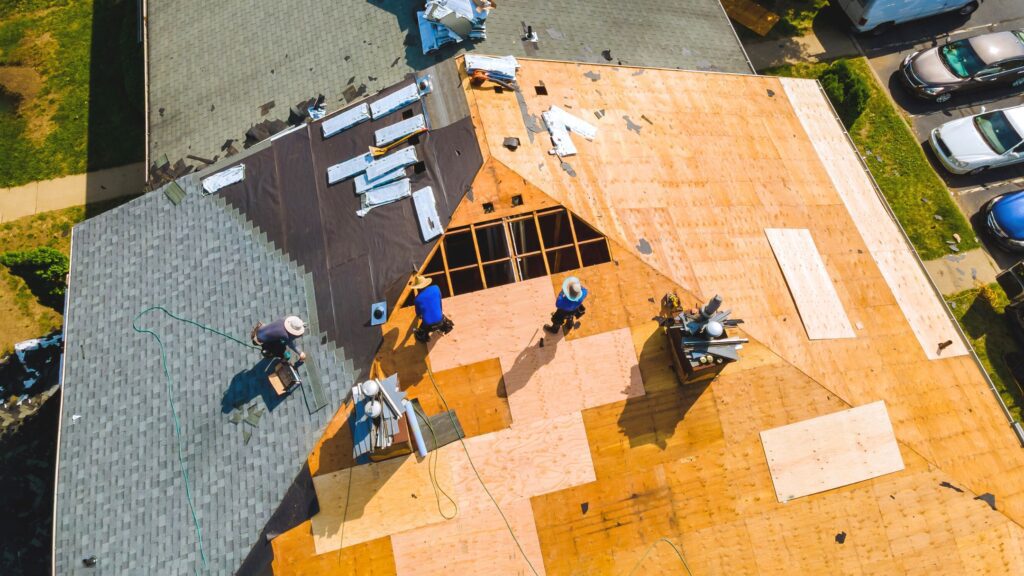
A dip in a roofline can be alarming because homeowners can often see it from the driveway without knowing what is causing it. The shingles may still be present. There may not be an obvious hole. The ceiling inside may even be dry.
But the roof covering is only the outer layer of the system. The decking and structural supports underneath are what keep that roof plane straight and able to carry its load.
That is why the first question is not simply, “Can somebody straighten this out?” It is, “Why did this part of the roof lose its shape?”
How Serious Is a Sagging Roof?
The seriousness depends on where the sag is located, how much of the roof is affected, and what the inspection finds underneath it.
A minor sag confined to one section of the roof edge can sometimes be a localized problem. If the surrounding decking and support structure remain sound and the source of the problem can be isolated, a targeted roof repair may be appropriate.
Widespread sagging is different. So is a roof where several areas of decking are soft or where the support system itself has deteriorated.
Those conditions are no longer just surface roofing defects. They involve the structure that supports the roof covering. More extensive decking or structural work may be required, and the roofing system above the damaged area may have to be removed to make those repairs correctly.
That is also why a visibly sagging roof should not be diagnosed by walking across it. A soft or deteriorated deck may not safely support weight.
What Does a Sagging Roof Actually Look Like?
Homeowners often first notice sagging while looking at the house from the ground. Instead of a roof plane or edge appearing straight, one section may dip, bow or sit lower than the surrounding roofline.
The condition may be confined to one edge, or it may appear farther up the slope. More significant deterioration may affect a broader area rather than one small point.
From inside the attic, related evidence can include stained decking, damp insulation, moisture, musty odors or daylight around a damaged area. Those symptoms do not prove the cause of the sag on their own, but they give the inspector more information about whether water has been entering the roof assembly.
If you are seeing multiple kinds of roof damage rather than one specific sag, our guide to common signs of roof damage covers the broader symptom list.
What Causes a Roof to Sag?
There is no single cause. The visible dip is the result of some part of the roof assembly no longer remaining as straight or rigid as intended.
1. Long-Term Water Intrusion
Persistent moisture is one of the most important causes to investigate.
When water gets through the roof covering and repeatedly reaches the wood beneath it, the decking can deteriorate. What begins as a leak around shingles, flashing or another roof detail can eventually become a problem with the material supporting the shingles.
This is why a sagging area should not be treated by simply addressing how it looks from the outside. If water caused the problem, the water-entry point and the damaged material both have to be addressed.
2. Soft or Deteriorated Roof Decking
The roof deck, also called sheathing, forms the surface beneath the roofing materials. When that deck loses strength, the roof surface above it can begin to dip.
The full condition of decking is not always visible from outside the home. Some deterioration becomes much easier to identify only when roofing materials are removed or when the underside of the deck can be inspected from the attic.
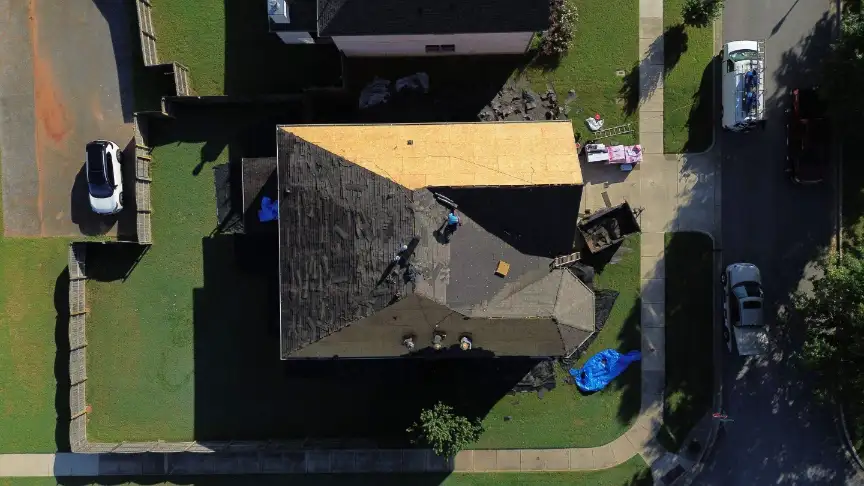
If deterioration is confined to a manageable area and the rest of the roof remains sound, damaged decking can sometimes be incorporated into a localized repair. If the deck is soft or deteriorated across multiple areas, the scope changes substantially.
3. Problems With Rafters or Other Roof Supports
Not every sag begins with the decking itself.
The site’s existing roofing guidance identifies undersized or improperly spaced rafters and inadequate support as possible contributors to an uneven or sagging roof deck. If the framing underneath the deck is the problem, simply replacing shingles will not correct the underlying condition.
An inspection therefore has to determine whether the visible sag is limited to the sheathing or involves the support structure beneath it.
4. Improper Roof Installation
A roof can also develop an uneven deck when the supporting materials were not installed or supported correctly.
This is especially important when a sag appears on a roof that is not particularly old. Age alone does not explain every uneven roofline.
If spacing, support or another part of the roof assembly was wrong from the beginning, the correct repair needs to address that installation problem rather than just covering the visible symptom with new roofing material.
5. Ventilation and Moisture Problems
Poor attic ventilation is another issue worth evaluating when the roof deck is deteriorating.
Your roof and attic function as a system. Moisture buildup inside the attic can affect wood materials from underneath, while exterior leaks attack them from above. That is why a professional roof inspection should not stop at the shingles when there is visible deformation.
The attic, ventilation, decking and exterior roofing details all provide part of the answer.
Can a Small Sag Be Repaired?
Yes. A sag does not automatically mean the entire roof needs to be replaced.
Your existing repair guidance already draws an important distinction between a minor sag at the roof edge and widespread sagging or soft decking.
A localized repair becomes more realistic when the sag is confined to one area, the surrounding deck is sound, the underlying cause can be identified, and the rest of the roofing system still has useful service life.
That can mean correcting the failed roofing detail that allowed moisture in, removing damaged material and rebuilding the affected area before restoring the roof covering.
For other symptoms that tend to remain repair-stage problems when caught early, see the site’s early roof repair signs for Huntsville homeowners.
When Does Sagging Point Toward Roof Replacement?
Replacement deserves closer consideration when the problem is no longer isolated.
| Condition | What It Suggests |
|---|---|
| Minor sag confined to one roof-edge area | May remain a localized repair if nearby decking and support are sound |
| One damaged decking area with a clear moisture source | May be repairable after the cause and damaged materials are addressed |
| Several soft or deteriorated decking areas | Broader structural and replacement evaluation is warranted |
| Sagging across a substantial roof plane | The problem is unlikely to be only a small surface defect |
| Problems involving rafters or structural support | Underlying structural work may be required before roofing can be restored |
| Widespread deterioration on an aging roof | A complete replacement may make more sense than repeated localized work |
Those conditions still do not mean a homeowner should make the replacement decision from the driveway. The choice depends on the age of the roof, how much of the structure is affected, the condition of the remaining system and the amount of work necessary to restore it.
That broader decision has its own page. Use our roof repair-or-replacement decision guide when the inspection has established the scope and you are deciding which path makes sense.
Does a Sagging Roof Mean It Could Collapse?
A sagging roof can indicate that part of the deck or support system has lost strength, which is why the condition should not be ignored.
The more useful response, however, is not to predict from the ground whether a particular roof will fail. The visible sag does not tell you exactly which component is damaged or how much strength remains.
Severe or widespread sagging requires prompt professional assessment because structural deterioration can worsen when it is left unresolved.
Until the condition is evaluated, avoid climbing onto the roof or testing a suspicious area by putting your weight on it.
What Can You Safely Check Yourself?
You do not need to climb onto the roof to gather useful information.
From the ground, look at the roof from more than one side of the house. Note whether the dip appears confined to one edge or continues across a larger roof plane. Photos taken from the same position can also help document whether the shape is changing over time.
If the attic is safely accessible, look for water staining on the underside of the decking, damp or matted insulation, musty odors and visible daylight around the area where the exterior roof appears uneven.
Do not walk across attic insulation or between framing members, and do not climb onto a roof that appears damaged or unstable.
Why Sagging Matters in Huntsville and North Alabama
Huntsville and the surrounding North Alabama area regularly deal with strong rain, wind, summer heat, humidity and severe storms.
Those conditions do not mean every sagging roof was caused by weather, but they can expose weak roofing details and allow a small moisture-entry problem to become more consequential when it goes unnoticed.
A leak that repeatedly wets decking is more important than the ceiling stain it eventually creates. By the time the roofline itself begins changing shape, the question has moved from simply stopping water to determining what material underneath has been affected.
What Should a Roof Inspection Check?
An inspection for a sagging roof should determine whether the visible deformation involves only one localized part of the deck or a broader portion of the roof structure.
The contractor should look for moisture entry, the condition of accessible decking, flashing and roof penetrations near the affected area, attic moisture and ventilation, and any evidence that the underlying supports are contributing to the sag.
The useful outcome is not merely, “Yes, the roof is sagging.” You already know that.
The inspection should explain what is sagging, why it happened, how much area is affected, and what has to be removed or rebuilt to correct it.
Repair the Cause, Not Just the Dip
A sagging roofline is not a cosmetic roofing problem to cover up.
If moisture weakened the deck, the leak source must be fixed and the damaged material addressed. If the structural supports are involved, those supports have to be evaluated. If the damage is widespread, replacing only a small visible section may not solve the larger problem.
At the same time, homeowners should not assume that every small uneven section requires a completely new roof. Localized edge damage can still fall within repair territory when the surrounding structure is sound.
If the inspection shows the problem is confined to a repairable area, start with the appropriate repair scope. If the deck and roofing system are deteriorated across a larger area, review the options for residential roof replacement in Huntsville.
Frequently Asked Questions About Sagging Roofs
Is a sagging roof serious?
Yes. A sagging roof can indicate weakened decking or problems with the roof support system. A minor localized sag may still be repairable, but widespread sagging or multiple soft decking areas deserves prompt structural and roofing evaluation.
Can a sagging roof be repaired without replacing the whole roof?
Sometimes. If the problem is confined to one area, the surrounding roof deck and supports remain sound, and the cause can be corrected, a localized repair may be possible. Widespread deterioration or structural-support problems can require a much larger scope and may make replacement more appropriate.
What causes a roof to sag?
Possible causes include long-term water intrusion, deteriorated or soft roof decking, problems with rafters or other supports, inadequate structural support, poor ventilation and improper installation. An inspection is needed to determine which condition is affecting a particular roof.
Does a small dip at the edge of the roof mean I need a new roof?
Not automatically. A minor sag at one roof edge can sometimes remain a localized repair when the surrounding decking and support system are sound. The concern increases when sagging is widespread, the deck is soft in multiple locations or the underlying structure is affected.
Should I walk on a sagging roof to inspect it?
No. A sagging or soft area may not safely support weight. Most useful homeowner observations can be made from the ground or, where safely accessible, from inside the attic. Leave direct roof and structural inspection to a professional.
The Bottom Line
A sagging roof deserves an inspection, but it does not automatically mean the entire roof needs replacement. A small localized sag can sometimes be repaired. Widespread sagging, soft decking or problems with the underlying support system are more serious and can require structural work plus partial or full roof replacement.
The deciding question is not how dramatic the dip looks from the driveway. It is what has weakened underneath it.

Jordan is the founder and owner of Huntsville Roofing Solutions, a locally owned, fully licensed and insured roofing company serving Huntsville and North Alabama. He and roofing supervisor Barry Minor have handled residential and commercial roofs across the region — replacements, repairs, storm damage, and insurance claims — earning a 4.9-star Google rating along the way.