
Yes. You can often repair just part of a roof when the damage is localized and the surrounding roofing still has useful service life. A few missing or creased shingles, one failed flashing detail, a cracked pipe boot, a limited leak, or a small area of damaged decking can often be repaired without replacing the entire roof. Patching makes less sense when damage appears across multiple slopes, the roof deck is soft in several areas, leaks keep returning, or the surrounding shingles are too deteriorated to support a durable repair. The right scope comes from finding the cause, checking the materials around it, and rebuilding the damaged section—not simply covering the symptom with sealant.
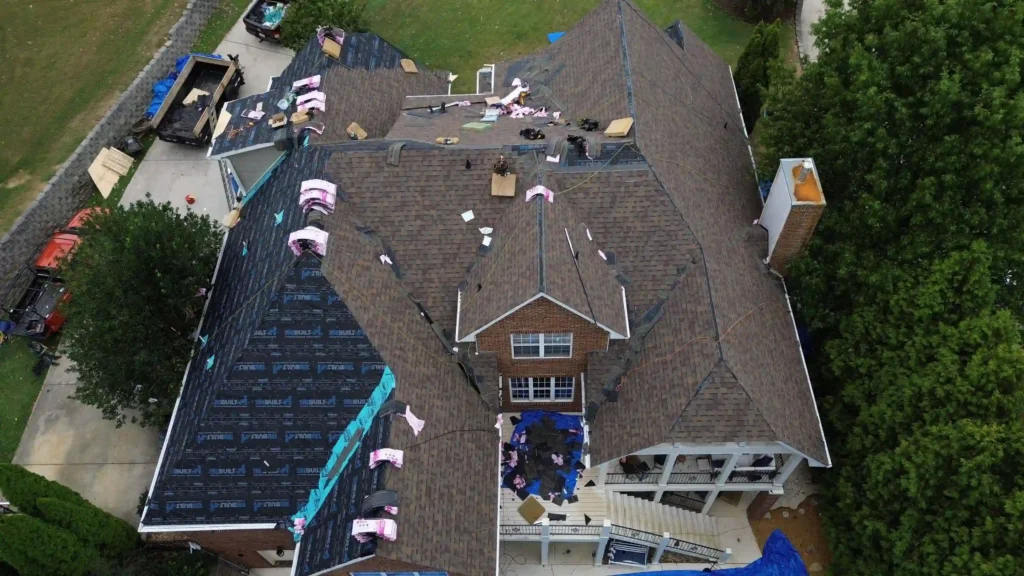
The important word is localized. A roof is a connected system, but that does not mean every defect requires work across the entire surface. Wind may damage several shingles while the rest of the slope remains serviceable. A pipe boot can crack while the field shingles around it remain intact. Flashing can fail at one wall or penetration. A focused leak can damage a small section of decking without affecting the full roof.
Those are the situations where a targeted repair may be the sensible scope. For homeowners who already know they need professional service rather than another diagnostic article, the site’s roof repair service page is the correct next step.
What Does “Repairing Part of a Roof” Actually Mean?
A partial roof repair can mean different things depending on what failed. It is not limited to gluing down one loose shingle or spreading sealant over a suspected leak. A real repair may require removing enough roofing material to expose the failed area, replacing damaged components underneath, correcting the source of water entry, and then rebuilding the section so it ties back into the surrounding roof.
Common localized repair scopes can include:
- Replacing a small group of damaged shingles after wind, impact, fastening failure or a broken seal damages only one area.
- Repairing or replacing flashing at a wall, chimney, valley or other transition when the surrounding roofing remains usable.
- Replacing a damaged pipe boot or vent detail and repairing the shingles immediately around the penetration.
- Repairing a roof edge where drip edge, flashing, fascia or a limited section of decking has been affected.
- Replacing a small section of wet or deteriorated decking after the source of a contained leak has been identified.
This is different from asking whether an aging roof should be repaired or replaced as a whole. That broader decision already belongs to the site’s roof repair or replacement decision guide. This article stays focused on one narrower question: when can a contained section be repaired successfully?
Can a Roofer Replace Only a Few Shingles?
Often, yes. A few lifted, creased, cracked or missing shingles can remain a repair-stage problem when the damage is concentrated and the surrounding roof is still in good condition. The roofer still needs to look beyond the missing tabs themselves. The underlayment beneath the shingles, the fasteners, nearby shingles and the roof deck all influence whether the repair can be completed cleanly.
A small shingle repair is more promising when the defect has a clear boundary. For example, wind may lift a handful of shingles in one area while the neighboring material remains stable. A branch impact may crack a limited section without creating widespread damage. In those cases, the goal is to remove the affected material, check what is underneath and rebuild the area before water spreads farther into the roof assembly.
If you are still trying to determine whether what you see is actually a repair-stage problem, the existing guide to signs a Huntsville roof needs repair covers lifted shingles, small stains, flashing problems, damaged penetrations, localized decking concerns and other early warning signs.
Which Roof Problems Are Most Likely to Stay Localized?
Failed Flashing at One Transition
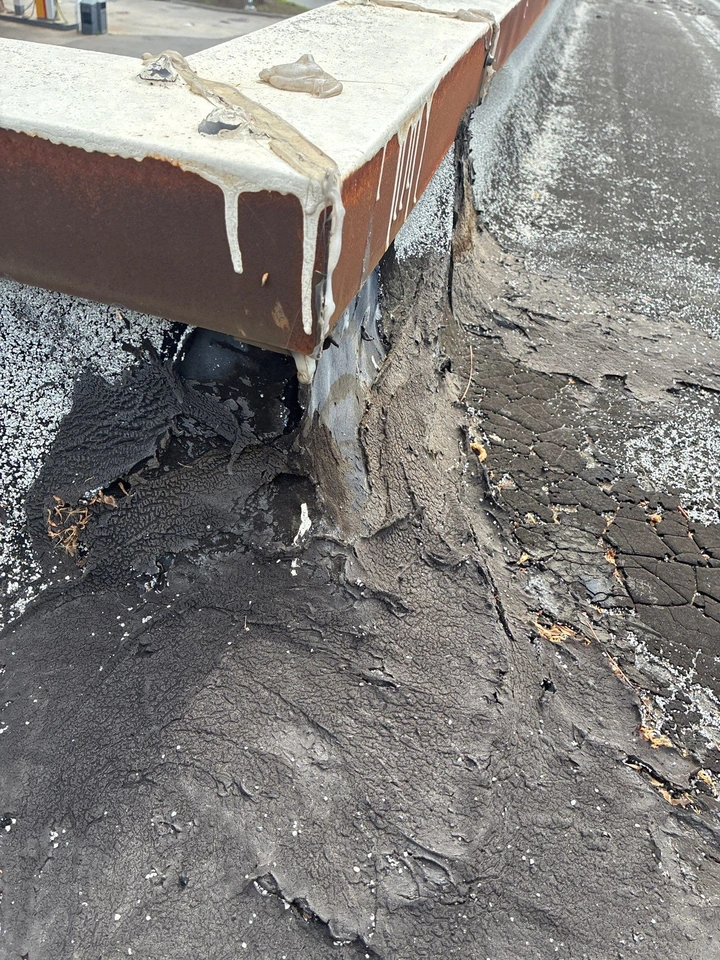
Flashing protects roof transitions and penetrations where water needs to be directed away from vulnerable joints. If one flashing detail loosens, cracks or stops shedding water correctly, the leak can remain concentrated around that transition while the rest of the roof continues to perform normally.
When the surrounding roof is still serviceable, correcting the flashing and replacing nearby materials affected by moisture can be much more appropriate than disturbing every shingle on the roof.
Pipe Boots, Vents and Small Penetrations
A small component can create a surprisingly persistent leak. Pipe boots can crack, sealant can separate, fasteners can loosen and vent details can fail while nearby shingles remain sound. The repair should correct the actual failed component and any roofing immediately around it rather than simply coating the surface and hoping the leak stops.
If the leak appears only during unusually hard or wind-driven rain, the weather pattern itself can help narrow the inspection. The site’s article on why a roof leaks only in heavy rain covers that specific diagnostic question without turning this post into a general leak guide.
One Small Area of Damaged Decking
Localized decking damage can sometimes be repaired section by section. If a focused leak has softened one limited area, the repair may involve removing the roofing above it, replacing the damaged deck section, correcting the original leak and rebuilding the roofing over that area.
That changes when soft or sagging decking appears in several locations. Multiple weak areas suggest that the problem is no longer confined to one repair zone. Homeowners should also avoid walking on any area that appears soft, dipped or unstable.
Proper Roof Repair vs. a Surface Patch
“Patching” can mean two very different things. One version is a properly scoped localized repair. The other is a temporary surface treatment that hides the symptom without fixing the cause.
| Localized Repair | Surface-Only Patch |
|---|---|
| Identifies the actual failed component or water-entry point | Covers the visible area without confirming the source |
| Checks surrounding shingles, underlayment and decking | May ignore damage below the roof surface |
| Removes and replaces damaged materials as needed | Often relies mainly on added sealant or coating |
| Rebuilds the section so it integrates with the existing roof | May only postpone the same leak or failure |
A repair should solve a specific cause. If water is entering around flashing, the flashing detail needs to be corrected. If a pipe boot has failed, that component needs attention. If a small section of deck has deteriorated, the repair should deal with the damaged wood as well as the roofing above it. Covering the symptom without understanding the water path is not the same as repairing the roof system.
When Does Repairing Only One Section Stop Making Sense?
A partial repair becomes less attractive when the damage is no longer truly partial. Widespread shingle deterioration, repeated leaks in different locations, soft decking across multiple areas, sagging on more than one section, or repeated repair attempts that keep failing are all reasons to broaden the evaluation.
The condition of the surrounding material also matters. Even a small damaged spot can be difficult to repair durably if nearby shingles are already brittle, heavily deteriorated or unable to support the work. That does not automatically mean replacement is required, but it does mean the inspection has to consider whether the repaired area can integrate with the existing roof.
At that point, this article should hand the decision off rather than duplicate another page. Use the repair-vs-replacement guide for the full framework, or the article on replacement-level roof warning signs if the problem looks widespread.
What May Be Replaced During a Partial Roof Repair?
The visible shingle is only one layer of the repair. Depending on what the inspection finds, a contained repair may involve several connected roof components:
- Asphalt shingles: the exposed weather surface that may be lifted, cracked, creased or missing.
- Underlayment: the protective layer beneath the shingles that may be exposed or damaged when shingles fail.
- Roof deck or sheathing: the wood substrate that supports the roofing and may need localized replacement if moisture has weakened it.
- Flashing: metal or other transition material used around walls, valleys, chimneys and penetrations.
- Pipe boots and vents: smaller components that can fail even when the surrounding roofing is still sound.
- Drip edge, fascia and roof-edge materials: components that can be affected when water reaches the eaves or drainage details fail.
This is why a “small leak” does not always equal a one-shingle job. The visible symptom may be small while the repair needs to reach one or two layers deeper. The advantage of catching the problem early is that the affected area may still remain contained.
Why Localized Roof Damage Is Common After North Alabama Weather
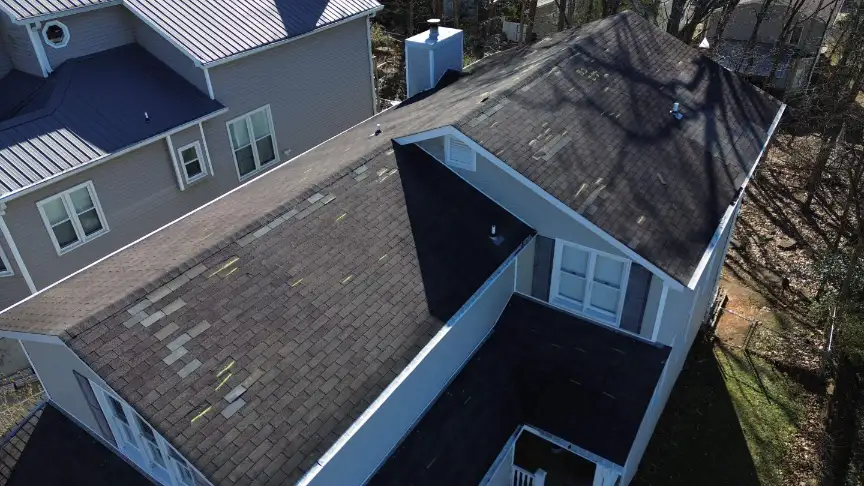
Huntsville and the surrounding North Alabama area experience strong wind, heavy rain, heat, humidity and severe storms. Those conditions do not always damage an entire roof evenly. Wind can lift shingles on one exposed area. Wind-driven rain can find one weak flashing joint. A branch can strike one section. Hail can affect a roof in a pattern that requires careful inspection rather than an assumption that every visible mark has the same cause.
If you suspect impact from hail, use the site’s hail damage identification guide for that specific question. It is designed to separate suspected hail effects from ordinary aging, abrasion, heat and other roof conditions.
What Should a Roofer Check Before Recommending a Partial Repair?
A useful inspection should do more than confirm that one shingle is missing. Before recommending a localized repair, the roofer should identify the cause of the damage, define how far the affected area extends, check the condition of the roof immediately around it, and look for signs that moisture has reached the underlayment or deck.
The inspection should also answer a simple question: Will this repair solve a contained defect, or is it only one visible part of a wider roof problem?
If the answer is “contained defect,” a partial repair can preserve the rest of a roof that still has service life. If the answer is “wider problem,” expanding the scope may prevent repeated service calls and additional interior damage.
Pricing is a separate search intent. If you already know the repair is localized and want to understand what affects the estimate, use the site’s roof repair cost guide rather than turning this article into a pricing page.
When Patching Makes Sense: A Simple Checklist
- The damaged area is clearly limited to one section.
- The surrounding shingles still appear serviceable.
- The roof deck around the repair is sound, or only a small deck section needs replacement.
- The roofer can identify a specific cause such as damaged shingles, flashing, a pipe boot, a vent detail or a focused impact.
- The repair can remove damaged material and rebuild the area rather than simply cover the symptom.
- Leaks are not appearing repeatedly across unrelated areas of the roof.
When those conditions are present, repairing part of the roof can be a practical way to stop a localized problem without replacing roofing that is still performing. The objective is not to make the repair as small as possible. It is to make the repair large enough to correct the entire damaged area and small enough to preserve the sound portion of the roof.
Need a Localized Roof Repair in Huntsville?
If you have missing shingles, a focused leak, damaged flashing, a failed pipe boot or another problem that appears limited to one area, start with an inspection rather than assuming the whole roof needs replacement. Huntsville Roofing Solutions can evaluate the damaged section, the materials around it and the roof deck beneath it, then explain whether a targeted repair is appropriate.
Learn more about roof repair in Huntsville, AL and request an inspection.
Frequently Asked Questions About Partial Roof Repair
Can you repair only a few shingles?
Yes. A small group of missing, lifted, creased or cracked shingles can often be repaired when the surrounding shingles and roof deck are still serviceable. The roofer should still check beneath the damaged area for underlayment or decking problems before treating it as a simple surface repair.
Can a small section of damaged roof decking be replaced?
Sometimes. When deterioration is limited to one area, the roofing above it can be removed, the damaged deck section can be replaced, the leak source can be corrected and the roofing can be rebuilt. Widespread soft or sagging decking needs a broader evaluation.
Is putting sealant over a roof leak a proper patch?
Not by itself. A durable repair should identify the actual water-entry point. Sealant may be part of certain repair details, but covering a stain, crack or suspected opening without diagnosing the cause can leave the underlying failure active.
When does a partial roof repair stop making sense?
A broader evaluation makes more sense when damage is widespread, multiple roof areas are failing, decking is deteriorated in several places, leaks keep returning, or the surrounding roofing is too deteriorated to support a durable repair.

Jordan is the founder and owner of Huntsville Roofing Solutions, a locally owned, fully licensed and insured roofing company serving Huntsville and North Alabama. He and roofing supervisor Barry Minor have handled residential and commercial roofs across the region — replacements, repairs, storm damage, and insurance claims — earning a 4.9-star Google rating along the way.