
What Counts as Ponding Water on a Flat Roof?
Most roofs called “flat” are actually low-slope roofs designed to move water toward internal drains, through-wall scuppers or perimeter gutters. Brief surface water during rainfall is not by itself a roof defect. Ponding becomes a concern when water repeatedly gathers in the same depression, remains long after surrounding areas have dried or grows deeper because the roof surface deflects.
What about the 48-hour rule? Some building-code discussions use drainage within 48 hours of precipitation when describing “positive roof drainage.” This is useful for screening, but it is not a universal membrane warranty standard or proof that a roof is safe for 47 hours and defective at 49. Rain duration, evaporation, drain capacity, slope and roof-system requirements all matter. The IIBEC discussion of roof drainage explains why simply meeting a time-based definition is not the same as achieving good drainage.
Why Does Water Pool on a Flat Roof?
1. Clogged or restricted roof drains
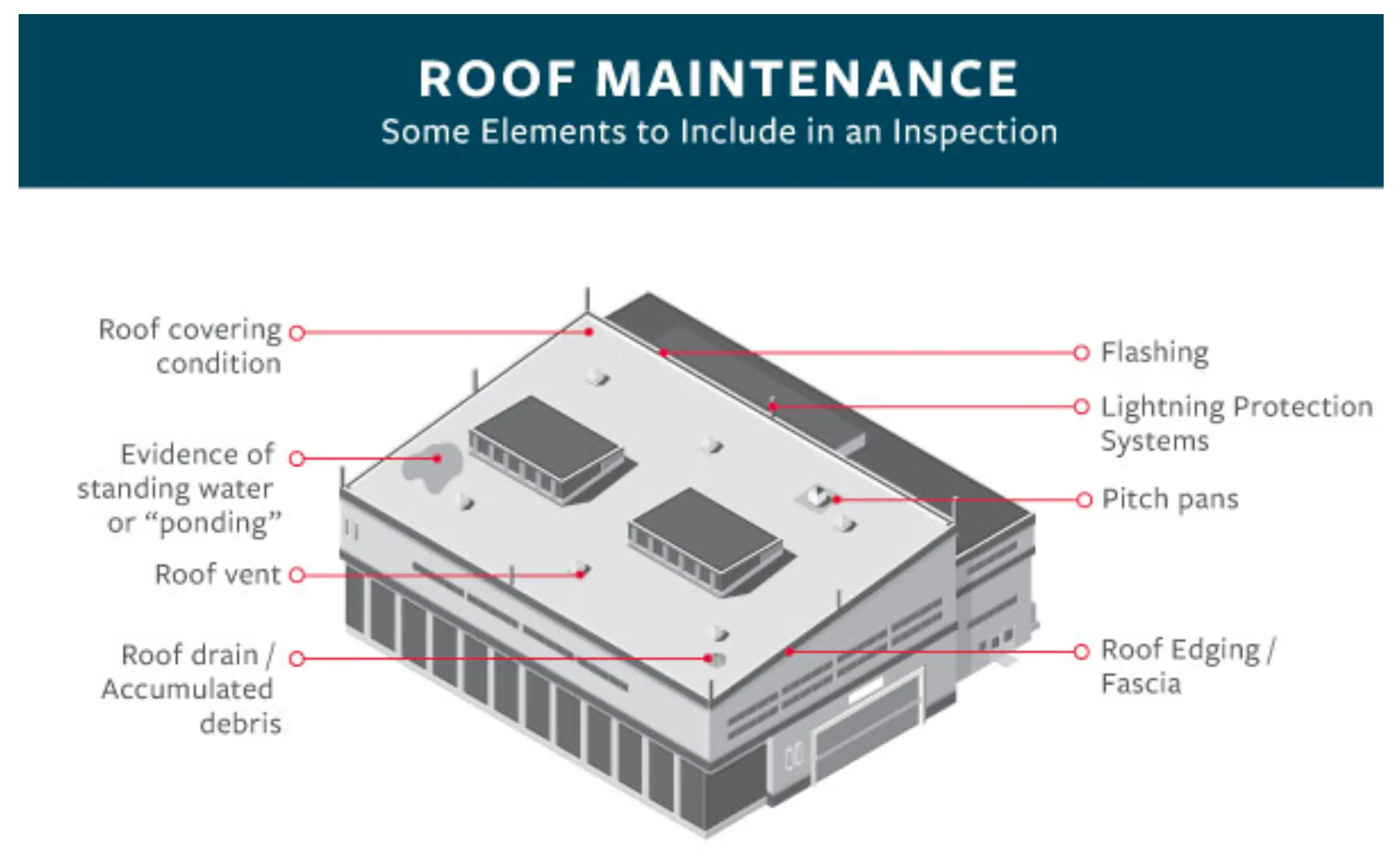
Leaves, sediment, packaging and other debris can obstruct strainers and slow water moving into internal drains. A clear-looking strainer does not prove the pipe or outlet beneath it is open. If water gathers around an otherwise correctly located drain, a qualified professional should check both the inlet and downstream path.
2. Scuppers or gutters that cannot discharge water effectively
Scuppers are openings through parapet walls that allow rainwater to exit the roof. A blocked scupper, poorly positioned opening or backed-up perimeter gutter can leave standing water along roof edges. Overflow drainage must also remain functional where the building’s design requires it.
3. Insufficient slope or a low spot in the roof surface
The roof may lack a continuous downward path to its outlets. Even when the overall roof slopes, a small depression near an equipment curb, wall or drain can trap water. For many new low-slope membrane roof designs, 1/4 inch of fall per horizontal foot (about a 2% slope) is a commonly referenced minimum; the correct design for an existing roof depends on its construction, applicable code, system specifications and loading.
4. Roof deck deflection or structural settlement
Framing and roof decking can flex under permanent building loads, rooftop equipment and retained rainwater. The lower area then holds additional water, which can increase loading and deflection. This feedback effect is sometimes called ponding instability. It is a structural issue, not something to correct by spreading sealant. IIBEC’s engineering review of low-slope drainage explains the interaction among roof slope, drainage and deck stiffness.
5. Compressed, deteriorated or poorly installed roof insulation
Roof insulation may create the finished drainage slope, particularly where tapered insulation is used. Crushed boards, uneven installation or moisture-damaged components can contribute to a localized depression. The membrane itself may still look intact, so a surface inspection alone cannot establish whether the insulation below it is dry and stable.
6. Rooftop equipment that interrupts the intended water path
HVAC curbs, supports, roof penetrations and additions can divert runoff or create sheltered pockets. Small sloped features called crickets or saddles are sometimes installed to guide water around obstructions and toward a suitable outlet.
How Can You Tell Which Problem Is Causing the Ponding?
Start with observations rather than a DIY roof repair. Record where water appears, how deep it seems, whether it repeats after different rain events and whether nearby ceiling stains or leaks are developing. Take photographs from a safe, authorized vantage point; do not climb onto a wet commercial roof simply to investigate it.
| What you observe | Possible cause | Appropriate next check |
|---|---|---|
| Water collects around a drain with debris nearby | Blocked strainer or restricted drain line | Inspect inlet, piping and flow path |
| A puddle returns in the middle of the roof | Insulation depression or deck deflection | Survey elevations and assess deck/insulation condition |
| Water stays behind an HVAC curb | Missing or ineffective cricket | Review the local slope and equipment detailing |
| Water accumulates along a parapet | Blocked scupper, gutter or poor edge drainage | Check outlet opening, elevation and discharge |
| The same wet area is associated with interior staining | Possible membrane, flashing or concealed moisture issue | Investigate water entry and affected roof assembly |
These patterns are clues, not definitive diagnoses. A leak can travel beneath roofing materials before becoming visible indoors, and more than one problem may be present.
How Do You Fix Ponding Water on a Flat Roof?
The lasting fix must restore the drainage path or correct the depressed area. Applying a patch to a puddle without addressing why the water collects can leave the original problem unresolved. The best repair depends on the roof system, its condition and whether the issue is hydraulic, waterproofing-related or structural.
Fix 1: Clear and repair the drainage system
When an obstruction is responsible, the work may include removing debris, clearing strainers, checking scuppers or gutters and inspecting drain piping. A trained contractor may also need to repair an outlet connection, drain flashing or damaged assembly. Do not remove safety grates or open concealed drainage components without appropriate safeguards and authorization.
Fix 2: Add slope using tapered insulation or properly designed crickets
If the water is trapped by roof geometry, a roofer may use tapered insulation or localized crickets during a suitable repair or reroofing project. These features redirect water toward drains or scuppers. Their layout has to account for roof elevations, insulation thickness, door thresholds, parapets and flashing heights. GAF’s roof-water management guidance describes how tapered insulation can establish a positive drainage slope.
Fix 3: Repair damaged membrane details after drainage is addressed
Standing water can expose weak seams, punctures, penetrations or flashing details. If the surrounding roof remains sound, localized repairs may be reasonable, using materials and methods compatible with the existing TPO, EPDM, PVC, modified-bitumen or other roof system. A repaired seam will not by itself eliminate a low spot.
Fix 4: Evaluate roof deck deflection and wet insulation
Where depressions are getting deeper, the roof looks visibly sagged or water volume is substantial, the building owner should seek an appropriately qualified roofing and structural assessment. Repairs may need to address deck capacity, framing stiffness, drainage layout or saturated insulation. A roofer cannot safely resolve a structural problem by adding roof material and weight without engineering review.
Fix 5: Review primary and emergency overflow drainage
On roofs with parapet walls, primary drains are not always the entire drainage strategy. Secondary drains or overflow scuppers, when required by the building design or applicable code, provide another discharge route if primary drainage fails. Their location, capacity and discharge arrangement need to be assessed by qualified professionals; never cut a new opening through a parapet or membrane as an improvised fix. The 2026 IIBEC technical paper on roof drainage design covers the distinct roles of primary and secondary systems.
How Much Weight Does Standing Water Add to a Roof?
Water adds approximately 5.2 pounds per square foot for each inch of water depth. As an illustrative calculation, a uniform 1-inch layer across 1,000 square feet would add about 5,200 pounds of water. Two inches over the same area would add about 10,400 pounds. Actual puddles vary in area and depth, and those figures are not a structural capacity test for any particular building.
That is why increasing pond depth, noticeable deck movement, unusual ceiling deflection or distress near rooftop equipment deserves prompt professional attention. Stay out from beneath any area suspected of structural instability and follow the building’s emergency procedures.
Is a Drain Repair Enough, or Does the Roof Need Replacement?
Many localized drainage problems do not require a full roof replacement. A blocked drain, small isolated depression or contained flashing defect may be repairable when the membrane, insulation and roof deck are otherwise serviceable. Broader restoration or replacement becomes more reasonable when the assembly has widespread moisture, repeated failures, extensive deterioration or a fundamentally inadequate drainage design.
A roof coating may offer protection in an appropriate, dry, compatible assembly, but a coating does not create proper slope, unclog drains or correct structural deflection. Some coating products have specific standing-water limitations; eligibility must be checked against the actual product and warranty terms. For the broader choice between restoration methods, see our roof coating versus replacement guide.
Likewise, recurring ponding may be one of several signs a commercial flat roof is failing, but a puddle alone cannot diagnose the condition of an entire roof.
What Should Huntsville Property Managers Do After Heavy Rain?
- Document the pattern. Record the storm date, location of the pooling and photographs from a safe vantage point; compare the same spot after surrounding areas have drained.
- Check inside the building. Note ceiling stains, drips, damp insulation indicators, unusual sagging or disruptions to occupied space.
- Arrange an appropriate inspection. Ask for a report describing outlet condition, ponding extent, roof-system defects and whether further structural or moisture investigation is warranted.
- Request a cause-based repair scope. A useful proposal should distinguish simple drainage maintenance from slope correction, membrane repair and structural work.
- Recheck after the next rain. Keep before-and-after photographs to establish whether the repair actually improved drainage.
Commercial rooftops can be slippery, have hidden fragile areas and require fall-protection procedures. Do not enter an unsafe roof area or attempt drainage work without proper training. OSHA’s guidance on low-slope roof fall protection provides additional workplace safety context.
How Can You Prevent Ponding Water From Returning?
Preventive drainage checks are often less disruptive than waiting for recurring leaks. For commercial properties in Huntsville and North Alabama, document known low spots; keep roof drains, scuppers and gutters clear; recheck after major storms; and coordinate roof access with HVAC and maintenance contractors so equipment work does not damage the roof or obstruct runoff.
Huntsville Roofing Solutions’ commercial roof protection plan includes scheduled inspections, photo documentation and drain and debris checks. Maintenance helps detect new problems, but it cannot substitute for a slope correction or structural repair where one is needed.
Frequently Asked Questions About Flat Roof Ponding
Is it normal to see water on a flat roof after rain?
Yes, temporary surface water during or soon after rain can occur on low-slope roofs. Repeated puddles that remain after surrounding areas dry, especially in the same depression, justify a drainage assessment.
Is standing water after 48 hours always a roof failure?
No. Around 48 hours is a useful inspection trigger used in some roof-drainage guidance, not a universal pass-or-fail rule. Continued rainfall, evaporation, roof design and manufacturer requirements affect the assessment.
Can I put roof coating over a ponding area?
A coating should not be treated as a drainage repair. It will not change roof slope or remove a blockage. Some systems may tolerate limited standing water under specific conditions, but the manufacturer’s requirements and the condition of the roof assembly must be checked first.
When should I call a commercial roofer about ponding?
Arrange an inspection when water repeatedly remains in the same place, a drain or scupper appears blocked, a ceiling stain develops or the puddle is growing. Visible sagging, significant accumulation or suspected structural distress requires urgent professional evaluation.
Get the Cause Diagnosed Before Choosing the Fix
The most useful ponding-water repair begins with a documented explanation of the drainage problem. Ask which outlet is intended to serve the area, whether the roof has adequate slope, whether concealed materials are wet and how the proposed work will be tested after rainfall. For an assessment of commercial roofing and drainage concerns in Huntsville, explore commercial roofing services in Huntsville.
Technical Sources
Technical discussion informed by the International Institute of Building Enclosure Consultants’ low-slope roof drainage analysis, IIBEC’s 2026 paper on drainage design and GAF’s discussion of roof-water management. Advice is general educational information, not a substitute for a site-specific roofing or structural assessment.

Jordan is the founder and owner of Huntsville Roofing Solutions, a locally owned, fully licensed and insured roofing company serving Huntsville and North Alabama. He and roofing supervisor Barry Minor have handled residential and commercial roofs across the region — replacements, repairs, storm damage, and insurance claims — earning a 4.9-star Google rating along the way.