If your insurer approves a roof repair but your roofer recommends full replacement, ask both parties to document the difference in scope. Alabama’s Department of Insurance explains that an insurer generally owes for the portion damaged by a covered peril, not for replacing undamaged roofing solely because it is old or worn. Your contractor may believe a repair is technically impractical or that additional storm damage exists. Obtain photos, measurements, and a written repairability explanation, then ask your insurer to review that evidence. A recommendation for replacement is not itself proof of coverage.
Why can the two scopes disagree?
The insurer evaluates the policy and the covered loss; the roofer evaluates the physical roof and the work required to make a durable repair. They may disagree about the number of damaged slopes, whether replacement shingles can be integrated without breaking nearby material, or whether an existing condition was caused by the storm. Neither side should reduce the dispute to “insurance says no” or “roofer says yes.” Ask each to identify specific locations, quantities, photos, and reasons.
Covered storm damage versus aging
A shingle roof can have both storm impact and age-related wear. If hail damaged only an identifiable section, the insurer may limit payment to covered damage even when the owner would prefer a whole new roof for appearance or remaining life. The Alabama Department of Insurance makes this distinction explicitly in its homeowners FAQ. Check your own policy for cosmetic, matching, wind or hail, and roof settlement endorsements before assuming the same result for every claim.
For physical decision factors, read the roof repair versus replacement guide.
What does a useful repairability report show?
Ask the roofer to document damaged shingle locations, approximate age and brittleness, availability of compatible materials, adjacent shingle disturbance risk, and the manufacturer’s relevant repair directions. Photos before and during a controlled assessment can support a position without overstating certainty. A report that says only “replacement recommended” is much less useful than one explaining why the damaged section cannot be repaired properly. Be wary of destructive demonstrations made solely to create evidence.
The hail damage identification guide explains distinguishing impact evidence.
What should you send the insurer?
Provide a concise, itemized comparison of the insurer’s approved scope and your roofer’s proposed scope, with supporting photographs and any manufacturer or code information. Ask your adjuster how the additional evidence should be submitted and whether a reinspection is appropriate. In Alabama, a roofing contractor may supply construction facts and estimates, but the statutory limits on representing or negotiating an insurance claim mean the homeowner must communicate coverage requests directly or seek authorized advice.
See the ACV versus RCV coverage guide for the effect of depreciation.
Can you choose replacement anyway?
Yes, you may choose to invest in full replacement even if insurance covers only part of the work, subject to your contractual obligations and property rules. Request separate prices for covered work, owner-elected upgrades, and any optional improvements, such as a different shingle grade. Do not assume the insurer will reimburse the difference later. If financing is considered, compare total repayment cost, not only monthly payment.
How should the decision be made?
Start with the physical question: can a repair reliably correct the covered damage? Then separate the financial question: what does the policy pay versus what will the full roof cost? A second qualified contractor opinion may be helpful when the repairability issue is disputed. Keep the final decision documented and resist pressure to sign a replacement contract before coverage and personal costs are understood. For urgent leaks, arrange temporary protection while the scope is reviewed.
The Alabama roof claim filing guide covers claim communication steps.
Repairable damage versus a roof that is simply old
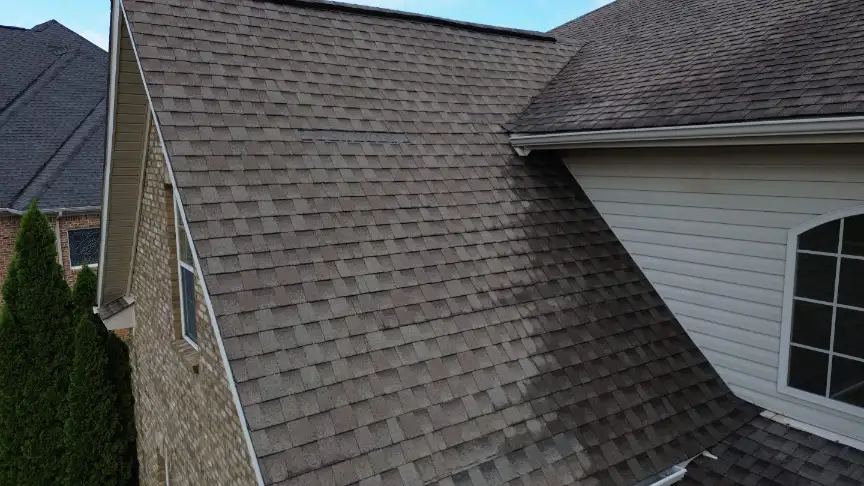
An insurer may agree that wind damaged several shingles while declining to replace an entire roof that has aged for decades. A roofer may recommend full replacement because the shingles are brittle, the existing color is unavailable, or repair work could disturb adjoining material. Both statements can be true: a full replacement may be prudent for the homeowner even if the policy only covers a narrower storm loss. The crucial question is what physical condition makes a covered repair impossible or inadequate, not whether the replacement quote sounds more complete. For example, photographs of a test repair that damages surrounding tabs are more specific than a general claim that “the roof is too old.” Ask the contractor to describe repairability and the insurer to explain the covered scope in writing.
How to make a repairability question specific
List the roof slope, damaged locations, shingle type, repair access, condition of adjacent shingles, and any code or manufacturer instructions the contractor believes apply. Ask which items are directly storm-related and which are pre-existing maintenance or age concerns. Send that evidence to the insurer yourself and request a documented response to each disputed line item. Under Alabama residential roofing law, the contractor may provide technical roofing facts but should not represent or negotiate the owner’s insurance claim. If you decide on full replacement for peace of mind, request a written price for the owner-elected work and do not assume reimbursement. The goal is an understandable scope comparison, not pressure to turn every approved repair into a larger insurance claim.
Frequently asked questions
Can I make the insurer pay for a whole roof because the shingles do not match?
Not automatically. Matching obligations depend on policy terms, applicable law, physical repairability and the facts of the covered loss. Obtain a documented explanation and ask the carrier to evaluate the issue. An aesthetic preference alone does not prove entitlement to full replacement.
Should the roofer show why repair is not practical?
Yes. A useful assessment identifies the damaged slopes, adjacent shingle condition, material availability and potential additional damage from removing existing shingles. Photographs and manufacturer instructions are more useful than a bare statement that the roof is “too old to repair.”
Can I fund the difference myself?
You may choose replacement as a personal project while accepting that the insurer may only owe for covered work. Request separate prices for insurance-related repairs and owner-elected additions. Confirm payment and financing terms before you authorize construction.
References and official guidance
- Alabama Department of Insurance — homeowners FAQs
- Alabama Code §8-36-2 — insurance-funded roofing contracts
Regulations, contracts, and insurance policies can change. This discussion is general information, not legal advice or a determination of coverage.
For a roof-specific assessment in Huntsville or North Alabama, contact Huntsville Roofing Solutions. An inspection and written scope are needed before recommending construction work.
Jordan is the founder and owner of Huntsville Roofing Solutions, a locally owned, fully licensed and insured roofing company serving Huntsville and North Alabama. He and roofing supervisor Barry Minor have handled residential and commercial roofs across the region — replacements, repairs, storm damage, and insurance claims — earning a 4.9-star Google rating along the way.