
Overhanging trees can damage a roof even when no large branch falls on the house. Branches that touch the roof can scrape asphalt shingles as they move in the wind, while leaves and twigs can collect in valleys and gutters, hold moisture against the roof and interfere with drainage. Heavy limbs create a separate impact risk during storms and can damage shingles or even the roof deck. The goal is not necessarily to remove every nearby tree. Keep branches from contacting the roof, control overhanging limbs and keep tree debris from accumulating on the roofing and in drainage areas.

Many homeowners think of tree damage as one dramatic event: a storm arrives, a limb breaks and the roof is visibly crushed.
That can happen. But most of the tree-related roof problems worth preventing are less dramatic.
A branch can repeatedly rub the same shingles. Leaves can pile up in a valley. Twigs can fill a gutter. A shaded section of roof can remain damp longer after rain.
Those are maintenance problems before they become repair problems.
How Can Overhanging Trees Damage a Roof?
Your existing roof-maintenance guidance identifies two primary risks from nearby trees.
First, branches touching the roof abrade shingles whenever wind moves them across the surface. Second, overhanging limbs drop debris into valleys and gutters while also shading the roof and slowing drying.
There is also a more sudden version of tree damage: a branch or limb can strike the roof during severe weather, damaging shingles or, in a more serious impact, reaching the roof decking.
These are different problems and should be treated differently. Routine contact and debris call for prevention and maintenance. A limb strike calls for a damage inspection.
1. Branches Can Scrape and Wear Asphalt Shingles
A branch does not need to be especially large to cause wear if it rests directly against the roof.
When wind moves that branch back and forth, it can rub across the same section of shingles repeatedly. Your site’s maintenance checklist specifically identifies this contact as a source of shingle abrasion and granule wear.
Those granules form the exposed surface of asphalt shingles. If one small roof area is losing granules because of repeated abrasion, it can begin aging differently from the surrounding roof.
The practical rule is simple: branches should not be resting on or repeatedly contacting the roof surface.
2. Leaves and Twigs Can Collect in Roof Valleys
Roof valleys deserve particular attention because they carry large amounts of water during rain.
Your maintenance guidance warns that debris piled in valleys holds moisture against the roofing surface. It also identifies leaves and pine needles as debris that can remain wet after a storm rather than allowing the area beneath them to dry normally.
That creates a different kind of tree-related roof problem.
The tree itself may be several feet away from the roof surface, but an overhanging canopy can continually deposit material into one of the most important drainage paths on the roof.
A few dry leaves are not the same thing as a roof failure. The concern is persistent accumulation that keeps returning and remains wet.
3. Tree Debris Can Clog Gutters and Downspouts
Leaves do not always stop in the roof valleys. Eventually much of that material moves toward the gutter line.
Clogged gutters can prevent rainwater from leaving the roof correctly. Your existing gutter guidance notes that leaves, twigs and other debris can impede water flow, leading to overflow and potential damage to the roof, siding and foundation.
This is why heavily wooded properties may require more frequent gutter attention than homes with little tree cover.
If drainage is becoming the main problem rather than the trees themselves, read the site’s guide to how gutters affect roof health.
4. Overhanging Trees Can Keep Part of the Roof Shaded
Shade by itself does not mean a roof is damaged.
But your maintenance guidance notes that overhanging limbs can shade a roof and slow drying, while the same site guidance identifies dark streaking on shaded roof slopes as a sign that those areas are not drying as readily.
The concern becomes greater when shade and debris occur together.
A shaded slope that is also collecting leaves or needles can stay damp longer than a clean, exposed roof surface after rainfall.
That is one reason tree management should be considered part of roof maintenance rather than only storm preparation.
5. Falling Limbs Can Damage Shingles
A falling limb creates direct impact rather than gradual wear.
Your roof-repair guidance specifically notes that a branch or other impact can crack a limited area of asphalt shingles. If only a small number of shingles are affected and the surrounding roof remains serviceable, that can still be a repair-stage problem rather than a reason to replace the entire roof.
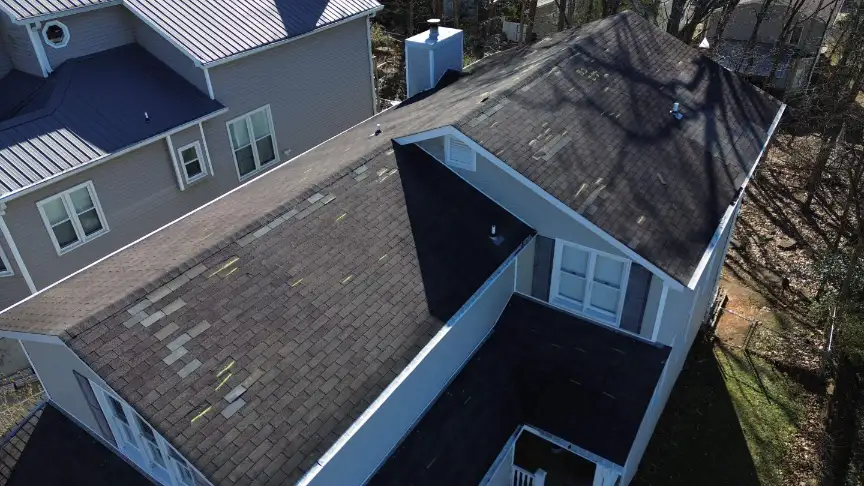
Look for cracked, creased, missing or displaced shingles after an impact.
Do not assume that because the branch bounced off or was removed, the roofing underneath escaped damage.
6. A Large Limb Can Damage the Roof Deck
The more serious scenario is a heavy tree limb striking with enough force to damage more than the shingles.
Your site’s storm-damage content explicitly discusses falling-limb damage that can puncture or affect roof decking.
That moves the problem beyond routine tree maintenance.
If a limb has struck the house hard enough to break roofing material, create a visible opening, deform the roof surface or expose material beneath the shingles, the next step is an inspection rather than simply removing the limb and assuming the roof is fine.
When tree damage occurs during high wind or severe weather, use the site’s post-storm response guide for immediate safety, documentation, and inspection steps.
Signs of Trees Damaging Roof Surfaces
| What You See | What It May Mean |
|---|---|
| Branches touching or dragging across shingles | Repeated abrasion and localized granule wear |
| Leaves or pine needles piled in valleys | Moisture being held in an important drainage path |
| Gutters repeatedly filling with leaves and twigs | Tree cover is increasing drainage-maintenance needs |
| Dark streaking on heavily shaded roof areas | The slope may not be drying as readily |
| Cracked or missing shingles below a branch | Possible direct impact or abrasion damage |
| A visible opening or damaged roof plane after a limb falls | Possible damage beyond the surface shingles |
The important distinction is whether you are looking at a maintenance condition or actual roofing damage.
Leaves that need clearing are maintenance. A cracked shingle caused by impact is a repair issue. A large limb through the roof is an urgent damage problem.
Do All Trees Near the House Need to Be Removed?
No.
Your site’s existing maintenance advice does not say homeowners need to remove every tree near the house. It says to keep limbs off the roof plane and prevent branches from making contact with the surface.
That is a much more useful standard.
A healthy tree near the home is not automatically a roofing problem. The concern is the relationship between the branches and the roof: contact, overhang, debris accumulation and the potential for weak or heavy limbs to strike the house.
How Far Should Branches Be From the Roof?
Your current site content does not specify a universal number of feet, so we would not invent one for this article.
The maintenance standard already used on the site is more practical: trim branches back so they do not contact the roof surface and keep overhanging limbs off the roof plane.
That gives the homeowner a visible condition to maintain without pretending that one distance fits every tree species, branch size or roof configuration.
Should You Trim the Branches Yourself?
That depends on the branch.
Your existing tree-maintenance guidance advises homeowners not to attempt large limbs without professional help and recommends a professional arborist when the work is too large or dangerous.
That is particularly important when the limb is already hanging over the roof. Cutting a heavy limb incorrectly can turn a preventive trimming job into the impact event you were trying to avoid.
Roofers and arborists also solve different parts of the problem. An arborist manages the tree. A roofer evaluates damage to the roofing system if contact or impact has already occurred.
How Often Should You Check a Roof Surrounded by Trees?
Your yearly maintenance checklist recommends clearing gutters and valleys at least twice a year, with more attention where tree cover is heavy. Tree trimming itself is listed as an as-needed task.
That is a useful baseline because tree-related maintenance is driven by conditions rather than only the calendar.
A property where leaves fill the valleys repeatedly may need attention more often than a neighboring house with little canopy over the roof.
The broader schedule—including ground-level checks, attic checks, drainage and professional inspection—is covered in the site’s roof maintenance program.
What Should You Check After a Branch Hits the Roof?
Start from the ground rather than climbing onto the roof.
Look for shingles or roofing pieces on the ground, an obvious change in the roof surface, displaced shingles, damaged gutters or any visible opening.
If the attic is safely accessible, moisture or daylight around the impact area is another reason to have the roof evaluated.
A roof can also have a limited shingle problem without the entire system being compromised. The site’s guide to repair-stage roof warning signs explains when isolated shingle or impact damage can remain a focused repair.
Do not walk onto a damaged roof to inspect the impact yourself.
Can Leaves Alone Ruin a Roof?
A few leaves sitting briefly on shingles are not the same thing as roof failure.
The problem described across your existing maintenance content is persistent accumulation.
Leaves, pine needles and debris can collect in valleys and gutters, hold moisture and interfere with drainage. Overhanging tree cover can also shade those areas and slow drying.
So the useful question is not whether one leaf can hurt a roof. It is whether the property continually produces enough debris to keep drainage areas clogged or the roof surface covered.
Why Tree Maintenance Matters in Huntsville and North Alabama
The site’s maintenance strategy already treats trees as part of the roof system’s surroundings rather than something unrelated to roofing.
That is especially practical where homes have mature tree cover and roofs also have to deal with significant wind and storms.
Routine trimming can address branches before they begin touching the shingles. Routine cleaning keeps valleys and gutters from holding tree debris. And post-storm checks catch the separate problem of falling-limb impact.
Those are three different jobs, but together they prevent a manageable tree issue from becoming roof damage.
Frequently Asked Questions About Trees and Roof Damage
Can tree branches rubbing on a roof damage shingles?
Yes. Branches that touch the roof can move across the shingles in the wind and create repeated abrasion. Your site’s maintenance guidance specifically identifies this contact as a cause of localized shingle and granule wear.
Are leaves on the roof harmful?
A small amount of temporary leaf debris is not automatically serious. The concern is persistent buildup in valleys and gutters, where leaves and pine needles can hold moisture and interfere with roof drainage.
Should branches hang over my roof if they are not touching it?
Overhanging branches can still drop leaves and twigs into roof valleys and gutters and shade the roof surface. Your existing maintenance guidance recommends keeping overhanging limbs off the roof plane rather than waiting until they are physically rubbing the shingles.
What should I do if a tree limb hits my roof?
Inspect what you can safely see from the ground, document the damage and arrange a roof inspection if shingles are cracked, displaced or missing, or if the roof surface appears damaged. A large impact can affect roofing layers beneath the visible shingles.
Do I need to remove trees near my house to protect the roof?
Not automatically. The site’s maintenance guidance focuses on preventing branch contact, controlling overhanging limbs and keeping tree debris out of roof drainage areas. A nearby tree is not itself proof that the roof is being damaged.
Who should trim large limbs over a roof?
Your existing maintenance guidance recommends professional help for large or dangerous limbs. An arborist manages the tree safely; a roofing professional should evaluate the roof if the branches have already caused impact or surface damage.
The Bottom Line
The most common problems from trees damaging roof surfaces are not limited to a tree crashing onto the house. Branches can abrade shingles, overhanging limbs can fill valleys and gutters with debris, shade can slow drying, and storms can turn a large limb into a direct impact hazard.
You do not necessarily need to remove every tree near the home. Keep branches from touching the roof, manage overhanging limbs, clear debris before it blocks drainage and inspect the roof after a branch strike.
If you want those checks handled as part of an ongoing schedule rather than reacting after damage appears, use Huntsville Roofing Solutions’ residential roof maintenance service.

Jordan is the founder and owner of Huntsville Roofing Solutions, a locally owned, fully licensed and insured roofing company serving Huntsville and North Alabama. He and roofing supervisor Barry Minor have handled residential and commercial roofs across the region — replacements, repairs, storm damage, and insurance claims — earning a 4.9-star Google rating along the way.