

The first few hours after a storm can feel rushed.
There may be water coming into the house, shingles in the yard, roofing contractors showing up at the door, and no clear idea yet of how extensive the damage is.
You do not need to sort out the entire roofing problem or every insurance question on the first night.
You do need to keep an already bad situation from getting worse.
Storm Damage Roof: What Should You Do First?
One practical way to think about the first two days is to divide them into four time periods:
- 0-2 hours: make sure everyone is safe and that the property is safe enough to approach or enter.
- 2-6 hours: document visible damage and deal with interior water where it is safe to do so.
- 6-24 hours: report the loss, arrange a roof inspection, and make necessary temporary repairs.
- 24-48 hours: organize your records, watch for additional leakage, verify contractors, and prepare for the next stage of the claim or repair process.
Those time periods are guidelines, not deadlines.
If another storm is approaching, utilities are damaged, or part of the home appears unsafe, safety comes first.
First 0-2 Hours: Protect People and Make Sure the Property Is Safe
Before thinking about shingles, insurance, or repair costs, look at the condition of the property around you.
Wind, hail, and severe thunderstorms can cause damage well beyond the roof.
You may have downed power lines, unstable tree limbs, broken glass, loose siding, damaged gutters, or pieces of roofing material scattered around the yard.
The Alabama Department of Insurance advises homeowners to stay away from downed power lines and damaged areas and to use caution around buildings that may have been weakened by severe weather.
If a ceiling is sagging heavily or water is coming into the home near electrical fixtures, do not stand beneath the affected area.
If the house appears structurally unsafe, leave the area and contact the appropriate emergency, utility, or building professional rather than trying to investigate the roof yourself.
Do Not Climb Onto the Roof
This is particularly important after a storm.
The roof that was safe enough to walk on yesterday may now have loose shingles, damaged decking, wet surfaces, damaged flashing, fallen branches, or hidden weak areas.
Walking on it can also disturb the condition you are trying to document.
Most of the information you need during the first stage can be gathered from the ground, windows, attic, driveway, or another safe location.
First 2-6 Hours: Document the Damage Before Cleanup
The first instinct after a storm is often to start cleaning up immediately.
Photograph the damage first.
The Alabama Department of Insurance’s storm claim guidance recommends documenting losses with photos or video before debris or damaged belongings are removed when it is practical and safe.
Start with wide pictures of the property and then move closer.
Useful things to document include:
- The front, back, and sides of the house
- Missing shingles visible from the ground
- Roofing material lying in the yard
- Damaged gutters or downspouts
- Fallen tree branches
- Damaged siding, windows, fences, or exterior equipment
- Water stains on ceilings or walls
- Wet attic insulation
- Interior dripping or pooled water
- Damaged personal belongings
Video can be helpful too.
A slow walkthrough of the accessible areas of the property preserves context that individual close-up photographs sometimes miss.
If you are not sure whether marks on the shingles are really hail impact, do not label them yourself. Our guide explaining what hail damage on a roof can look like covers that separately.
Document the Damage First, Then Make Temporary Repairs
There is an important difference between temporary mitigation and permanent roof repair.
Temporary mitigation is meant to keep the damage that has already happened from getting worse.
That might include covering an exposed roof opening, boarding a broken window, moving belongings away from leaking areas, placing containers beneath drips, or drying accessible wet areas.
A permanent roof repair changes or replaces the damaged roofing itself.
The National Association of Insurance Commissioners recommends documenting the damage first and then making reasonable temporary repairs to prevent additional loss.
Keep the receipts for those emergency expenses.
This does not mean every homeowner should climb up and install a tarp personally.
If covering the roof requires walking on a steep, wet, damaged, or unstable surface, hire someone qualified to do it safely.

What Should You Do When Water Is Coming Into the House?
Deal with interior water only where you can do it safely.
Move furniture, electronics, rugs, boxes, and other belongings away from the affected area.
Put containers beneath dripping water if the ceiling is stable and there are no electrical hazards nearby.
If water is close to outlets, light fixtures, wiring, or the electrical panel, do not touch the affected area. Get professional help.
You also cannot assume that the stain you see directly below the roof is where the water entered.
Water can travel along roof decking, rafters, fasteners, or framing before it finally appears inside the house.
The immediate goal is to limit further damage.
The exact entry point can be determined during the roof inspection.
First 6-24 Hours: Notify Your Insurance Company
If you believe the storm caused damage to insured property, contact your insurance company or agent as soon as practical.
You do not need to diagnose every damaged shingle before making that first call.
Have the basic information ready:
- Your policy number if available
- The date and approximate time of the storm
- Your current contact information
- A brief description of the visible damage
- Whether water has entered the home
- Whether any temporary repairs have already been completed
Write down the claim number they provide.
Also ask where photographs, contractor reports, receipts, and estimates should be sent.
For the broader claim process and adjuster coordination, use our roof insurance claim guide. That page owns the detailed insurance workflow rather than this first-48-hours checklist.
A Roofing Contractor Does Not Decide Whether the Claim Is Covered
This point is important.
A roofing contractor can inspect shingles, flashing, gutters, vents, roof decking, and other building components.
The contractor can document what is physically present and prepare a repair or replacement scope.
The insurance company applies the insurance policy and makes the coverage decision.
A roofer should not guarantee that the insurer will pay for a new roof simply because a severe storm passed through the neighborhood.
First 6-24 Hours: Arrange a Professional Roof Inspection
After a storm, one basic question needs to be answered:
What physical damage actually occurred?
That is different from trying to make the roof fit an insurance claim.
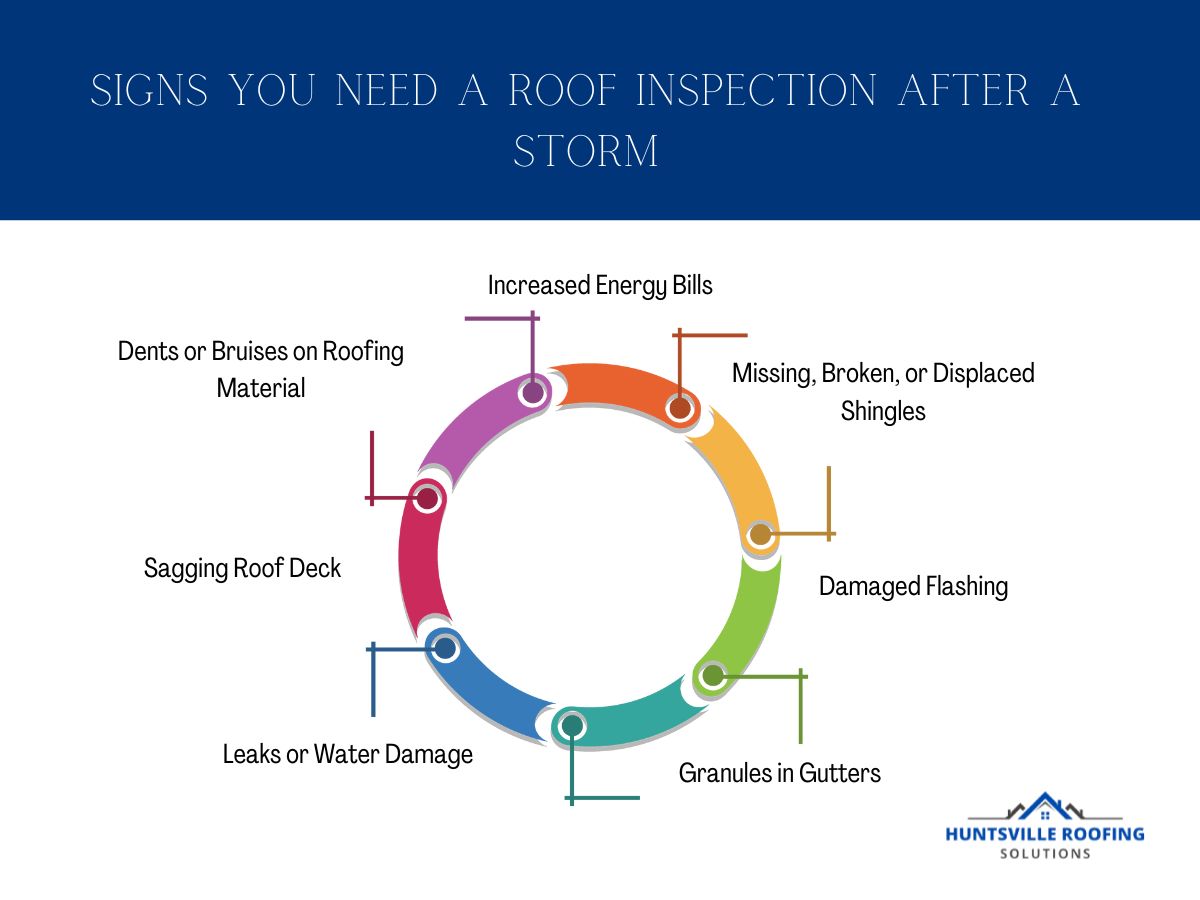
A good inspection may find wind-lifted shingles, missing shingles, damaged flashing, dents in softer metal components, damage from fallen limbs, exposed underlayment, roof-deck damage, or no meaningful storm damage at all.
That last possibility matters too.
A severe storm passing through your neighborhood does not automatically mean your roof was damaged.
Likewise, finding one missing shingle does not automatically mean the entire roof needs to be replaced.
If the inspection shows a repairable problem, our residential roof repair service explains the types of localized roofing work that may be appropriate.
Who Should You Contact First, the Roofer or the Insurer?
You do not really need to treat this as an either-or decision.
If there is obvious damage to the property, you can report the loss promptly while also arranging a qualified roof inspection.
Waiting several days for a roofing estimate before contacting the insurer may not be necessary, particularly because reporting requirements differ between policies.
At the same time, reporting a claim does not make the roofing contractor responsible for interpreting the policy.
A cleaner division of responsibility is:
- Homeowner: report the loss, document the damage, prevent additional damage where practical, and keep records.
- Roofing contractor: inspect and document the physical condition of the roofing system.
- Adjuster or insurer: evaluate the claim according to the policy.
What Receipts and Records Should You Keep?
Do not think only about the final roofing invoice.
During the first 48 hours, put everything related to the storm into one folder, whether digital or physical.
Keep:
- Before-and-after photographs if you have them
- Photos and videos taken after the storm
- Your insurance claim number
- Emails and text messages with the insurance company
- Emergency tarp invoices
- Receipts for temporary materials
- Temporary lodging receipts if the home cannot be occupied
- The roof inspection report
- Contractor estimates
- A simple record of phone calls and who you spoke with
Whether a particular cost is reimbursable depends on the policy and the circumstances of the loss.
First 24-48 Hours: Look for Damage That Was Not Obvious at First
Some problems become easier to notice several hours after the storm has passed.
Check accessible areas again later or after the next rainfall.
Look for:
- New ceiling stains
- Damp attic insulation
- A musty smell
- Water around roof penetrations
- Loose exterior materials
- Gutters that have pulled away from the fascia
- Shingles or debris that have moved since the first inspection
This does not mean you need to crawl through every part of the attic yourself.
If an area is difficult or unsafe to reach, leave it for the contractor.
What If the Roof Looks Fine From the Ground?
That is encouraging, but it does not prove that nothing happened.
Wind can lift or crease shingles without completely removing them.
Hail can affect the shingle surface without creating a large hole.
Flashing, roof vents, and other components can also be damaged while the main roof still looks normal from the driveway.
At the same time, it is wrong to assume hidden damage exists simply because the storm was severe.
If there was significant hail, damaging wind, nearby tree damage, interior water, or visible exterior damage, a professional inspection can determine whether the roof actually needs work.
Be Careful With Roofing Contractors Who Appear Immediately After the Storm
Storms attract reputable roofing companies and dishonest operators at the same time.
The Alabama Department of Insurance advises homeowners to be cautious with aggressive contractors, unusually low bids, and large demands for payment upfront following a disaster.
Do not let the urgency of the situation remove normal due diligence.
Before signing anything, know who the company is, what work is included, who is responsible for the project, and whether the contractor has the appropriate credentials.
Our separate guide explains how to verify a roofing contractor in Alabama before you sign a roofing contract.
What Should You Avoid During the First 48 Hours?
A few rushed decisions can make the situation more complicated than it needs to be.
- Do not climb onto a wet or damaged roof.
- Do not throw away damaged materials before documenting them when they can safely be retained.
- Do not make unnecessary permanent repairs before the condition has been documented.
- Do not assume every mark on the roof was caused by the storm.
- Do not assume the insurance policy covers a specific repair before the insurer evaluates it.
- Do not sign contracts, assignments, or financial documents you do not understand.
- Do not agree to a complete replacement simply because a storm happened nearby.
Why the First 48 Hours Matter in North Alabama
Severe weather in North Alabama can bring several types of damage at once.
One storm may include wind, hail, heavy rain, and falling tree limbs.
That makes documentation particularly useful because one property can have several different damage mechanisms.
It also means the first problem you notice may not be the only one.
A lifted shingle may be repairable.
A fallen tree limb may have damaged the decking underneath the shingles.
Interior water may have traveled several feet from the actual point where it entered the roof.
This is why the first 48 hours are mainly about documenting what happened, limiting further damage, and gathering enough information to make the right decisions afterward.
What Happens After the First 48 Hours?
Once the property has been documented and secured, the process moves away from emergency response and toward determining the actual scope of damage.
The insurer may arrange for an adjuster to inspect the property.
The roofing contractor may prepare a repair or replacement estimate.
What happens next depends on what the inspection finds.
Sometimes damage is localized and can be repaired.
Sometimes the damage is widespread enough that replacement becomes the more practical option.
In more serious cases, damage may also involve the roof deck or other parts of the structure.
The decision should be based on the evidence found at the property—not on how dramatic the storm looked on the weather map.
Frequently Asked Questions About the First 48 Hours After Storm Damage
What Is the First Thing to Do After a Storm Damages My Roof?
Make sure the property is safe.
Stay away from downed power lines, unstable structures, broken glass, and other hazardous areas. Do not climb onto a damaged roof. Once it is safe, photograph visible damage before starting cleanup or temporary repairs.
Should I Call Insurance Right After Roof Damage?
If you believe the storm damaged insured property, contact your insurance company or agent promptly.
Reporting requirements vary between policies. You can continue documenting damage, obtaining contractor information, and gathering estimates after the initial report.
Can I Cover My Roof Before the Adjuster Inspects It?
Temporary measures to prevent additional damage are commonly recommended after a loss.
Document the damage first when practical and keep receipts. Do not install a tarp yourself if doing so requires climbing onto an unsafe roof.
Should I Repair the Roof Before the Adjuster Arrives?
Temporary mitigation may be necessary to prevent additional damage.
Avoid unnecessary permanent repairs until the condition has been properly documented. If immediate work is necessary for safety or weather protection, take photographs and keep receipts and relevant materials when practical.
Should I Go Onto the Roof to Document the Damage?
No.
A storm-damaged roof may have wet shingles, loose materials, damaged decking, or hidden weak areas. Take what photographs you safely can from the ground and leave roof access to trained professionals.
Does Storm Damage Always Mean the Roof Needs Replacing?
No.
Storm damage can range from a small repairable problem to widespread failure. There are also cases where a professional inspection finds no meaningful storm-related roof damage.
Should I Throw Away Damaged Materials?
Not immediately if they can be retained safely.
Photograph damaged property first and keep it available when practical in case the insurer needs to inspect it.
What Should I Keep for an Insurance Claim?
Keep photos, videos, the claim number, contractor reports, estimates, emergency-work invoices, relevant temporary-lodging receipts, and records of communication with the insurer.
Whether a particular cost is covered depends on the policy.
The Bottom Line: What Should You Do After Storm Damage?
During the first 48 hours after storm damage, focus on four things: stay safe, document what happened, prevent additional damage, and begin the appropriate insurance and roof-inspection process.
You do not need to decide on a complete roof replacement during the first few hours.
You also should not leave an exposed roof or continuing water intrusion unattended while waiting for every part of the claim process to be completed.
Take photos before cleanup when it is safe. Make reasonable temporary repairs. Keep receipts. Notify the insurer. Have the roof professionally inspected. Then make decisions about permanent repairs once the condition of the roof is understood.
That protects the house without allowing the urgency of the storm to force a rushed decision.

Jordan is the founder and owner of Huntsville Roofing Solutions, a locally owned, fully licensed and insured roofing company serving Huntsville and North Alabama. He and roofing supervisor Barry Minor have handled residential and commercial roofs across the region — replacements, repairs, storm damage, and insurance claims — earning a 4.9-star Google rating along the way.