
What Is a Storm Chaser Roofing Company?
The term storm chaser usually describes a contractor or sales operation that moves between areas recently affected by hail, strong winds, tornadoes or other severe weather to solicit repair and replacement work. Some traveling contractors are established businesses providing needed capacity after a disaster. Others may have little local presence, pressure owners into signing or leave customers struggling to obtain follow-up service.
The distinction is conduct and accountability, not a license plate. The Federal Trade Commission warns that after disasters, unreliable contractors may demand advance payment, resist written contracts or make promises they cannot substantiate. Alabama’s Attorney General likewise advises checking references carefully when approached without invitation or by an out-of-town contractor.
A company that genuinely serves North Alabama should also be willing to answer the same questions. A local address is helpful to verify, but it is not a substitute for licensing, insurance, workmanship and written commitments.
Storm Chaser vs. Local Roofer: What Can You Actually Check?
| What to check | Evidence to ask for | Reason to slow down |
|---|---|---|
| Business identity | Consistent legal business name, working contact details and verifiable operating address | Only a salesperson’s mobile number, inconsistent company names or an unverifiable address |
| Alabama authority | Applicable active roofing or unlimited homebuilder license confirmed with the state board | Claims that an out-of-state license alone settles Alabama requirements |
| Insurance | Current insurance information that can be confirmed with the issuing agent | Refusal to provide meaningful proof of liability coverage or explain workforce coverage |
| References | Recent customers you can independently contact, plus documented past work | Only anonymous testimonials or references who cannot be reached |
| Inspection and estimate | Photos of actual conditions and an itemized written scope | Promises of an entire new roof before anyone documents what is damaged |
| Payment | Clear amounts, milestones, receipts and payment recipient matching the contract | Demands for full payment before work or payment to an unrelated individual |
| Aftercare | Written workmanship terms and a named contact for future issues | No clear answer about who will return for leaks or warranty work |
None of these items alone guarantees quality. Together, they make sales claims easier to verify and give you a stronger basis for comparing bids.
1. Verify the Alabama Roofing License Yourself
For qualifying residential roofing work costing more than $2,500, Alabama law requires the appropriate state license. The Alabama Home Builders Licensure Board offers a license search for both individuals and companies. An unlimited homebuilder license also authorizes residential roofing; a limited homebuilder license by itself does not.
Ask the contractor for the exact legal name and license information. Use the Alabama Home Builders Licensure Board’s verification guidance rather than relying only on a photograph of a license card. The board advises calling 1-800-304-0853 when a listing is missing or unclear.
Check that the licensed person or company matches the entity offering to contract with you. If the salesperson uses a different business name, ask for a clear explanation before signing. Work involving structural repairs may require a different license scope; confirm that with the board when necessary.
Our separate guide to verifying an Alabama roofing contractor covers the broader credential-checking process. This article focuses on using those checks when a company appears after a storm.
2. Confirm Their Business History and Post-Storm Availability
Ask how long the business has operated, where it normally performs roofing work and where you can reach it after the current storm response ends. Search the legal business name independently. Look for consistent information across its website, state records, customer reviews and written quote.
Ask for recent references from people whose roofs were completed, not just inspected. If the company is traveling, ask whether it has a permanent office elsewhere and how it handles return visits in Alabama. If it is local, ask which local projects you may independently verify.
The key follow-up question is: who answers the phone six months after the installation? A specific service contact and written workmanship process are more meaningful than a verbal promise that the crew will always be nearby.
Read reviews critically. A collection of five-star ratings posted within a short window cannot replace independent references, especially if they say little about completed work or longer-term follow-up.
3. Demand an Inspection Before Agreeing That You Need a New Roof
A storm can damage one roof severely while leaving another nearby with little or no meaningful damage. Neither the appearance of a hailstorm on the weather radar nor the fact that a neighbor is replacing a roof proves that your roof needs replacement.
Ask the roofer to show photographs of the actual condition: affected shingles, flashing, roof penetrations, exposed decking or other observed defects. The contractor should explain what requires temporary protection, what appears repairable and what still needs further evaluation.
If someone says, “Everyone on this street qualifies for a full insurance roof,” ask what physical damage they have documented on your property. Do not allow a sales promise to replace an evidence-based inspection.
A trustworthy assessment can conclude that localized roof repairs may be sufficient. The goal is to document what the roof needs, not to force every inspection into a replacement proposal.
4. Treat Insurance Promises as a Verification Test
A roofing contractor does not decide whether your policy covers the damage. A contractor can inspect the roof, document physical conditions, explain appropriate construction methods and prepare a roofing estimate. Your insurance company evaluates coverage under your policy.
Be cautious if a salesperson guarantees claim approval, says you must sign a roofing agreement before contacting your carrier, asks you to sign over your insurance check or claims authority to negotiate your insurance claim on your behalf.
Alabama Code § 8-36-2 prohibits a residential roofing contractor from representing or negotiating—or advertising that it will represent or negotiate—a roof insurance claim for the property owner. The roofing contractor can supply technical information without taking over the homeowner’s role in the claim.
For what to document, when to contact the insurer and how roofing estimates relate to the claim, follow the insurance-claim resource linked below. Keep coverage decisions with the insurer and consider appropriately licensed claim professionals or legal advice if you need representation in a dispute.
A promise to “cover your deductible” should also trigger questions. Ask for a complete written explanation of every proposed discount and payment, and confirm what your insurance policy requires. Do not submit inaccurate invoices or authorize anyone to misrepresent what you paid.
5. Read the Contract Before Anyone Starts Permanent Roofing Work
A detailed written agreement should identify the actual contracting company, property, measured scope, materials, installation details, total price, payment schedule, expected dates, change-order process and warranty terms. Ask who obtains any required local permits and who is responsible for inspections and cleanup.
The FTC recommends comparing multiple written estimates and avoiding blank contracts or arrangements requiring full payment up front. A very low figure is difficult to evaluate when it omits underlayment, flashing, decking contingencies, ventilation or disposal.
Alabama has a specific cancellation rule for qualifying residential roofing agreements funded by property-insurance proceeds. Under Alabama Code § 8-36-2, a homeowner may cancel by the fifth business day after receiving qualifying written notice from the insurer that the claim is not covered in whole or part or will not sufficiently cover the contract. The contract must include the required cancellation information. This is not a universal five-day right that begins whenever a roofing contract is signed.
If the roofer dismisses the cancellation notice, refuses to give you a complete copy or rushes you past the terms, do not sign until you have clarified the issue.
6. Separate Emergency Protection From a Full Roof Contract
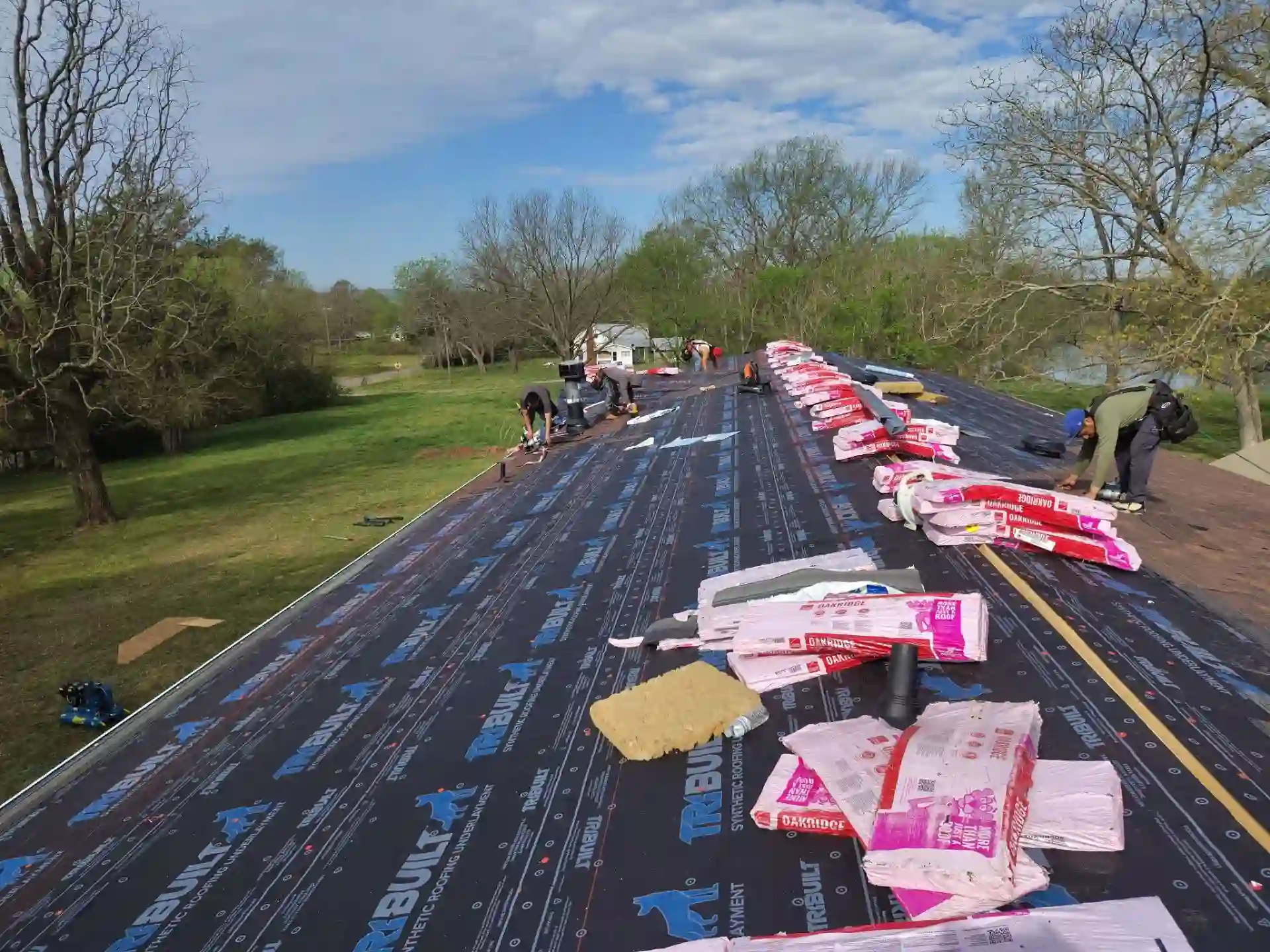
There is one situation in which waiting for every estimate can be unreasonable: an exposed roof is allowing rain into your home or another storm is approaching. Safety and reasonable temporary protection matter. But emergency work and a permanent replacement contract are different decisions.
Alabama’s Attorney General specifically cautions that a contractor providing emergency services such as tarping cannot use that work to bind a homeowner automatically to additional roof repairs. The state’s roofing statute addresses reasonable charges for emergency services acknowledged in writing as necessary.
Ask for a written scope and price covering only the immediate work. Document the original damage when safely possible, retain photographs after installation and keep the invoice. For the narrower decision about when tarping is appropriate, read our emergency roof tarping and cost guide.
Never climb onto a wet, damaged or unstable roof yourself simply to photograph it or install a cover. Professional emergency protection may be necessary, but it does not require surrendering your choice of permanent roofing contractor.
7. Ask Who Is Responsible After the Crew Leaves
Material warranties and workmanship commitments are different. A shingle manufacturer’s warranty does not necessarily cover errors made during installation, and a contractor’s written workmanship promise should state who responds, what is covered, any exclusions and how to request service.
Questions worth asking include: Who will come back if the roof leaks after the next heavy rain? Does the company have a reliable service contact? Will the same legal entity named in the contract remain responsible? What happens if the sales crew is working in another state?
Local availability is a practical consideration because a nearby operating team may be easier to contact for follow-up. But evaluate the actual service arrangement rather than assuming that all local firms respond well or that every traveling contractor disappears.
What If a Roofer Knocks on Your Door Right After a Storm?
You do not have to decide immediately. Ask for the representative’s name, the company’s legal name, license information, insurance details and a written description of any proposed inspection. Then independently verify the business before making commitments.
Be especially careful when a visitor says the price expires today, asks for all the money up front, insists that a signed document is “only permission to inspect” when it also contains payment or exclusivity terms, or offers to take over your insurer communications.
If there is no active leak or exposed opening, you can use the time to gather additional estimates. If the property is unsafe or open to weather, arrange appropriate temporary protection without committing to an entire reroof.
For the broader sequence of safety, documentation, insurer notification and inspection after severe weather, use our separate first 48 hours after storm damage checklist.
How Should You Compare Two Roofing Estimates After a Storm?
Compare what each company intends to install, not just the bottom-line price or whether a salesperson lives nearby. Check roof measurements, the number of roof layers to be removed, decking allowances, underlayment, flashing, ventilation, accessories, cleanup, timing and warranty language.
Ask each contractor to explain discrepancies. One proposal may include necessary work omitted from the other; another may include work that has not been justified by the inspection. Request photographs and clear descriptions of the roof conditions supporting each recommendation.
Pay attention to the name on the proposal and who receives payment. The contracting entity, license details and payment recipient should make sense together. Keep copies of all estimates and messages.
Where Can Alabama Homeowners Report Suspected Roofing Fraud?
If you suspect unlicensed residential roofing activity, contact the Alabama Home Builders Licensure Board at 1-800-304-0853. If you suspect misleading sales practices or home-repair fraud, the Alabama Attorney General’s Office has consumer reporting information. You can also report suspected fraud to the FTC.
Preserve copies of the contract, advertisements, texts, photos, invoices, payment records and the representative’s identifying information. If the problem involves insurance representations, let your insurer know and ask what it recommends for protecting your claim records.
Frequently Asked Questions About Storm Chaser Roofing Companies
Are all storm chaser roofing companies scams?
No. A roofing business may travel to an area after a severe storm to meet legitimate demand. Assess whether it has appropriate Alabama credentials, verifiable insurance, transparent terms, relevant references and a dependable plan for post-installation service.
How can I tell whether a roofing contractor is actually local?
Check the legal business name, operating address, established work history, independently reachable local references and who handles service calls after the current storm. A local telephone number or business listing alone is not proof of long-term local operations.
Does an out-of-state roofer need an Alabama roofing license?
An out-of-state business must meet Alabama’s applicable licensing requirements for the work it undertakes. For qualifying residential roofing jobs costing more than $2,500, verify the appropriate Alabama license through the Home Builders Licensure Board. An out-of-state license alone should not be assumed to satisfy Alabama requirements.
Can a roofer guarantee that insurance will replace my roof?
No. A roofer can document damage and estimate necessary construction work, but the insurance company determines coverage under the policy. Alabama law also prohibits residential roofers from representing or negotiating a roof claim on the homeowner’s behalf.
Can a roofer tarp my roof without getting the full replacement job?
Yes. Necessary emergency protection and a permanent replacement agreement are separate matters. Alabama’s Attorney General warns that emergency tarping must not be used to bind a homeowner automatically to further roof work. Agree on the limited emergency scope and its reasonable price in writing.
Should I sign a roofing contract before my insurer makes a decision?
Read and understand the obligations first, including pricing, payment terms and any contingency or cancellation provisions. Under Alabama Code § 8-36-2, qualifying insurance-funded residential roof contracts have a specific cancellation right triggered by certain written insurer notices; it is not a blanket five-day period from signing.
The Bottom Line: Verify the Company, Not Just Its ZIP Code
The clearest way to distinguish responsible roofers from risky post-storm operators is to verify what they say. Confirm the applicable Alabama license, check insurance, speak with references, compare written scopes, understand payment and cancellation terms, and ask exactly who will handle warranty and follow-up work.
Established North Alabama service is a useful point of accountability, but it is not a substitute for proof. Out-of-town crews should meet the same standard. If your roof is exposed, arrange safe temporary protection; do not let emergency repairs become an automatic commitment to a full replacement.
Huntsville Roofing Solutions says it is based in Huntsville and serves North Alabama. We encourage you to apply the same credential, estimate and follow-up questions to us as to any other contractor before you authorize work. For storm-related inspection and documentation, see our roof insurance assistance in Huntsville and North Alabama.
Official Consumer Sources
- Alabama Home Builders Licensure Board: Verify a License
- Alabama Home Builders Licensure Board: Residential Roofing Licensing
- Alabama Attorney General, Insurance Department and Licensing Board: Storm Contractor Warnings
- Alabama Code § 8-36-2: Insurance-Funded Roofing Contract Rules
- Federal Trade Commission: Avoid Post-Disaster Scams
Jordan is the founder and owner of Huntsville Roofing Solutions, a locally owned, fully licensed and insured roofing company serving Huntsville and North Alabama. He and roofing supervisor Barry Minor have handled residential and commercial roofs across the region — replacements, repairs, storm damage, and insurance claims — earning a 4.9-star Google rating along the way.