
Which Shingle Colors Hold Up Best in Alabama
Mid-tone blended shingle colors, the weathered wood, driftwood, barkwood and pewter families, hold up best under the Alabama sun. They run cooler than solid black, and their mixed granules disguise both the slow lightening that UV causes and the dark algae streaking that humid Tennessee Valley summers encourage. Deep charcoal and black look sharp the day they go on but absorb more heat and reveal fading and repair patches sooner. Color is not the whole story: attic ventilation, algae resistant granules and steady roof maintenance decide how long any color survives on a North Alabama roof.
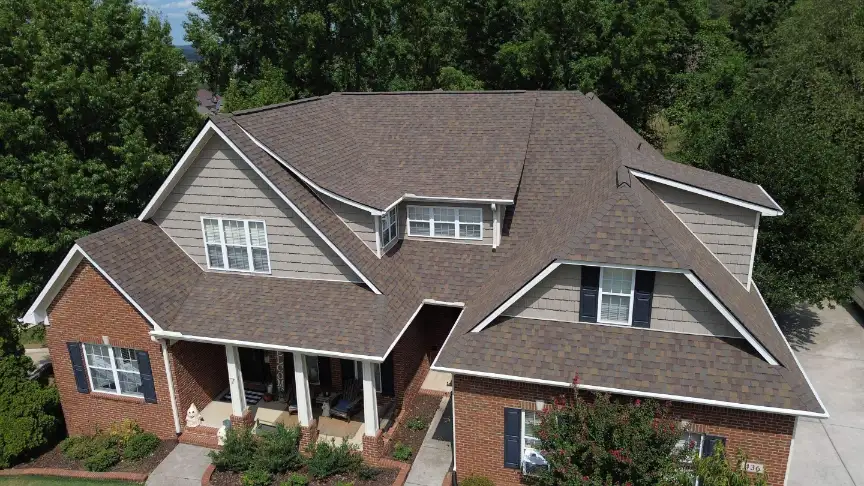
Below is what the sun actually does to a shingle, which color families cope with it best, and the handful of things that matter far more than the name on the sample board.
What the Alabama sun actually does to a shingle
North Alabama sits in a humid subtropical climate, which means long stretches of intense summer sun followed by afternoon storms and consistently high humidity. A roof here takes three separate hits.
Ultraviolet light. UV slowly breaks down the asphalt binder holding the shingle together and dulls the coloring on the ceramic granules. This is the part people call fading, and it happens to every asphalt roof regardless of color.
Heat cycling. A roof surface can climb well past air temperature on a July afternoon, then drop sharply after a storm rolls through. That daily expansion and contraction is what stiffens shingles and works on sealant strips over the years.
Humidity. Warm, damp air is the reason dark streaks show up on so many roofs in the Tennessee Valley. That is a biological problem rather than a sun problem, but it changes how a roof looks long before the shingles wear out.
Color influences the first two and changes how visible all three become.
Does shingle color change how hot a roof gets?
Yes, measurably. A dark surface absorbs more of the sun’s energy and re-radiates it as heat, so a black roof runs hotter than a light gray one on the same house on the same afternoon. Reflective, cool rated shingles reflect a noticeably larger share of that energy than a standard dark shingle.
What that means in practice is more modest than most homeowners expect. On a well insulated, properly vented attic, the color of the shingle is a small factor in your summer cooling load. On a poorly vented attic, a dark roof makes an existing problem worse: hotter attic air, hotter shingles from underneath, and shingles that stiffen and age faster than the manufacturer intended.
So the honest framing is this. Color does not decide whether your roof survives Alabama. It decides how much margin you have when something else about the system is less than perfect.
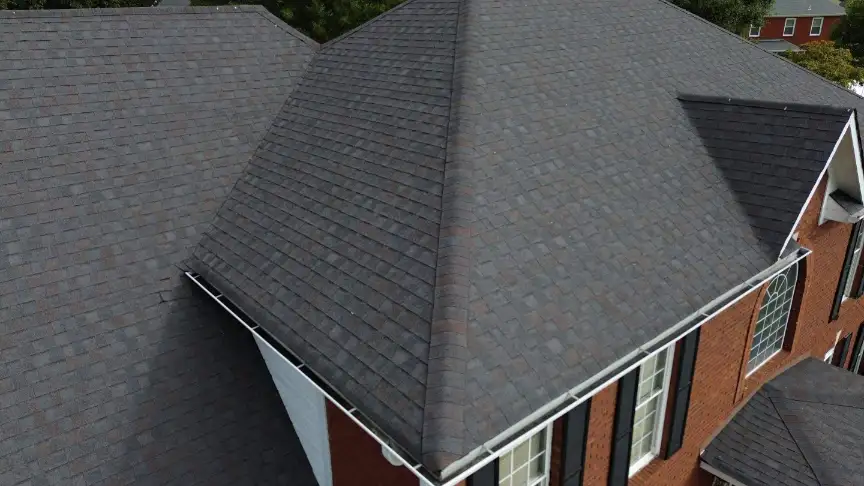
Shingle colors ranked for Alabama sun exposure
Every color family below is installed across North Alabama and all of them are legitimate choices. The differences are in how they behave in full sun and what shows up first as they age.
| Color family | Behavior in full sun | What shows first | Best fit |
|---|---|---|---|
| Onyx / true black | Absorbs the most heat of any common option | Fade contrast and repair patches | Modern and farmhouse exteriors with excellent attic ventilation |
| Charcoal and dark gray blends | Runs hot, but blended granules soften it visually | Chalky lightening on south facing slopes | The most popular compromise on brick homes here |
| Weathered wood and brown blends | Mid range heat absorption | Very little, which is the point | Brick, tan and beige exteriors across the Tennessee Valley |
| Driftwood and pewter mid grays | Cooler than charcoal, warmer than light gray | Very little; hides both fade and streaking | Homeowners who want gray without the heat penalty |
| Light gray and silver | Reflects well, stays coolest of the grays | Dark algae streaking, in high contrast | Sun exposed roofs with algae resistant granules specified |
| Tan, sand and desert tones | Low heat absorption | Streaking, plus any dirt and debris staining | Light exteriors and open lots with minimal tree cover |
| Cool rated reflective blends | Highest reflectance available in asphalt | Depends on the shade chosen | Homes where attic heat is a known, ongoing problem |
The pattern is consistent. The extremes at either end of the scale, true black and near white, are the ones that show their age fastest here. The middle of the range is where a roof still looks intentional a decade in.
Do dark shingles fade faster in the South?
This is the question homeowners ask most, and the answer is a little counterintuitive.
Dark shingles do not necessarily lose more color than light ones. UV works on all of them. What changes is visibility. When a deep black shingle lightens, the difference between where it started and where it is now is dramatic. When a mid-tone blend lightens by the same amount, the change disappears into granules that were already several different shades to begin with.
That is why a fifteen year old black roof often looks tired while a fifteen year old weathered wood roof looks broken in. Similar chemistry, very different result on the street.
The same principle applies to repairs. A patch on a black roof announces itself. A patch on a blend rarely does. If you expect to keep the house long enough to need a repair, and in a region that sees this much wind and hail, that is a reasonable expectation, it is worth weighing.
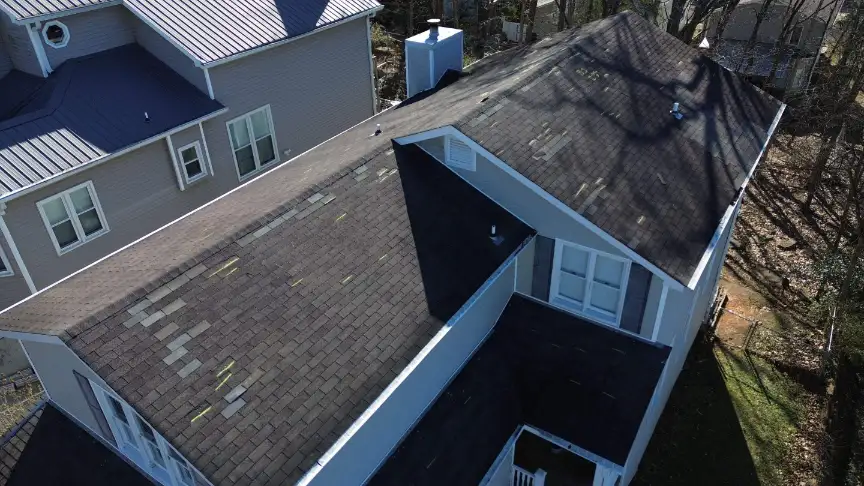
Why blended granule colors age more gracefully than solid ones
The color of an asphalt shingle comes from ceramic coated mineral granules pressed into the asphalt surface. Those granules do two jobs at once: they shield the asphalt underneath from UV, and they are the visible surface of your roof.
A solid color shingle uses granules in essentially one shade. A blended color mixes several. As the roof weathers, loses a percentage of its granules and lightens unevenly, the blend keeps reading as a texture rather than as damage. The solid color has nothing to hide behind.
Architectural shingles compound the advantage. Their layered profile casts shadow lines across the roof, and shadow reads as depth rather than as wear. Between the blend and the shadow, an architectural shingle in a mid-tone color is the most forgiving thing you can put on a house in this climate.

The specs that matter more than the color name
Two shingles can look nearly identical on a sample board and perform differently on your roof. These are the details worth asking about.
Algae resistance
Look for algae resistant granules, usually copper containing, and check the term of the stain warranty attached to that specific product line. Terms vary meaningfully between entry level and premium lines. In a humid climate this matters more than the shade you pick, particularly if you are leaning light.
Solar reflectance
If attic heat is already a problem in your house, ask for the Cool Roof Rating Council numbers rather than trusting the word “cool” in a product name. The rated solar reflectance and thermal emittance tell you what the surface actually does.
Impact and wind rating
Neither is affected by color at all, and both matter here. Hail and straight line wind are far bigger threats to a North Alabama roof than sunlight is. If you are still weighing systems rather than shades, our guide to the best roofing materials for the North Alabama climate covers that ground properly.
Product line, not just color
Colors are often available across several tiers of the same manufacturer’s range. The same weathered wood on a builder grade line and a premium line are two different shingles with two different warranties.
Dark streaks are not fading
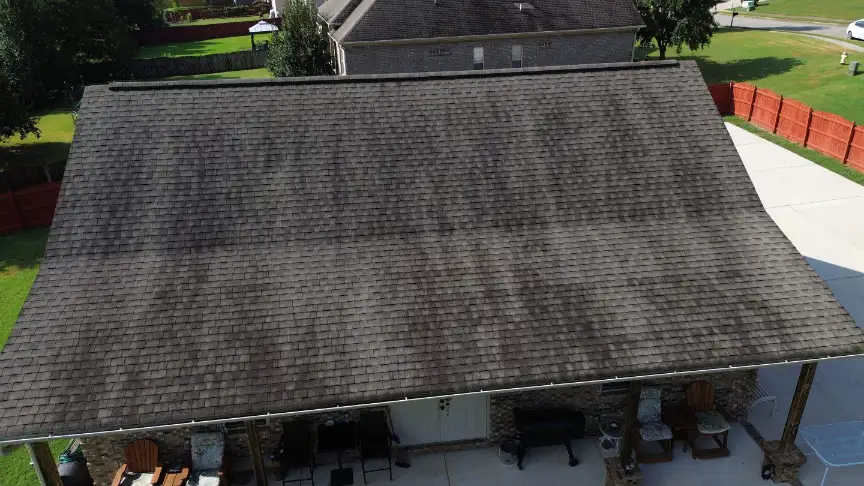
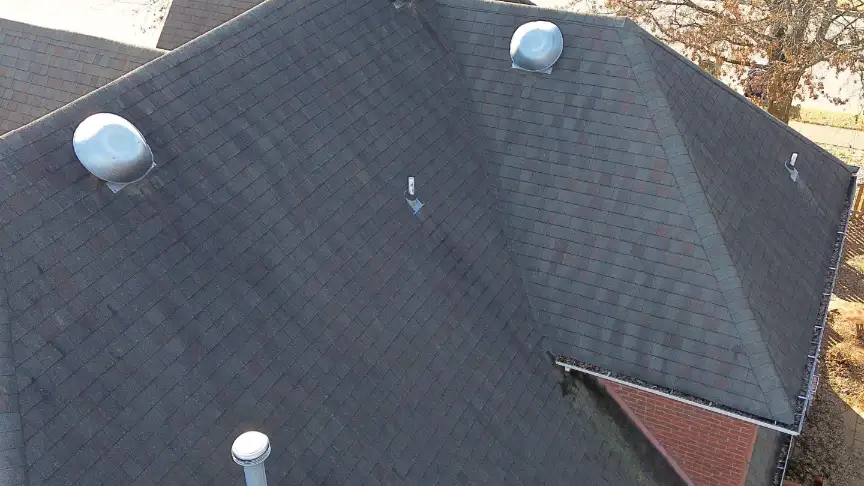
Those black streaks running down the north facing side of so many roofs around here are not sun damage. They are Gloeocapsa magma, an airborne algae that thrives in humidity and feeds on limestone filler in the shingle. It shows up first on shaded slopes, which is exactly the opposite of where sun damage appears.
The distinction matters because the fixes are different. Streaking is a surface condition that can be treated and slowed. Fading is not reversible, and pressure washing an asphalt roof to chase it strips granules and shortens the roof’s life.
Color changes only how obvious the streaking is. On light gray or tan it is unmistakable within a few seasons. On weathered wood or charcoal, the same growth can go unnoticed for years, which is a reason to have someone actually look at the roof rather than judging it from the driveway.
What actually decides how long your color lasts
Color is one variable among several, and it is not the strongest one.
Attic ventilation. Balanced intake at the soffit and exhaust at the ridge lets heat escape instead of cooking the shingles from beneath. A dark roof over a well vented attic will comfortably outlast a light roof over a sealed one.
Installation quality. Nail placement, starter strip, proper flashing and correctly sealed courses determine whether the roof reaches its rated life at all. None of it is visible from the ground once the job is done.
Sun exposure and tree cover. A west facing slope in an open lot in Madison ages differently from a shaded slope in an older Huntsville neighborhood, on the same house with the same shingle.
Ongoing care. Keeping granules out of the gutters, clearing debris off valleys, treating algae before it establishes and catching a lifted shingle in year six rather than year nine. That is the difference between a roof that reaches its number and one that does not. Our roof maintenance program exists for exactly this, and the same points are covered from the lifespan angle in how long a roof lasts in Alabama.
Choosing a color for a specific North Alabama house
Once the durability question is settled, the choice comes down to the house itself. A few local realities worth keeping in mind:
- Red brick is common across Huntsville, Madison and Decatur, and it narrows the field. Weathered wood, driftwood and charcoal are the safe pairings; anything with a strong warm undertone tends to fight the brick.
- Newer subdivisions often carry HOA approved color lists. Worth confirming before you fall in love with a sample.
- If a sale is anywhere on the horizon, a mid-tone blend appeals to a wider pool of buyers than a statement color does.
- Trim and gutter color matter more than most people expect. A roof that clashes with white fascia reads as a mistake even when the shingle itself is a good one.
When you are ready to see actual shades against actual houses rather than reading about how they age, our shingle color options page lays out the available collections.
How to judge a color before you commit
Sample boards lie, and they lie in a predictable direction. Everything looks darker and more saturated in your hand than it will on a roof plane forty feet away in full sun.
- Take the sample outside and hold it up against the house, not against the kitchen counter.
- Look at it twice, once in morning light and once mid afternoon. Grays in particular shift considerably.
- Hold it near the brick, the siding and the trim at the same time, since those three have to agree.
- Drive the neighborhood and find the color already installed on a roof of a similar pitch. Ten year old examples tell you more than any brochure.
- Decide before the crew arrives. Changing a color mid project is the most expensive way to buy a shingle, as our breakdown of what moves a roof replacement quote explains.
Frequently asked questions
What shingle color lasts the longest in Alabama?
No color changes the warranty, but mid-tone blends such as weathered wood, driftwood and pewter tend to look acceptable the longest. They run cooler than solid black, and their mixed granules disguise both the slow lightening caused by UV and the dark streaking caused by humidity.
Do dark shingles fade faster than light shingles?
All asphalt shingles lighten slowly under UV exposure. Dark shingles do not necessarily lose more color, but the change is far more visible because the contrast between original and faded areas is greater. Light and blended colors change by a similar amount and simply hide it better.
Does a light colored roof lower cooling bills in North Alabama?
A lighter or reflective shingle keeps the roof surface cooler and reduces heat pushed into the attic, but the saving is modest on a typical home. Attic insulation and balanced intake and exhaust ventilation have a much larger effect on summer cooling than the color of the shingle.
Are black shingles a bad choice for a hot climate?
No. Black shingles are installed across the South every day and perform properly when the attic is ventilated correctly. They run hotter, show fade and repair patches sooner, and are less forgiving of a poorly ventilated attic, so the ventilation has to be right.
What causes the dark streaks on a shingle roof?
Those streaks are Gloeocapsa magma, an algae that thrives in humid Southern summers and feeds on limestone filler in the shingle. It is a surface issue rather than fading, it appears first on shaded north facing slopes, and algae resistant shingles use copper containing granules to slow it down.
Will a repair patch match my existing shingle color?
Rarely an exact match. New shingles sit next to a roof that has been weathering for years, so the patch usually reads lighter or brighter for a season or two. Blended mid-tone colors close that gap faster and more convincingly than solid black or solid light gray.
Talk it through with someone who has seen these colors age
We have installed and inspected these shingles across Huntsville, Madison, Athens and Decatur long enough to know how each family looks after a decade of Alabama summers, not just how it looks on the sample board.
If your current roof is fading, streaking or losing granules, a free inspection will tell you whether you are looking at a cosmetic issue or a real one, and the signs a roof needs repair before replacement are worth a read first. If you are planning a new roof, see how our roof replacement process works, or call (256) 203-5638 and we will get someone out to look at it.
Serving Huntsville, Madison, Athens, Decatur and the surrounding North Alabama area.

Jordan is the founder and owner of Huntsville Roofing Solutions, a locally owned, fully licensed and insured roofing company serving Huntsville and North Alabama. He and roofing supervisor Barry Minor have handled residential and commercial roofs across the region — replacements, repairs, storm damage, and insurance claims — earning a 4.9-star Google rating along the way.