
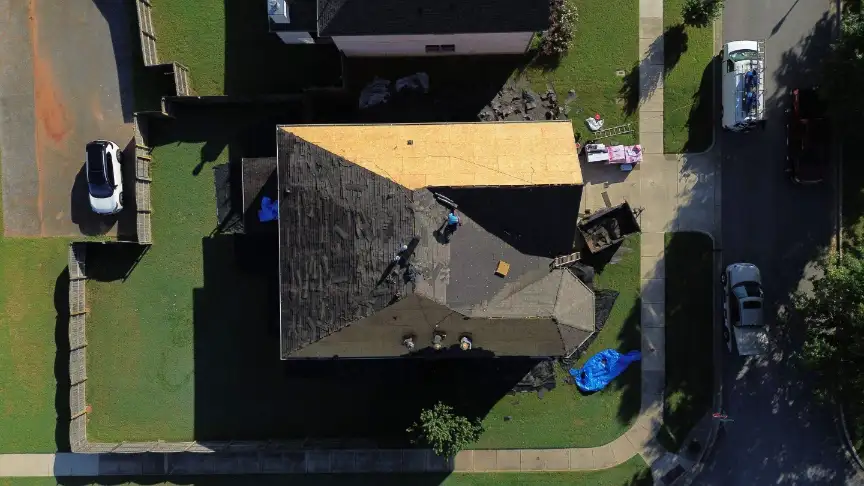
If rain starts during roof replacement, a responsible roofing crew should stop exposing new areas, secure materials, protect any open sections and pause installation until conditions are safe and the roof deck is dry. If rain is forecast before tear-off begins, the contractor may delay the start rather than unnecessarily open the roof. A brief shower does not automatically ruin a roof replacement, but wet decking should not simply be covered and ignored. It should be inspected, allowed to dry as needed, and confirmed suitable before underlayment or shingles are installed.
Rain is one of the variables that cannot be scheduled as precisely as a material delivery or crew arrival.
That does not mean a roofing contractor should be surprised that weather exists.
A good replacement plan includes checking the forecast, limiting how much roof is exposed at one time, having temporary protection available and knowing when to stop work.
The goal is not to promise that rain will never interrupt your project. The goal is to prevent a normal weather delay from becoming water damage.
What Happens If Rain Is Forecast Before Roof Replacement Starts?
If the forecast shows a meaningful chance of rain during the planned tear-off and installation window, the safest decision may be to postpone the start.
That can be frustrating when materials have arrived and you have already rearranged your schedule, but delaying an unopened roof is usually easier than trying to protect one after thousands of square feet of shingles have been removed.
A contractor may consider:
- When the rain is expected to begin.
- How long the weather window appears to remain dry.
- Roof size and complexity.
- How quickly each roof section can be torn off and dried in.
- Wind conditions.
- Temperature and surface conditions.
- The roofing materials being installed.
- How much work can realistically be completed before conditions change.
Rescheduling because the weather window is poor is not necessarily evidence of bad planning. Sometimes postponing work is the most responsible decision a roofing contractor can make.
If you want the broader sequence of events when conditions cooperate, see our roof replacement day walkthrough.
What Happens If It Starts Raining After Tear-Off Begins?
This is the situation homeowners usually have in mind when they ask about rain during roof replacement.
The crew has already removed some or all of the old shingles, and the finished roof is no longer protecting that section of the house.
The response should focus first on stopping additional exposure.
Depending on how far the job has progressed, that can mean:
- Stopping additional shingle tear-off.
- Securing loose roofing materials and tools.
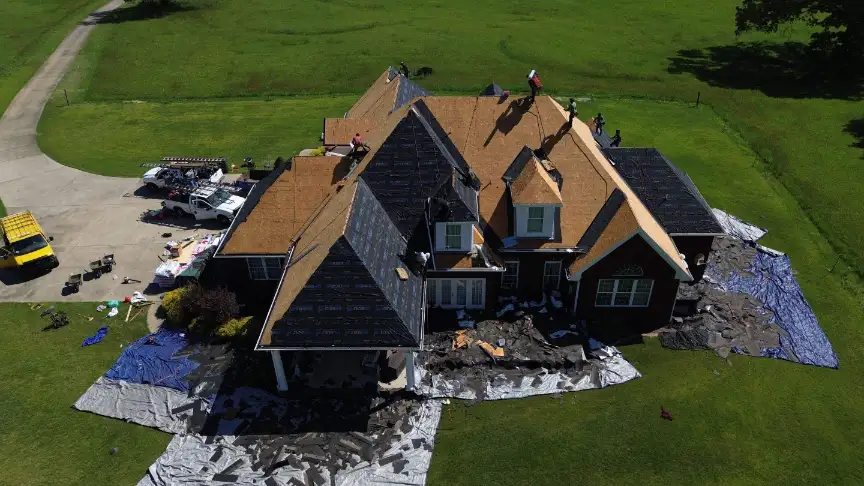
- Protecting exposed roof sections with an appropriate temporary covering.
- Checking valleys, roof penetrations and edges where water could enter.
- Monitoring the attic or interior if significant rain occurred.
- Waiting until the roof surface is safe before returning to work.
- Assessing whether exposed decking became wet and whether it has dried sufficiently before roofing continues.
Exactly how a roof is temporarily protected depends on which layers are already installed and the roofing system being used.
A section that still has bare plywood needs a different response from a section that already has properly installed underlayment and water-protection materials.
Is Your House Completely Exposed Once the Old Shingles Come Off?
Not necessarily.
Roof replacement is normally completed in stages rather than by removing every protective layer from the entire house and leaving it exposed indefinitely.
Once the old shingles and old underlayment are removed, the crew inspects the roof deck. After necessary deck repairs, the next layers can include drip edge, self-adhered water protection in specified locations and field underlayment before the new shingles are installed.
Those layers are part of the roof’s water-management system.
However, an unfinished roofing system should not be treated as though it is already a completed roof.
Underlayment products have different exposure limitations and installation requirements. Temporary protection should follow the instructions for the specific product rather than assuming that any roll of underlayment can safely sit through unlimited rain.
What Happens If the Roof Deck Gets Wet?
A wet roof deck does not automatically mean every sheet of plywood or OSB has to be replaced.
The important question is what condition the decking is in after the weather passes.
Roofing materials should not simply be installed over wet decking to keep the project moving.
Asphalt-shingle installation guidance calls for the roof deck to be clean, smooth, properly fastened and dry before the roofing system is installed. Covering wet wood can create problems as the material dries and changes dimension beneath the finished roof.
After unexpected rain, a contractor may need to evaluate:
- How much rain reached the exposed decking.
- How long it remained wet.
- Whether water entered joints or damaged areas.
- Whether plywood has swollen or delaminated.
- Whether OSB has softened or swollen at the edges.
- Whether existing deck deterioration became more obvious after getting wet.
- Whether the surface has dried sufficiently for the next roofing layer.
A brief shower on otherwise sound decking is different from prolonged saturation of already deteriorated sheathing.
That distinction is why inspection matters more than an automatic rule that says “it got wet, so replace everything” or “it looks dry, so cover it immediately.”
Does Underlayment Protect the Roof If Rain Starts?
Properly installed underlayment provides an additional water-shedding layer beneath the finished roof covering, and certain self-adhered membranes are designed to provide enhanced protection in particularly vulnerable locations.
But there are two important qualifications.
First, underlayment is not a substitute for the completed roofing system.
Second, different underlayment products have different requirements for installation, fastening and allowable exposure.
A roofing contractor should know which product is on your home and how that manufacturer allows it to be used if weather interrupts the installation.
If rain is already falling, the correct response is not simply to keep installing shingles faster.
Can Roofers Keep Working in Light Rain?
Active roofing work should generally pause when rain makes the roof surface or deck wet.
There are two separate reasons.
The first is worker safety. A pitched roof becomes substantially more hazardous when wet.
The second is installation quality. Asphalt shingles and the materials underneath them are intended to be installed over suitable, dry roof decking according to the manufacturer’s requirements.
A contractor trying to beat active rainfall is not necessarily providing better service than one who stops.
Sometimes the professional decision is to protect the work, get everyone safely off the roof and continue later.
Will Rain Ruin the New Roofing Materials?
Usually not simply because rain occurred on the jobsite, but different materials need to be handled differently.
Bundles of asphalt shingles are designed to become part of an exterior roofing system, but that does not mean every package, accessory, adhesive, sealant or roll of underlayment should be stored carelessly in standing water.
Materials should be stored and handled according to manufacturer instructions.
If packaging becomes saturated or a product appears damaged, the crew should evaluate it before installation instead of assuming that everything is automatically usable.
This is especially important for products whose adhesion or performance depends on clean, dry application surfaces.
Will Rain Make My Roof Replacement Take Longer?
It can.
A weather interruption may add only a few hours, or it may push the project into another day depending on when the rain arrives and how quickly safe, dry working conditions return.
The delay is not limited to the time rain is physically falling.
The crew may also need time for:
- Roof surfaces to become safe to walk on.
- Exposed decking to dry.
- Temporary protection to be removed and checked.
- Any affected materials to be inspected.
- The work area to be reorganized.
A one-day replacement can therefore become a two-day project without anything being wrong with the roof or the installation.
Speed is less important than keeping moisture out of the finished assembly.
Why Weather Planning Matters in Huntsville
Rain is not an unusual event in North Alabama.
National Weather Service climate normals for Huntsville show approximately 54.29 inches of normal annual precipitation based on the 1991–2020 climate period.
That does not mean roofing work is constantly interrupted. It does mean a North Alabama contractor should treat changing weather as a normal project-management issue rather than an exceptional event nobody could anticipate.
The forecast is still only a forecast. A day that begins dry can develop an unexpected shower, particularly during unsettled weather.
That is why the contractor’s response plan matters as much as the forecast itself.
Is Rain During a Roof Replacement the Contractor’s Fault?
Rain itself is not the contractor’s fault.
Weather changes.
The more useful question is whether the contractor handled the risk responsibly.
A contractor cannot guarantee that no unexpected shower will ever appear. What you can reasonably expect is planning and communication.
That includes checking weather conditions before major tear-off, avoiding unnecessary exposure, having temporary protection available, stopping when conditions are unsafe and telling you what happened if weather affects the schedule.
There is also an important distinction between an unavoidable weather interruption and preventable exposure.
If rain was clearly expected for most of the day and a contractor removed a large section of roofing with no realistic way to protect it, that deserves questions.
If an unexpected shower arrives after a reasonable dry forecast and the crew quickly protects the open roof, that is a different situation.
Candidly, no competent contractor can make weather risk zero. The standard should be sensible planning and a competent response when conditions change.
What Should You Ask Your Roofer About Rain Before the Job Starts?
You do not need to plan the roofing operation yourself, but it is reasonable to ask how weather interruptions are handled.
Useful questions include:
- How closely do you monitor the forecast before tear-off?
- How much roof do you normally expose at one time?
- What happens if an unexpected shower develops?
- What temporary protection do you keep available?
- How do you determine whether wet decking is ready to cover?
- How will I be notified if weather changes the schedule?
- Who should I call if I notice water inside the house while the project is underway?
The answers do not need to sound complicated. They should sound organized.
You can also prepare your home before the roofing crew arrives so vehicles, outdoor belongings, pets and other household concerns are already handled if the schedule changes.
What About Cold Weather, Frost or Winter Rain?
Rain is only one weather condition that can affect installation.
Cold temperatures, frost, ice and wind can create separate material and safety concerns.
Those conditions should not be folded into one generic rule because asphalt shingles, membranes, adhesives and sealants can have different temperature and installation requirements.
If your project is scheduled during the colder months, read our separate guide to winter roof replacement in North Alabama.
Frequently Asked Questions About Rain During Roof Replacement
Can a roof replacement continue while it is raining?
Generally, active roofing should pause when rain makes the roof deck or working surface wet. The crew should protect exposed areas and wait for safe conditions and a suitable dry deck before continuing installation.
What happens if rain starts after the old shingles are removed?
The crew should stop exposing additional roof area, secure the jobsite and temporarily protect the open roof. After the rain, exposed decking should be inspected and allowed to dry as necessary before the roofing system continues.
Does plywood need to be replaced if it gets wet during roof replacement?
Not automatically. Sound plywood that experiences a brief wetting may remain usable once it has dried and been inspected. Decking that becomes soft, swollen, delaminated or otherwise unsuitable should be addressed before it is covered.
Can underlayment get wet during a roof replacement?
Some roofing underlayments are designed to tolerate limited exposure, but allowable exposure and installation requirements vary by product. The contractor should follow the specific manufacturer’s instructions rather than assuming all underlayments perform the same way.
Will rain delay my roof replacement?
It can. Rain may pause work for several hours or extend the project into another day because the roof must be safe to walk on and exposed decking or materials may need time to dry or be inspected.
Is an unexpected rain shower a sign that my roofer planned poorly?
Not necessarily. Forecasts can change. What matters is whether the contractor monitored conditions, limited unnecessary exposure, had temporary protection available, stopped work when appropriate and communicated clearly about the delay.
The Bottom Line
Rain during roof replacement does not automatically mean your house or new roof has been damaged.
A well-managed roofing project is prepared for weather to change.
If rain is expected before tear-off, the start may be postponed. If an unexpected shower arrives after work begins, the crew should stop exposing the roof, protect open areas and wait until the deck and working conditions are suitable before installation resumes.
The important part is what happens next—not whether a single raindrop touched the jobsite.
For homeowners comparing contractors, you can meet the team behind Huntsville Roofing Solutions and learn more about the company before deciding who will be working on your home.
If you have a replacement coming up and want to discuss scheduling, weather planning or what to expect during the project, contact Huntsville Roofing Solutions.
Technical review note: Asphalt-shingle manufacturer installation guidance recommends roofing over a clean, suitable and dry roof deck, and industry guidance supports pausing installation when rain makes roofing conditions unsafe or unsuitable. Huntsville precipitation figures referenced above are based on National Weather Service 1991–2020 climate normals.

Jordan is the founder and owner of Huntsville Roofing Solutions, a locally owned, fully licensed and insured roofing company serving Huntsville and North Alabama. He and roofing supervisor Barry Minor have handled residential and commercial roofs across the region — replacements, repairs, storm damage, and insurance claims — earning a 4.9-star Google rating along the way.