
A no money down roof replacement in North Alabama means an approved third-party lender funds the roofing project, so the homeowner starts work without a deposit. The sequence is fixed: free inspection, written scope and price, credit application, lender approval, signed agreement, installation, then funding once the homeowner confirms the work is complete. The first monthly payment normally begins after the roof is finished, not the day you sign. “No money down” describes the payment structure, not the total cost, and approval still applies. Huntsville Roofing Solutions offers this across Huntsville, Madison, Decatur, Athens, and the surrounding North Alabama service area.

This guide explains the mechanics of a zero-down roofing project: how the money actually moves, what order things happen in, and where a homeowner’s obligations begin.
It is deliberately not a rate sheet. For current plans, terms, and disclosures, use the roof financing page. For a side-by-side of the available plan structures, see how to finance a new roof with $0 down and monthly plan options.
What “No Money Down” Actually Means on a Roofing Project
It means the roofing project can begin without a deposit, a draw payment, or a check at contract signing.
That is a narrow, specific thing. It is not a discount, a grant, or a delay in the cost of the roof. The full price of the project still exists. What changes is who pays it and when.
In a conventional roofing contract, homeowners are frequently asked for a deposit up front, sometimes to cover material orders. In a zero-down structure, an approved lender takes that position instead. The homeowner’s cash stays where it is, and the obligation shifts from a lump sum to a repayment schedule.
This is why the phrase is so often misread. Homeowners hear “no money down” and process it as “cheaper.” It is not cheaper. It is differently timed, and the total you repay depends entirely on the plan you accept.
Who Pays the Roofing Crew If You Are Not Paying Anything Up Front?
There are three parties in a financed roof replacement, and it helps to see them separately.
- You, the homeowner. You own the property, approve the scope of work, and sign the lender agreement. After the project funds, you repay the lender.
- The roofing contractor. Huntsville Roofing Solutions inspects the roof, prices the work, and performs the installation. The company does not lend the money and does not set the interest rate.
- The third-party lender. An outside finance company reviews the application, approves an amount, and pays the contractor for the approved project.
That last point is the one most homeowners have never had explained. You do not make monthly payments to your roofer. You make them to the lender. The roofing company is paid once, by the lender, and then steps out of the money side entirely.
Funding is typically released after the work is finished and the homeowner confirms completion. That ordering matters: it means the contractor has a direct incentive to finish the job properly, because the job being genuinely complete is what triggers payment.
The Step-by-Step Sequence of a Zero-Down Roof Replacement
The order is not arbitrary. Each stage produces something the next stage needs.
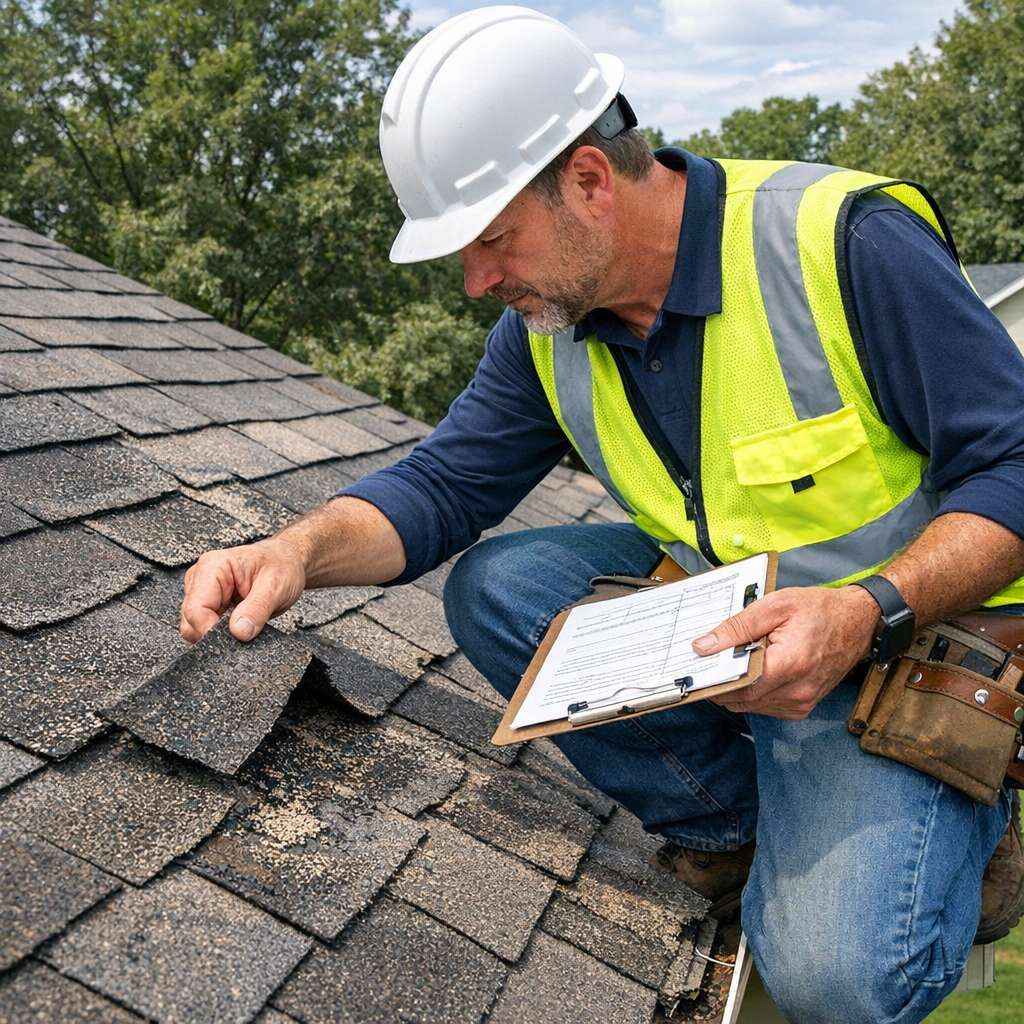
1. Free inspection and documentation
A roofer gets on the roof, measures it, and documents condition: shingle wear, flashing, penetrations, decking, ventilation. This is also where you find out whether you need a replacement at all. Plenty of roofs need a repair instead, which costs a fraction as much. If you are unsure, start with the repair or replace decision guide.
2. Written scope and price
You receive a written scope covering materials, tear-off, decking allowances, ventilation, and labor, with a project total. Get this number before you look at any payment plan. A monthly payment is meaningless until you know what is being financed. What moves that number is covered in what changes a roof replacement quote.
3. Insurance check, if storm damage is involved
If wind or hail is a factor, this is the moment to find out what a claim may cover, because it changes the amount you need to finance. See how the insurance claim process works.
4. Credit application
A short application goes to the third-party lender. This is a real underwriting step, not a formality. Approval, amount, and available terms come back from the lender.
5. Choose the plan structure
Once approved, you select from the plans you qualify for. Deferred-interest promotions, deferred-payment plans, and long fixed-rate terms behave very differently over time. Read how 18-month deferred interest works before assuming a promotional plan is the same as 0% interest, because it usually is not.
6. Sign the lender agreement
This is the binding document. It states the amount financed, the rate, the term, when payments begin, and what happens if a promotional window closes with a balance remaining. Read it. It governs your obligation, not the roofing proposal.
7. Schedule and install
Materials are ordered, a date is set, and the crew performs the tear-off and installation. You choose your shingle color somewhere in here — see the shingle color options.
8. Completion, funding, then first payment
After a final walkthrough, you confirm the work is done. The lender releases funds to the contractor. Your repayment schedule begins according to your agreement.

Where the Money Sits at Each Stage
| Stage | What is happening | What you have paid so far |
|---|---|---|
| Inspection and quote | Roof is measured, scope and price are written up | Nothing |
| Application and approval | Lender underwrites and returns approved terms | Nothing |
| Signing | Lender agreement is executed; obligation begins | Nothing out of pocket |
| Installation | Tear-off and new roof system installed | Nothing out of pocket |
| Completion and funding | You confirm completion; lender pays the contractor | Nothing out of pocket |
| Repayment | Monthly payments begin per the agreement | Monthly payments to the lender |
The out-of-pocket column stays empty until the roof is on the house. That is the entire practical point of the structure.
When Does the First Payment Actually Start?
The first payment is tied to funding, not to signing.
Because funding normally happens after the roof is finished, most homeowners are looking at a gap between the day they signed and the day the first payment is due. On plans that defer required payments, that gap can be considerably longer.
Two things worth separating:
- When payments are due. Set by your plan and your funding date.
- When interest starts accruing. Not always the same date. On deferred-interest structures, interest can begin accruing from the purchase date even while no payment is required.
That distinction is where homeowners get surprised eighteen months later. “No payments” and “no interest” are two different promises, and a plan may offer one without the other.

Zero Down vs. a Deposit-Based Roofing Contract
Both are legitimate ways to buy a roof. They allocate risk differently.
With a deposit-based contract, you hand over cash before work begins. Your money is committed to a contractor who has not yet performed. If that contractor is reputable, this is fine and often slightly cheaper. If they are not, your deposit is the thing at risk.
With a zero-down structure, the contractor is paid by a lender after completion. You have not advanced funds against unperformed work. The cost of that protection is the cost of borrowing, which depends on the plan.
If you are weighing whether to borrow at all versus writing a check from savings, that comparison is handled in full in finance or pay cash for a new roof.
What No Money Down Does Not Mean
Four corrections, because these cause most of the confusion:
- It does not mean guaranteed approval. The structure describes the down payment, not the underwriting standard. Approval depends on the lender. If credit is a concern, read roof financing with less-than-perfect credit in Alabama.
- It does not mean the roof costs less. The project price is set by the scope of work. See the 2026 roof replacement cost guide for what drives that figure.
- It does not mean borrowing is free. Only a genuinely interest-free plan, paid within its terms, costs nothing extra.
- It does not mean you must finance the whole project. Many homeowners pay part in cash, apply an insurance payment, and finance only the remainder.
Warning Signs on a Zero-Down Roofing Offer
The structure is common and legitimate. Certain sales behavior around it is not.
- A monthly payment quoted before anyone has measured your roof.
- Pressure to sign the lender agreement the same day, framed as an expiring offer.
- A verbal “0% interest” that the written agreement describes as deferred interest.
- Reluctance to give you the total amount financed and the total repaid over the full term.
- A storm-chasing outfit with no local address, no Alabama history, and no way to reach them in year three.
A financing plan lasts years. The company backing your workmanship warranty needs to still exist for those years. Our guide on finding a reputable roofing contractor covers what to verify.
Who This Structure Actually Fits
It tends to work well when:
- The roof is actively failing and waiting means interior damage. Deferring a leaking roof is almost always the more expensive choice.
- You have savings but would rather not empty them for a planned expense.
- An insurance claim covered part of the job and you need to bridge the remainder.
- Your income is stable and a fixed monthly line item is easy to absorb.
It fits less well when the roof only needs a repair, when you can comfortably pay cash and dislike carrying debt, or when your budget is already strained enough that adding a fixed obligation would create a new problem.

How This Works Across North Alabama
The process above is the same whether the house is in Huntsville, Madison, Decatur, Athens, Cullman, or Harvest.
City does not change the mechanics. What changes the outcome is the project amount, the approved terms, and the repayment length. Homeowners specifically comparing local payment structures can also read roof payment plans in Decatur and Athens, and regional pricing context sits in roofing prices in Huntsville and North Alabama.
The full coverage map is on the area served page.
Frequently Asked Questions
Does no money down mean the roof is free until I start paying?
No. It means no deposit is required to begin. The work is funded by an approved lender, and repayment follows the agreement you sign. Depending on the plan, interest may begin accruing before your first payment is due.
Who pays the roofing crew if I pay nothing up front?
The lender pays the contractor directly for the approved project amount, typically after the work is complete and you have confirmed it. You then repay the lender rather than the roofing company.
When does the first monthly payment start?
It is tied to when the loan funds, which is normally after installation rather than the day you sign. Some promotional plans push it further out. Your exact date comes from the lender agreement.
Is everyone approved?
No. Zero down describes the payment structure, not the approval standard. Financing runs through third-party lenders and remains subject to credit approval and lender terms.
Can I combine an insurance claim with financing?
Frequently, yes. When covered storm damage is involved, insurance may pay part of the project and financing can cover the balance, such as a deductible or upgrades outside the claim.
Can I pay the balance off early?
Huntsville Roofing Solutions lists no early payment penalty among its financing features. Confirm prepayment terms in your specific agreement, since these vary by plan and lender.
Do I still get a warranty on a financed roof?
Yes. Workmanship and manufacturer coverage are identical to a cash job, and warranty coverage remains active for the duration of the financing agreement.

Start With the Inspection, Not the Payment
The most common mistake is shopping for a monthly payment before knowing what the roof needs. Work the other direction: find out whether it is a repair or a replacement, get the scope and price in writing, check any legitimate insurance coverage, then decide how much you actually want to finance.
Huntsville Roofing Solutions offers free inspections across North Alabama, with financing available through third-party lenders subject to credit approval.
Review current terms on the roof financing page, or request a free roof inspection and get a real number to work from.
Financing is provided by third-party lenders and is subject to credit approval. Plans, rates, and terms are set by the lender and may change. This article explains process and structure only and is not financial advice; review your lender agreement for the terms that apply to you.
Jordan is the founder and owner of Huntsville Roofing Solutions, a locally owned, fully licensed and insured roofing company serving Huntsville and North Alabama. He and roofing supervisor Barry Minor have handled residential and commercial roofs across the region — replacements, repairs, storm damage, and insurance claims — earning a 4.9-star Google rating along the way.