
Yes, a contractor can sometimes replace just one side or slope of an asphalt-shingle roof. It can make sense when damage is confined to that slope, the other sections have substantial useful life remaining, and valleys, ridges and flashing can be integrated reliably. It may be a poor choice if the roof is uniformly aged, matching shingles are unavailable, or the new work requires disturbing adjoining slopes. Have the roofer inspect the whole system before choosing partial replacement solely to save money.

What counts as a separate roof slope?
A slope is a continuous plane of roofing from ridge or upper transition to eave. Replacing one complete plane differs from patching a handful of shingles. Roof geometry matters: hips, valleys and dormers can link multiple planes into one weather-shedding system, making a clean boundary more complicated.
One slope versus a full replacement
A partial job uses fewer materials and may be reasonable after localized damage. A whole-roof replacement creates more uniform appearance and aging, with fewer old-to-new transitions. The right option depends on damage distribution and roof condition, not a universal percentage of shingles that can be replaced.
Use this comparison to discuss both scopes with your roofer. It is a decision aid, not a substitute for inspecting the whole roof.
| What to compare | Replace one slope | Replace the entire roof |
|---|---|---|
| Where damage exists | May be appropriate when damage is confined to one slope and the rest remains serviceable. | Worth assessing when several slopes show deterioration, recurring leaks or widespread damage. |
| Ridges, hips and valleys | New roofing must connect reliably to adjoining existing materials; some adjacent work may be necessary. | Allows the contractor to address transitions as part of one coordinated replacement. |
| Appearance | New shingles may not match weathered shingles, even within the same product line. | Usually gives the roof a more consistent appearance and age. |
| Budget and future work | Smaller initial scope, but remaining slopes may need work later. | Larger initial scope, but may avoid a separate replacement on other aging slopes later. |
| Warranty questions | Confirm coverage on new materials, transition workmanship and the untouched roof separately. | Ask which manufacturer and workmanship warranties apply to the completed system. |
Matching, transitions and warranty concerns
A newly manufactured shingle may differ in color and thickness from weathered older shingles even if the product name is identical. Valleys, ridge caps and step flashing at the join need careful detailing. Ask how manufacturer and workmanship coverage applies to the new section and whether the remaining slopes retain their existing protection.
Manufacturer details matter at the boundary between old and new roofing. For example, Owens Corning’s technical bulletin on partial roof replacement at hips and ridges (PDF) explains how underlayment should integrate with adjacent existing shingles for certain Owens Corning products. The requirements and warranty terms for your roof depend on the actual materials and manufacturer instructions.
When insurance or a sale is involved
An insurer may evaluate covered damage differently from an elective replacement; coverage is contract-specific. A buyer may notice mismatched roof colors and ask about remaining life on untouched slopes. Do not assume a partial job will be viewed as equivalent to a fully replaced roof.
What the estimate should define
Request a diagram marking the exact slope, ridge and valley boundaries, an explanation of waterproofing transitions, material specifications and a plan for deck repairs. Ask the roofer to identify any reason a neighboring slope would also need disturbance.
If both options are feasible, request written estimates that identify the included roof planes, any work on adjacent shingles or ridge caps, material matching, disposal and the workmanship warranty. Compare what each quote covers before comparing the totals.
When a full replacement is the safer call
If multiple slopes show brittle shingles, widespread granule loss, recurring leaks or decking concerns, repairing only one side may postpone the larger problem without solving it. Get a whole-roof assessment and compare total likely lifecycle costs rather than only the initial invoice.
Further reading and next steps
These published guides provide additional context for the decision and the parts of your roofing system involved:
- how partial roof repairs differ
- repair-versus-replacement framework
- full roof replacement options
- insurance considerations for leaks
Huntsville Roofing Solutions serves homeowners in Huntsville and across North Alabama. For a problem that may be causing active water entry, request an inspection before selecting a repair or replacement scope. Observations described here are educational, not a diagnosis of your specific roof.
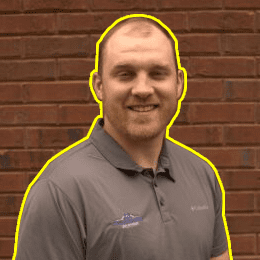
Jordan is the founder and owner of Huntsville Roofing Solutions, a locally owned, fully licensed and insured roofing company serving Huntsville and North Alabama. He and roofing supervisor Barry Minor have handled residential and commercial roofs across the region — replacements, repairs, storm damage, and insurance claims — earning a 4.9-star Google rating along the way.