
A final roof inspection before payment should confirm that the agreed roofing system is complete, roof edges and penetrations are properly finished, ventilation and flashing are addressed, and the property is cleaned up. Ask the contractor to compare the completed work with your signed scope, show photographs of areas you cannot safely see, identify any remaining punch-list items, and provide warranty and permit documentation where applicable. Do not climb on the roof yourself. Final payment should follow the schedule in your contract, including any agreed inspection or acceptance milestone.
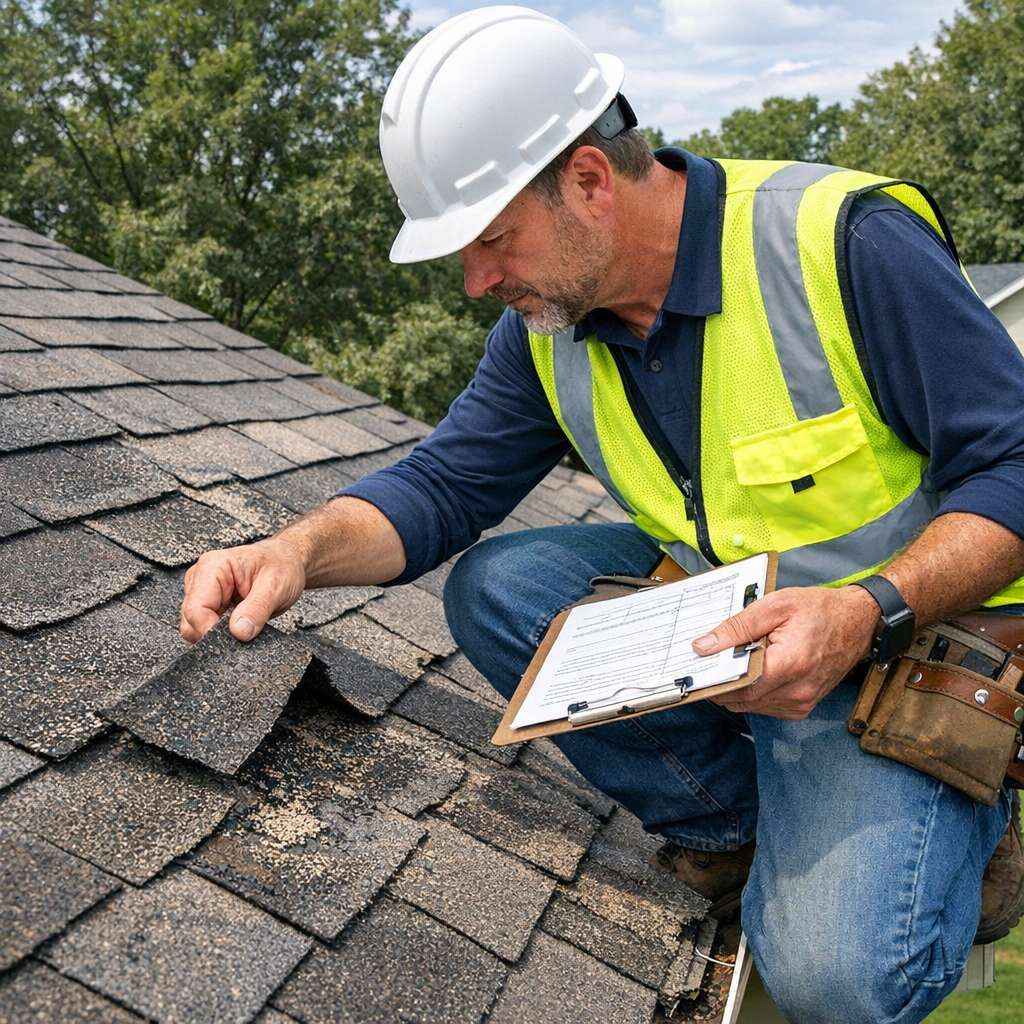
What counts as a final roof inspection?
A final roof inspection is the closeout review of the finished installation, not simply a glance at the shingles from the driveway. The contractor should look at visible shingle alignment, ridge caps, starter and edge details, flashings around chimneys and pipe penetrations, and the condition of roof accessories. Confirm that any promised rotten-decking replacement, ventilation work, or skylight flashing is documented. The roofer can show you roof-level photos rather than asking you to walk on a steep or newly finished surface.
Contractor walkthrough versus city inspection
A contractor walkthrough and a government inspection serve different purposes. The roofer confirms the contractual scope and workmanship; any permit-related inspection addresses the applicable authority’s requirements. A municipal signoff, if required, is not a substitute for examining the invoice, manufacturer product selections, warranties, and incidental property damage. Ask which inspection is included, who schedules it, and what evidence of completion you should receive. Do not treat a verbal assurance that “it passed” as a copy of the inspection record.
For the separate municipal requirements, see the Huntsville roofing permit guide.
What problems should be on the punch list?
Make a short written list of issues before the crew demobilizes: loose debris, exposed fasteners, unfinished flashing, gutter dents, displaced screens, nail or shingle scraps, damaged siding, and disturbed landscaping. A photograph and location description help avoid arguments over exactly what was noticed. A minor cosmetic concern is different from an active leak or unsealed roof opening; unsafe or weather-exposed conditions need immediate attention. Ask for the correction plan and timing in writing, and do not use the final invoice as the only place a problem is recorded.
The roof replacement day timeline explains when closeout normally happens during installation.
What should a Huntsville homeowner check from the ground?
From a safe position, look at the driveway, lawn, patios, gutters, downspouts, porch roofs, and any areas where materials were staged. The crew should collect tear-off debris and perform an appropriate magnetic fastener sweep, understanding that no sweep guarantees every nail will be found. If your property has mature trees or a steep driveway, confirm that protection equipment was removed and drainage paths are open. Take dated photos of anything you want to discuss later.
Which documents close out the roofing job?
Request the final scope and any signed change orders, an itemized invoice, shingle manufacturer and product information, workmanship warranty terms, inspection or permit records if applicable, and proof of any promised registration. Some material warranties are issued by manufacturers and some workmanship assurances are issued by contractors; they are not interchangeable. If an insurer is involved, keep the final invoice and completion photos with your claim papers. Ask what triggers a service call and how to report a concern after the crew leaves.
Use the roofing quote line-item breakdown to compare the final scope with the original bid.
Should you sign off if an item is unfinished?
Do not sign a statement saying all work is satisfactory if you know material work remains incomplete. Instead, document what is finished, what needs correction, and how your contract handles acceptance and the final payment milestone. An undisputed balance may still be contractually due even when there is a punch-list dispute; get advice before withholding money contrary to your agreement. The goal is a record of a completed roof, not an unnecessary payment standoff. A courteous, dated email can preserve the details for both sides.
For pre-contract expectations, review these questions to ask a roofer before signing.
A homeowner-friendly 20-minute walkthrough sequence
Start at the front of the property and ask the project manager to explain what was installed compared with the signed scope. From the ground, look for loose packaging, debris along the foundation, visible scratches on siding, distorted gutters, and damage to plants or driveway surfaces. Then look at labeled close-up photographs of the areas that cannot be inspected safely from below: roof valleys, step flashing, pipe penetrations, the ridge, and chimney transitions. Ask which images were taken after installation rather than during tear-off. Check whether the yard and magnetic nail sweep were completed, but recognize that no magnetic sweep can promise every tiny fastener has been found. Finish by checking that product labels, warranties, change orders, permit paperwork if applicable, and the final invoice all refer to the same agreed job. This order gives an ordinary homeowner useful evidence without pretending a ground-level walk is a substitute for a qualified inspection.
What photographs and documents can—and cannot—confirm
A photograph can show that a drip edge was installed along a visible section, but it cannot establish that every concealed fastener or layer is correct. A completion certificate can confirm that a contractor reported the job finished; it does not prove that no future leak will occur. A municipal inspection, where required, serves a different purpose from a manufacturer installation audit or a contractor quality-control walkthrough. For example, a wide roof photo may make a shingle color mismatch obvious while concealing small flashing errors that require a close view. Ask for a record tied to each question rather than a large photo gallery with no captions. Write any unresolved concern as a location, observation, and requested next action—for example, “rear downspout loose; please inspect attachment and confirm repair date.” Keep that written punch list with the signed contract. It creates a fair record for both parties without accusing a crew of defects that have not been verified.
Frequently asked questions
Is a roof inspection from the ground enough?
A ground-level review is useful for cleanup, gutters, driveway conditions and obvious visible defects, but it cannot fully evaluate flashing, fasteners, or roof-plane details. Ask your contractor for close-up completion photographs and a documented professional roof-level review; do not personally access a steep or slippery roof.
Should I insist on a municipal signoff?
If the project required a permit or inspection, request the associated record. Local jurisdiction and project scope control that process; a city inspection may not be required for every minor repair. Ask the permit holder to clarify the applicable requirement before treating a missing signoff as either proof of failure or proof of compliance.
What if a leak appears after the walkthrough?
Record when the leak appeared, the exact location, rain conditions and any interior damage, and notify the contractor immediately through the warranty contact process. Reduce additional damage safely. A completed walkthrough does not prevent legitimate later warranty questions, but it is helpful to preserve dated closeout photographs and documents.
For a roof-specific assessment in Huntsville or North Alabama, contact Huntsville Roofing Solutions. An inspection and written scope are needed before recommending construction work.

Jordan is the founder and owner of Huntsville Roofing Solutions, a locally owned, fully licensed and insured roofing company serving Huntsville and North Alabama. He and roofing supervisor Barry Minor have handled residential and commercial roofs across the region — replacements, repairs, storm damage, and insurance claims — earning a 4.9-star Google rating along the way.