
For many North Alabama homes, roof valleys should be checked at least twice a year—typically in spring and fall—and again after major storms or heavy leaf drop. Cleaning frequency depends on the trees around the home, the roof's shape, and whether debris collects where slopes meet. A shaded roof under mature trees may need attention more often than an open roof. Do not climb onto a steep or wet roof yourself; ask a qualified professional to remove debris without damaging shingles or valley flashing.
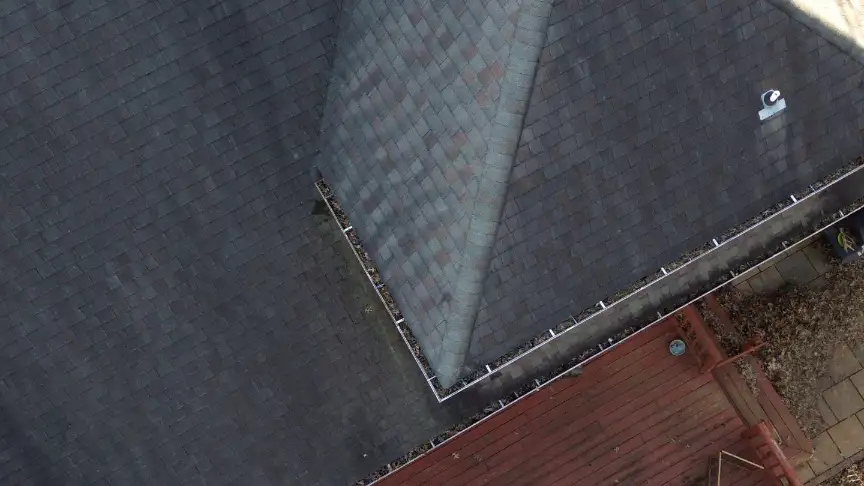
Why roof valleys collect more debris than open slopes
A valley is the channel where two roof planes meet, concentrating runoff from both slopes. Leaves, twigs, and pine needles can collect there, especially where the valley runs beneath trees or toward a narrow gutter outlet. Packed debris slows drainage and may keep water in contact with shingle edges longer than intended. Valleys can also hide worn underlayment or flashing. Cleaning is useful, but recurring leaks need a separate investigation rather than repeated sweeping alone.
Spring and fall versus after every storm
A twice-yearly check is a practical baseline rather than an official local requirement. In spring, look for winter debris and early growth. In fall, remove accumulated leaves before rain packs them tightly. Following thunderstorms or strong winds, a ground-level visual check may reveal new branches or debris clusters. Some neighborhoods with pines or heavy tree cover need more frequent attention. Plan the schedule around actual conditions rather than a fixed calendar promise.
How to know a valley needs cleaning now
From a safe vantage point, look for visible leaf mats, twigs bridging the channel, water overshooting gutters, or persistent dark damp patches after other roof areas have dried. Staining indoors near a valley is a reason for professional leak tracing, not proof that debris is the sole cause. Take photographs with a zoom lens if possible; avoid standing on a ladder in poor conditions and do not use a pressure washer on shingles.
What a professional should avoid while cleaning
Aggressive scraping can remove protective granules or disturb shingles and metal valley components. A professional should use suitable tools, avoid forcing debris beneath overlaps, and check for lifted or damaged materials afterward. The water path toward gutters must remain clear. If the valley flashing is corroded or the shingle cuts are wrong, cleaning will not repair the underlying defect. Ask for a photograph of the valley once it is cleared.
Does cleaning change in hot, humid weather?
Humidity, tree shade, and frequent showers can keep debris wet and encourage organic buildup. That does not mean every black streak is destructive or that a stronger chemical is warranted. Concentrate on removing water-trapping material and improving drainage. If moss or algae is present, use a method compatible with the roofing product and follow manufacturer instructions. Avoid treating roof valleys like concrete that can tolerate pressure washing.
How valley care fits a roof maintenance plan
Pair valley checks with gutter and downspout clearing, flashing inspection, and a look at accessible attic areas for moisture. Record the date and photograph recurring debris hotspots; that helps refine the schedule. Homes with overhanging branches may benefit from qualified tree maintenance. If a valley has leaked, obtain a documented inspection before assuming the cause is leaves alone. Keeping a channel clear reduces avoidable stress but cannot correct defective installation.
Further reading and next steps
For the related decisions and roofing components, these published Huntsville Roofing Solutions guides offer additional context:
- annual roof maintenance schedule
- how trees damage roofs
- gutter drainage and roof health
- what to do when a roof leaks in heavy rain
Industry reference: ARMA guidance on removing debris from valleys. Confirm product-specific instructions and applicable local requirements before making changes.
Huntsville Roofing Solutions serves Huntsville and surrounding North Alabama communities. An educational article cannot diagnose a particular roof without inspection; a repair recommendation should be supported by observed conditions, appropriate materials, and a written scope.
Jordan is the founder and owner of Huntsville Roofing Solutions, a locally owned, fully licensed and insured roofing company serving Huntsville and North Alabama. He and roofing supervisor Barry Minor have handled residential and commercial roofs across the region — replacements, repairs, storm damage, and insurance claims — earning a 4.9-star Google rating along the way.