
Roofing nails can pop up through shingles when they were not fully seated, do not grip the decking adequately, or are pushed upward as roof sheathing moves or deteriorates. A raised nail can create a visible bump, lift a shingle edge and sometimes expose a path for rainwater. It should be inspected and correctly repaired rather than simply hammered down through the same hole. Persistent nail pops can indicate a broader fastening or decking problem requiring a roofer’s assessment.
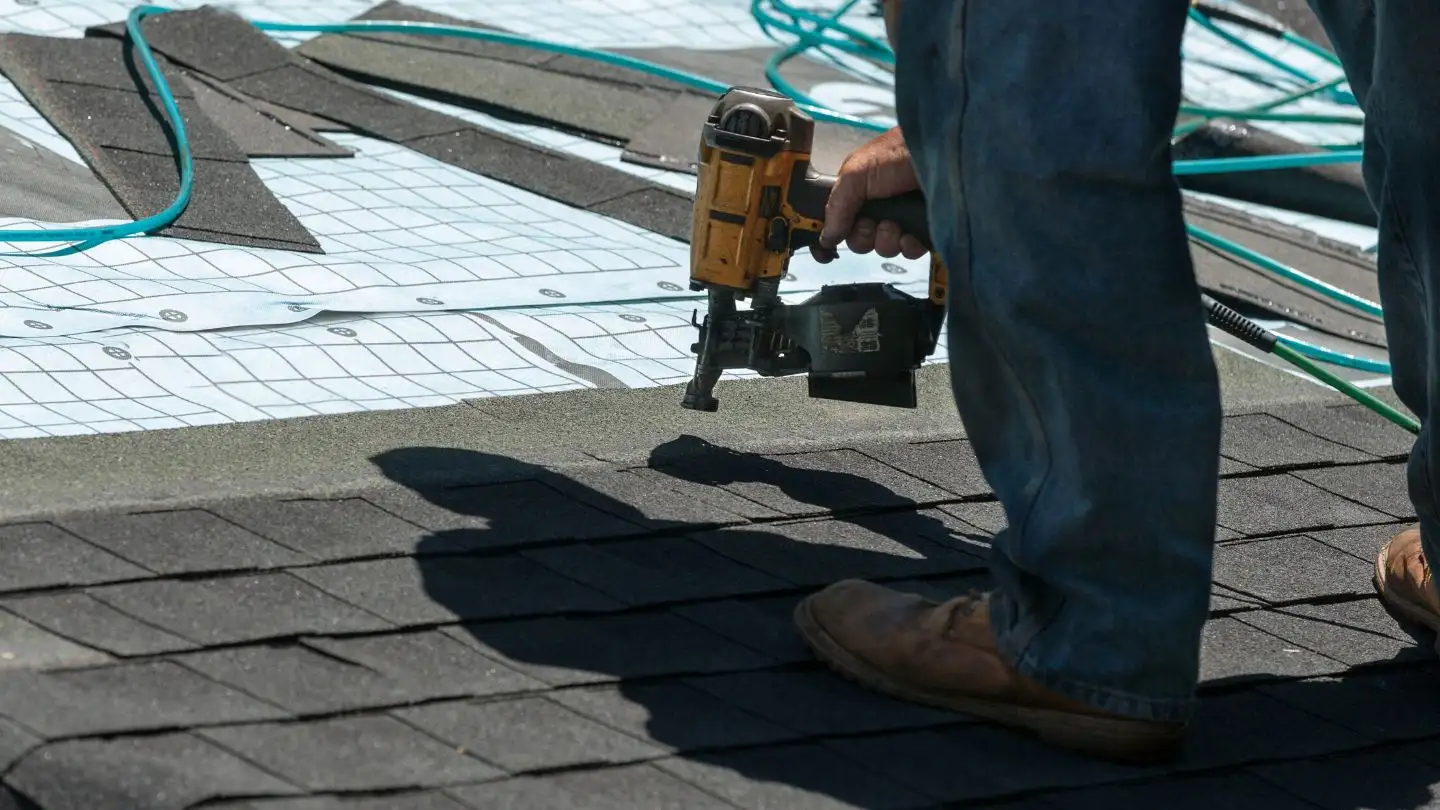
What a nail pop looks like
From the ground you might see a small pointed bump or an unusually raised shingle tab. Some raised fasteners are hidden until a leak develops. A nail head breaking the shingle surface is more concerning than a smooth, low-profile shingle edge. Do not peel up bonded shingles to inspect suspected nails yourself.
Not every raised tab is a nail pop. Shingles can also look uneven while settling, especially after cool-weather installation. Our separate guide explains why new roof shingles may not lie flat and when that appearance merits an inspection.
Why fasteners move or fail to grip
Underdriven nails may never have been flush during installation. Short, poorly placed or unsuitable fasteners can lose grip. Temperature and moisture changes can move wood decking, and damaged or delaminated sheathing can stop fasteners from holding correctly. The cause must be addressed to prevent repeat failures.
The visual clue alone cannot identify the cause. These are common possibilities a roofing professional can evaluate:
| Possible cause | What a homeowner might notice | What the roofer should investigate |
|---|---|---|
| Underdriven fastener | A localized raised spot that appears to follow a nail position. | Whether the nail head was originally seated to the product specification and whether the shingle is damaged. |
| Poor deck penetration or holding power | A raised nail or shingle may recur after an earlier repair. | Fastener length, penetration and whether the nail engages sound, suitable decking. |
| Decking movement or deterioration | Several raised points, uneven roof sections or a repeating pattern. | Sheathing condition, movement, moisture damage and whether the roof substrate needs attention. |
| Incorrect fastener placement or unsuitable installation | Raised spots concentrated along a course or around a repaired area. | Nailing zone, fastener type, shingle placement and the applicable manufacturer instructions. |
A raised nail that has penetrated the shingle surface, or evidence of active water entry, warrants prompt professional assessment. Do not climb onto the roof or try to flatten the bump yourself.
Is driving the nail back down enough?
Usually not. Reusing the same loosened hole may not restore holding power, and exposed or damaged shingle material still needs proper weatherproofing. Professional repairs may include removing and replacing the affected shingle, setting correct new fasteners into sound decking and sealing the assembly according to product instructions.
When repeated nail pops indicate a bigger issue
One isolated defect may be a small repair. A row of similar bumps across a slope suggests fastening problems or decking movement. If the wood is swollen, soft or delaminating, the roofer may need to open the area to assess structural sheathing. Cosmetic repairs will not solve that underlying cause.
What matters for the shingle warranty
Fastener number, placement, length and installation depth must meet the particular manufacturer’s specifications and applicable code. IKO specifically identifies underdriven nails, inadequate penetration and deck movement as causes of raised fasteners. A contractor should document any installation defect before proposing a lasting repair.
How to handle a new-roof nail problem
Notify the installer promptly and request dated photographs of the affected area. If the roof was installed recently, review the workmanship warranty and ask the contractor to explain any corrective work. Do not assume a single nail pop means the entire roof needs replacement, but do not ignore water entry.
For a focused follow-up, ask the contractor to document:
- Location and extent: Which shingle courses and how many fasteners are affected, supported by inspection photographs.
- Likely cause: Whether the issue involves seating depth, penetration, fastening position or sheathing condition.
- Repair scope: Whether affected shingles need replacement, where new fasteners will engage sound decking, and how water resistance will be restored.
- Warranty and follow-up: Which workmanship or manufacturer instructions apply and what will be checked after the repair.
Keep a copy of the written findings and any warranty communication. A repair proposal should address the reason the nail moved, not just the visible bump.
Further reading and next steps
These published guides provide additional context for the decision and the parts of your roofing system involved:
- roof decking damage signs
- asphalt shingle styles and characteristics
- roof repair choices
- warning signs of roof damage
Technical reference: IKO: Roofing Nails for Asphalt Shingles. Manufacturer guidance depends on the product and installation conditions.
Huntsville Roofing Solutions serves homeowners in Huntsville and across North Alabama. For a problem that may be causing active water entry, request an inspection before selecting a repair or replacement scope. Observations described here are educational, not a diagnosis of your specific roof.

Jordan is the founder and owner of Huntsville Roofing Solutions, a locally owned, fully licensed and insured roofing company serving Huntsville and North Alabama. He and roofing supervisor Barry Minor have handled residential and commercial roofs across the region — replacements, repairs, storm damage, and insurance claims — earning a 4.9-star Google rating along the way.