
On a typical roof replacement day, the crew first protects the property and stages equipment, then removes the old roofing, inspects the exposed roof deck, replaces any unsuitable decking, installs the water-shedding layers and flashing, lays the new shingles, and finishes with debris removal, a magnetic nail sweep and a final inspection. A straightforward asphalt-shingle roof may move through all of those stages in one long workday, but many North Alabama replacements take 1–3 days. Roof size, pitch, complexity, weather and hidden damage discovered during tear-off can all change the schedule.
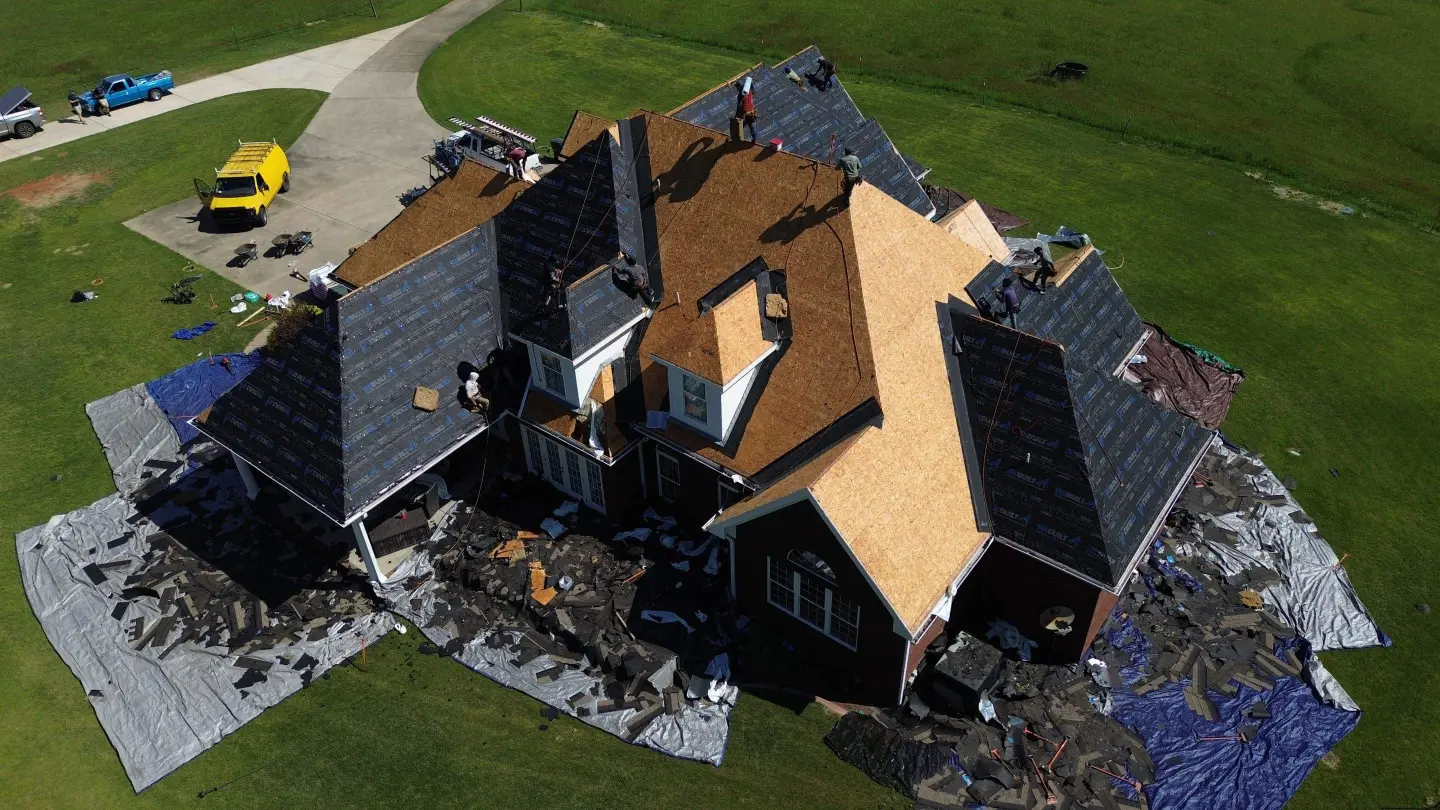
If you have never watched a roof replacement before, the amount of activity can be surprising.
There may be crew members on several roof slopes at once, material being moved, old shingles coming down, tools running and debris being collected around the property.
From inside the house, you will hear hammering or pneumatic nailers and feel vibration through the structure.
The timeline below shows how a straightforward residential asphalt-shingle project can progress when weather, access and decking conditions cooperate.
Important: the clock times are illustrative. Roofing crews organize projects around daylight, weather, roof design and safe working conditions rather than forcing every house into the same schedule.
6:30–7:30 AM: Crew Arrival, Material Staging and Property Protection
The first part of roof replacement day happens before anyone starts tearing shingles from the house.
The crew needs to organize the site so roofing materials can move efficiently without unnecessarily exposing the property to falling debris.
Typical setup can include:
- Confirming access around the house.
- Positioning trailers or debris containers.
- Staging roofing materials and tools.
- Protecting landscaping and vulnerable exterior surfaces.
- Installing tarps or debris-control materials.
- Reviewing roof access and safety conditions.
- Confirming the day’s work plan.
Property protection matters because tear-off creates a large volume of old shingles, nails, underlayment and other debris.
The existing site guidance recommends protective coverings, strategic debris management and protection around windows, siding and landscaping while the job is active.
Your own preparation should already be complete before this stage. If you need the checklist for cars, children, pets, attic belongings or outdoor furniture, use the separate guide on preparing your home for a roof replacement.
7:30–10:00 AM: Tear-Off Begins
Once the property is protected, the existing roofing system begins coming off.
For a conventional full replacement, workers remove the old shingles rather than simply covering them with another layer.
Depending on the existing roof, tear-off may include:
- Field shingles.
- Ridge-cap shingles.
- Old underlayment.
- Old nails and fasteners.
- Damaged flashing or roof accessories being replaced.
- Old vent components where the new system calls for replacement.
This is one of the loudest and most disruptive parts of the day.
Removing thousands of fasteners and roofing materials creates noise and vibration throughout the structure. That does not necessarily indicate something is wrong; it is part of physically removing the old roof system.
The crew may work section by section rather than exposing the entire house at once.
The exact approach depends on the size of the roof, crew organization and weather risk.
Why Tear-Off Matters More Than It Looks
Tear-off is not simply demolition.
It is the stage that reveals what could not be fully seen during the initial exterior inspection.
Removing the shingles and underlayment gives direct access to the roof deck and can reveal:
- Soft plywood or OSB.
- Rot around previous leaks.
- Delaminated sheathing.
- Old water staining.
- Extra roofing layers.
- Problems around chimneys or penetrations.
- Deteriorated flashing.
- Roof-edge damage.
That is why a complete tear-off provides information that an inspection from the ground cannot.
It is also why the first several hours of roof replacement day can determine whether the original schedule remains realistic.
9:30–11:00 AM: The Roof Deck Is Inspected
As sections of roofing are removed, the underlying plywood or OSB becomes visible.
The roof deck needs to provide a suitable structural surface for the new roofing system.
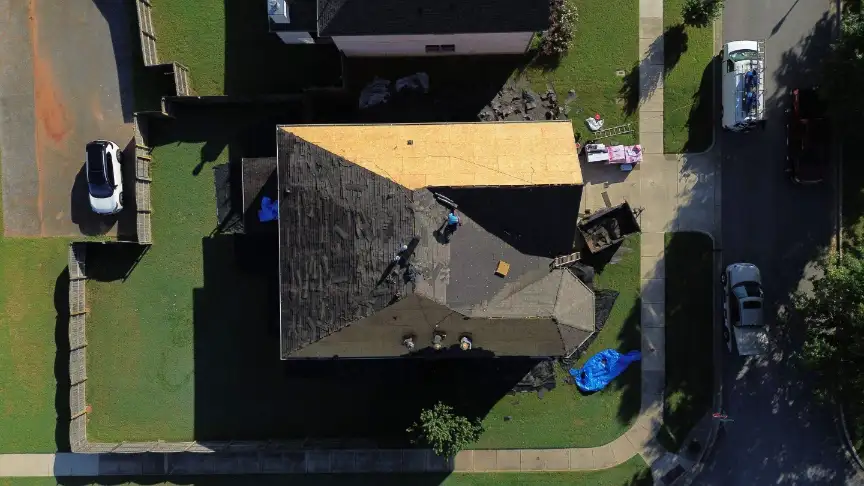
Minor staining does not automatically mean every sheet needs replacement.
The important issue is whether the decking is still structurally suitable and capable of holding roofing fasteners properly.
Sections may require replacement when they are:
- Rotten.
- Soft or spongy.
- Badly delaminated.
- Structurally deteriorated.
- Damaged around a long-term leak.
- Unable to provide a reliable fastening surface.
This is also the point where a professional roofing process should become very transparent.
10:00–11:30 AM: What Happens If Hidden Decking Damage Is Found?
Finding damaged decking does not automatically mean something has gone wrong with the project.
Some deterioration simply cannot be confirmed until the old roofing is removed.
The important question is how the discovery is handled.
A good process should look something like this:
- The concealed condition is identified.
- The affected area is documented, ideally with photos.
- The homeowner is told what was found.
- The contractor explains why repair or replacement is necessary.
- The previously agreed decking allowance, unit rate or change-order terms are applied.
- The unsuitable decking is corrected before the new roof covers it.
The project should not jump from “we found plywood damage” to an unexplained number on the final invoice.
Your site’s guide to hidden roof replacement costs goes deeper into decking, extra tear-off layers, flashing and other conditions that may only become clear after demolition starts.
10:30 AM–12:30 PM: Deck Repairs and Roof-System Preparation
Once unsuitable decking has been addressed, preparation for the new roofing system begins.
This is the stage homeowners rarely see once the roof is finished because most of the components being installed will soon be hidden beneath the shingles.
Depending on the agreed roofing system, work may include:
- Replacing damaged decking.
- Installing drip edge.
- Installing self-adhered leak protection in specified locations.
- Installing new field underlayment.
- Preparing valleys.
- Replacing or rebuilding flashing where required.
- Replacing pipe boots or other penetrations included in the scope.
- Preparing intake or exhaust ventilation components.
This hidden work matters as much as the shingles themselves.
A roof is a layered water-management system, not simply a decorative covering attached to plywood.
11:30 AM–1:00 PM: Underlayment, Flashing and Edge Details Take Shape
By late morning or around midday on a straightforward job, portions of the roof may transition from exposed decking to the protective layers beneath the new shingles.
The sequencing matters because water should always be directed down and out of the system.
That means details around:
- Roof edges.
- Valleys.
- Walls.
- Chimneys.
- Skylights.
- Pipe penetrations.
- Roof vents.
have to integrate with the underlayment and roof covering correctly.
One reason roof-replacement proposals can differ significantly is that one contractor may include replacement of these system components while another proposal leaves them vague or assumes some existing materials will be reused.
The site’s roof replacement quote guide explains those scope differences separately.
12:00–1:00 PM: Lunch May Happen in Shifts
A roofing crew does not necessarily stop the entire site for one synchronized hour.
On an active project, breaks may be staggered so the work area remains organized and weather exposure is managed.
From the homeowner’s perspective, midday is often when the house looks the least like a finished home.
One roof slope may be bare deck, another may already have underlayment, and another may be ready for shingles.
That unfinished appearance is normal during an active replacement.
12:30–3:30 PM: New Shingle Installation Accelerates
Once the deck, protective layers and details are ready, the most visually satisfying part of the day begins.
Starter materials are installed where required and the field shingles begin moving up the roof.

On an asphalt-shingle roof, installation generally progresses in courses from the lower portion of the roof upward.
The crew also works around features such as:
- Valleys.
- Dormers.
- Chimneys.
- Plumbing vents.
- Skylights.
- Wall intersections.
- Roof exhaust vents.
A simple gable roof can move faster than a similarly sized roof with numerous hips, valleys, dormers and penetrations.
That is one reason square footage alone does not tell you exactly how many hours installation will require.
What Is Happening on the Ground While the Roof Is Being Installed?
Roof replacement day is not only roof work.
Ground crews or crew members moving between tasks also manage debris as the project progresses.
That can include:
- Collecting torn-off shingles.
- Moving debris into trailers or containers.
- Keeping access routes usable.
- Watching landscaping protection.
- Collecting packaging and material scraps.
- Keeping loose roofing debris from spreading unnecessarily around the site.
Cleanup should therefore begin during the installation rather than waiting until the last shingle is nailed down.
2:30–4:30 PM: Flashing, Vents and Finish Details Are Completed
As the major roof planes become covered, attention shifts increasingly toward finish details.
Depending on the roof, this may include:
- Completing flashing transitions.
- Finishing valleys.
- Sealing and integrating pipe boots.
- Installing roof vents included in the system.
- Completing ridge ventilation where specified.
- Installing ridge-cap shingles.
- Checking exposed fasteners or sealant locations.
These details can be relatively small compared with the roof’s total area, but they matter because penetrations and transitions are where water-management mistakes tend to become visible later.
3:30–5:30 PM: The Crew Decides Whether the Roof Finishes Today
Not every roof should be rushed into completion simply because the afternoon clock is moving.
Several conditions can push a replacement into another day:
- A larger roof.
- Steep slopes.
- Multiple stories.
- Complex valleys or dormers.
- Unexpected decking replacement.
- Additional roofing layers.
- Complicated flashing.
- Weather delays.
- Limited property access.
- Material or equipment constraints.
Your site currently describes most residential replacements in the Huntsville area as taking approximately 1–3 days.
So a project continuing tomorrow is not automatically evidence that the crew is behind schedule.
The relevant question is whether the property and roofing system are left secure for the conditions expected overnight.
What Happens If the Roof Is Not Finished Before the Crew Leaves?
A multi-day roof replacement still needs an intentional stopping point.
The contractor should manage open sections so the house is not simply left unnecessarily exposed.
Exactly how the roof is secured depends on:
- Which parts have already been torn off.
- What protective layers have been installed.
- The roof design.
- The forecast.
- The stage of installation.
This is another reason contractors monitor weather closely during reroofing.
A good installation sequence avoids opening more roof than the crew can reasonably manage under expected conditions.
4:00–6:00 PM: Cleanup, Magnetic Nail Sweep and Site Check
As installation winds down, attention increasingly moves from production to cleanup.
Your site’s existing replacement guidance identifies cleanup as including:
- Collection of roofing debris.
- Hauling materials away.
- Disposal.
- Magnetic nail cleanup.
- Final site cleanup.
A magnetic sweep helps locate ferrous fasteners that may have fallen into grass, driveways or planting areas during tear-off.
It is an important cleanup step, but homeowners should still use common sense after any roofing project. Thousands of fasteners may have been removed from an old roof, and no cleanup method should be described as mathematically guaranteeing that a single nail can never remain hidden in dense landscaping.
A professional cleanup should nevertheless leave the site substantially cleaner and safer than it was during active tear-off.
End of Day: Final Roof and Property Inspection
The contractor’s responsibilities do not end with the last ridge-cap shingle.
A completed job should receive a final review.
Depending on the project and company process, that review can include:
- Checking completed roof surfaces.
- Reviewing flashing and penetrations.
- Checking roof edges and ridge details.
- Confirming required accessories were installed.
- Reviewing any decking or scope changes made during the project.
- Checking the ground for remaining debris.
- Completing another nail sweep where needed.
- Discussing final homeowner questions.
Photos are especially useful because much of the most important work—deck repairs, underlayment and leak-protection details—may already be hidden by the time the homeowner sees the finished roof.
Should You Stay Home During Roof Replacement Day?
You can, but you do not necessarily have to.
What matters is understanding that roof replacement is noisy.
You should expect:
- Repeated impact noise.
- Pneumatic nailers or hammering.
- Vibration through ceilings and walls.
- Workers moving around the exterior.
- Vehicles, trailers or material deliveries.
- Periods when access around portions of the property is restricted.
If you work from home, have an infant, have pets that react strongly to storms or construction noise, or simply prefer a quieter environment, spending part of the day elsewhere can be more comfortable.
What should remain available is a reliable way for the contractor to reach you if hidden damage or another decision needs homeowner approval.
What If the Contractor Finds Something Unexpected While You Are Away?
This is why communication procedures should be agreed before installation day.
If tear-off exposes a condition outside the original known scope, the contractor should be able to:
- Photograph or document the issue.
- Explain what was found.
- Explain whether the work is necessary for the roofing installation.
- Reference the existing contract or agreed unit price.
- Get authorization where the agreement requires it.
You should not need to stand in the driveway all day to receive that information.
Clear phone, text or email communication allows the project to keep moving without turning installation day into a series of surprises.
A One-Day Roof vs a Three-Day Roof: What Changes?
| Factor | Faster / Simpler Project | Longer / More Complex Project |
|---|---|---|
| Roof size | Smaller roof area | Large roof area |
| Pitch | Moderate, walkable slopes | Steep slopes requiring slower movement and additional safety measures |
| Roofline | Simple gable design | Multiple hips, valleys, dormers and penetrations |
| Tear-off | One expected layer | Multiple layers or difficult removal |
| Decking | Sound deck | Multiple areas requiring replacement |
| Access | Easy driveway and material access | Tight site, landscaping, height or limited equipment access |
| Weather | Stable working conditions | Rain, wind or other delays |
The important point is that speed by itself is not a measure of quality.
A crew should not skip decking repairs, flashing details or cleanup simply to advertise a one-day roof.
What Should Be Finished Before You Consider Roof Replacement Day Complete?
For a completed project, you should expect more than new shingles visible from the driveway.
The agreed scope should be complete, including the hidden and visible components specified in the contract.
That may include:
- Roof deck repairs.
- Underlayment.
- Specified leak protection.
- Drip edge.
- Flashing.
- Pipe boots.
- Ventilation components.
- Starter materials.
- Field shingles.
- Ridge caps.
- Cleanup and debris removal.
If something changed from the original agreement, you should also understand what changed and why.
The Bottom Line
Roof replacement day is essentially a controlled sequence of demolition, inspection, rebuilding and cleanup.
The crew protects the property, removes the old roofing, exposes and evaluates the deck, corrects necessary concealed damage, installs the protective roofing layers and flashing, installs the new roof covering, and then cleans and inspects the property.
The exact clock is less important than the sequence.
A straightforward home may progress through those stages in one day. A larger, steeper or more complicated roof—or one with hidden decking deterioration—may continue into day two or three.
For homeowners choosing who will be carrying out that work, you can learn more about Huntsville Roofing Solutions and the team behind the company.
If you already know your roof needs replacement and want to discuss the property, scope or scheduling, contact Huntsville Roofing Solutions to arrange the next step.
Frequently Asked Questions About Roof Replacement Day
How long does a roof replacement take?
Most residential roof replacements in the Huntsville area are completed in approximately 1–3 days according to the site’s existing replacement guidance. Roof size, pitch, complexity, weather, access and decking repairs can extend or shorten the timeline.
What happens first on roof replacement day?
The crew normally stages equipment and materials, establishes property protection and prepares debris-management areas before tear-off begins. The goal is to create a safer, more organized worksite before old roofing materials start coming off.
How soon will the contractor know whether my roof deck is damaged?
The condition becomes much easier to verify once the old shingles and underlayment are removed. Concealed soft, rotten or delaminated decking may not be fully visible during the original exterior estimate.
Will my house be noisy during the replacement?
Yes. Tear-off and installation involve removing fasteners, moving materials and nailing the new roof system. Homeowners should expect significant impact noise and vibration through the house while the crew is working.
Can I stay home during roof replacement?
Yes, but some homeowners prefer to leave because of the noise, vibration and activity around the property. Whether you stay or leave, make sure the contractor has a reliable way to contact you if a concealed condition requires a decision.
What happens if rotten plywood is discovered?
The contractor should document the affected area, explain why the decking is unsuitable, apply the decking allowance or change-order terms agreed before work began, and replace the necessary sections before the new roofing system covers them.
Does the roofing crew clean up every day?
Debris management should continue throughout the project, with more thorough cleanup at the end of the workday. Final cleanup can include debris collection, haul-off, a magnetic nail sweep and a final review of the property.
Is a one-day roof replacement better than a two- or three-day replacement?
Not necessarily. Completion time depends on roof size, pitch, complexity, access, weather and concealed conditions. Installation quality, correct roof-system details and proper cleanup matter more than finishing within an arbitrary number of hours.
About the author: Jordan Woolf is the founder and owner of Huntsville Roofing Solutions, a locally owned roofing company serving Huntsville and North Alabama with residential and commercial roof replacement, repair, storm-damage and maintenance services.

Jordan is the founder and owner of Huntsville Roofing Solutions, a locally owned, fully licensed and insured roofing company serving Huntsville and North Alabama. He and roofing supervisor Barry Minor have handled residential and commercial roofs across the region — replacements, repairs, storm damage, and insurance claims — earning a 4.9-star Google rating along the way.