When comparing architectural vs 3-tab shingles for a North Alabama primary residence, architectural shingles are worth examining first because their layered design and available higher-tier wind-warranty options can justify the additional upfront cost. Three-tab shingles remain a lower-cost choice for some projects when an available product meets the roof’s requirements. In a 2026 national cost guide, three-tab shingles run roughly $3–$5 per square foot installed, compared with $4–$6 for standard architectural shingles. But the real decision is about the exact product and complete installation—not appearance or warranty numbers alone. Neither type is storm-proof, and local estimates may differ.
What Is the Difference Between Architectural and 3-Tab Shingles?
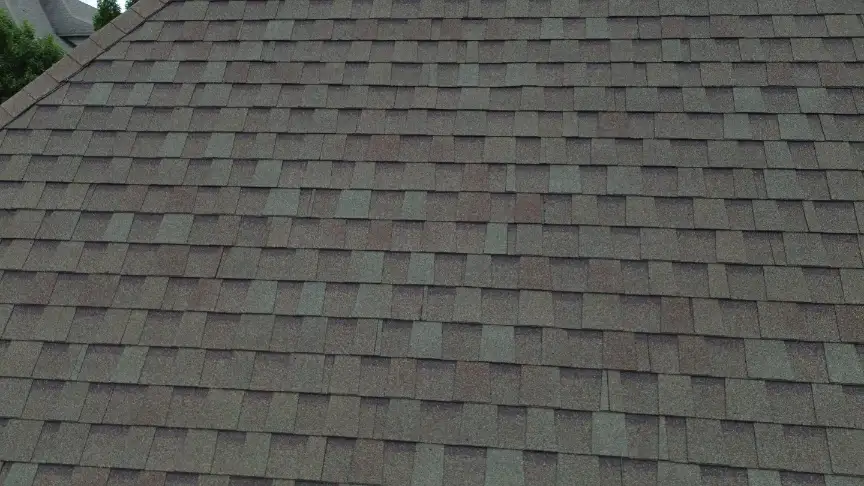
Both are asphalt roofing shingles, but they are constructed differently. Three-tab shingles, also called strip shingles, have a relatively flat, uniform profile. Their cutouts create the appearance of three regularly spaced tabs. Architectural shingles, also called dimensional or laminated shingles, bond layers together to create a thicker-looking, varied pattern with visible shadow lines.
The Asphalt Roofing Manufacturers Association (ARMA) recognizes 3-tab and laminated shingles as distinct asphalt shingle categories. The layered look of architectural products is a design difference; actual performance still depends on the specific shingle, roof geometry, installation and other components.
Architectural vs. 3-Tab Shingles at a Glance
| Consideration | 3-Tab Shingles | Architectural Shingles |
|---|---|---|
| Construction | Flat strip profile with uniform tab pattern | Laminated, dimensional profile |
| Appearance | Traditional, consistent rows | Layered shadow lines and more varied patterns |
| 2026 national installed planning range | About $3–$5 per sq. ft. | About $4–$6 per sq. ft. for standard products |
| Illustrative product wind warranty | GAF Royal Sovereign: 60 mph limited coverage | GAF Timberline HDZ: special conditional limited wind coverage; see details below |
| Service-life planning | Typically a shorter planning horizon in published guides | Often a longer planning horizon, but not guaranteed |
| Hail resistance | Check the exact product and test classification | Check the exact product; not every architectural shingle is Class 4 |
| Product selection | Fewer style variations within basic product lines | Broader dimensional styles and color blends, depending on brand |
Important: The wind row uses two named GAF products to illustrate why you must read the actual warranty. It does not describe every 3-tab or architectural product. A warranty is also not a prediction of what will happen to your roof during a storm.
What Do 3-Tab and Architectural Shingles Cost in 2026?
According to HomeGuide’s 2026 national shingle cost guide, installed three-tab shingles commonly fall around $300–$500 per roofing square, while standard architectural shingles fall around $400–$600 per square. One roofing square is 100 square feet of roof surface—not 100 square feet of house floor area.
To make those numbers easier to understand, here is an illustrative 20-square roof (2,000 square feet of roofing surface):
| Shingle Type | National Guide Range per Square | Illustrative 20-Square Total |
|---|---|---|
| 3-tab | $300–$500 | $6,000–$10,000 |
| Standard architectural | $400–$600 | $8,000–$12,000 |
These ranges overlap. They are national budgeting references, not current Huntsville Roofing Solutions pricing or like-for-like bids. A steep roof, multiple valleys, rotten decking, extra flashing, disposal and warranty requirements can move either estimate. A detailed comparison should use the same roof measurement and identical assumptions for the work beyond the shingles themselves.
For the broader factors that change an actual roofing bid, use the separate guide on what changes a roof replacement quote.
Which Shingle Type Is Better Suited to North Alabama Wind?
North Alabama homeowners should compare the actual product’s tested performance and warranty conditions, then evaluate how the entire roof will be installed. It is tempting to compare two wind-speed figures and choose the larger number, but that can be misleading.
For example, GAF lists a 60 mph limited wind warranty for its Royal Sovereign three-tab shingle. GAF’s Timberline HDZ architectural shingle may qualify for its WindProven limited wind warranty, with no specified maximum wind-speed coverage, only when the required qualifying accessories and other warranty conditions are met. These are different product-specific warranty structures. The latter does not mean the roof has unlimited physical wind resistance or that every damaged roof will qualify for payment.
For either type, nail placement, the right starter strips, roof-edge details, underlayment, decking condition and the installation instructions matter. Manufacturer instructions and the applicable local building requirements should guide the installation rather than a general claim that one shingle category is always wind-proof.
The Insurance Institute for Business & Home Safety’s FORTIFIED Roof program looks beyond shingle selection. Its approach includes stronger roof edges, improved deck attachment and a sealed roof deck to reduce the risk of water entering when roof covering is damaged. Ask about those assembly details when storm performance is an important concern.
Do Architectural Shingles Last Longer Than 3-Tab Shingles?
Many published planning guides estimate about 15–20 years for conventional three-tab shingles and 20–30 years for standard architectural shingles. Treat those figures as broad replacement-planning assumptions rather than a forecast for your house. A roof can require work earlier—or perform longer—depending on the exact product, sun exposure, roof slope, ventilation, installation quality, severe weather and maintenance.
Do not mistake a manufacturer’s limited lifetime product warranty for a promise that an installed roof will last a lifetime. Read the product warranty for defect coverage, transferability, exclusions, non-prorated periods and any separate wind or algae provisions.
If two quotes promise different lifespans, ask the roofers which product specifications and assembly details support those assumptions. A longer printed warranty does not substitute for correct installation.
Does Alabama Heat Make Architectural Shingles the Better Choice?
Heat performance is not determined by whether a shingle is laminated or three-tab. Roof color, the tested solar reflectance of the exact product, insulation and the roof/attic design influence how much heat enters a home.
ENERGY STAR notes that reflective roof surfaces can reduce roof temperatures, particularly in hot, sunny climates, but actual energy savings vary by building. A dark architectural shingle is not automatically cooler than a light-colored three-tab product; compare published solar-reflectance ratings if summer roof heat is a priority.
North Alabama humidity is another consideration. In a conventional vented attic, the design and condition of intake and exhaust ventilation can affect heat and moisture management. ARMA identifies adequate ventilation as an important roofing-system consideration. An unvented or conditioned roof assembly needs its own appropriate design; do not add vents automatically.
Once you have chosen a product category, browse the manufacturer’s available samples through the shingle colors and styles gallery. Color availability varies by product, distribution area and season.
Which Shingles Handle Hail Better?
Neither category alone tells you whether a roof is impact-resistant. A standard architectural shingle is not automatically a Class 4 shingle, and a laminated appearance is not proof of a particular hail rating. If impact performance matters, look for the exact product’s UL 2218 classification, read the manufacturer’s exclusions and consider independent testing information where available.
Some homeowners may also want to compare a storm-focused shingle upgrade against standard architectural products. That is a separate decision covered in the guide to Class 4 impact-resistant shingles in Alabama. No impact rating makes a roof hail-proof, and any potential insurance credit must be confirmed with your insurer rather than assumed.
When Might 3-Tab Shingles Still Make Sense?
Three-tab shingles can still be considered when upfront spending is the main constraint, the homeowner wants a simple uniform appearance, and a locally available product meets the roof’s required specifications. That may be relevant to certain detached garages, outbuildings or tightly budgeted projects, provided the building design and applicable requirements allow the product.
Availability matters. Do not assume a particular three-tab product and matching color are stocked locally just because they appear online. Ask for the exact manufacturer’s current product sheet and warranty before accepting an estimate.
On a primary residence with significant wind exposure, also compare the difference in installed price with an architectural option that meets the desired specifications. If the project requires additional roof-system work either way, the final difference between the two complete proposals can be smaller or larger than the shingle-material price difference suggests.
When Are Architectural Shingles Worth the Additional Cost?
Architectural shingles are especially worth comparing when you want a dimensional appearance, a wider range of current product options or a product with specific higher-tier wind-warranty terms. For a homeowner planning to stay in the same North Alabama house, it can be reasonable to pay more upfront for an assembly that better matches the roof’s exposure and your maintenance plans.
However, the most expensive architectural shingle is not automatically the most appropriate. A lower-priced architectural product installed correctly over a sound, properly prepared roof deck can be more useful than paying extra for a premium product while ignoring flashing, drainage, ventilation or workmanship.
Should You Consider Standing-Seam Metal Instead?
If your budget or ownership timeline allows you to consider an entirely different roof material, standing-seam metal belongs on a separate shortlist. It is not simply a more expensive version of architectural shingles: panel design, attachment, acoustics, thermal movement, appearance, repair methods and project price all differ.
This article is a comparison of two asphalt shingle types, not a metal-versus-asphalt cost model. For the complete metal option, see standing-seam metal roofing for Huntsville homes.
What Should You Ask Before Choosing Between These Shingles?
The most useful comparison is between two written proposals with the same scope. Ask each contractor to show the full roof measurement, precise product name, underlayment, starter and ridge products, ventilation scope, flashing, tear-off, deck-repair allowance, permitted installation details, labor warranty and the actual manufacturer warranty documents.
Also ask whether the roof has unusual wind-exposure conditions or needs special detailing at edges, ridges, valleys, chimneys and other penetrations. If FORTIFIED construction is under consideration, discuss those requirements before work starts; they should not be assumed from the chosen shingle label.
When you are ready to compare a defined replacement scope, Huntsville Roofing Solutions outlines its residential roof replacement process.
Frequently Asked Questions
Are architectural shingles better than 3-tab shingles in North Alabama?
They are often worth comparing first for a primary-residence replacement because laminated products offer a dimensional appearance and may provide more extensive product-specific wind-warranty options. The appropriate choice still depends on the exact product, installed price, roof design and installation quality.
How much more do architectural shingles cost than 3-tab shingles?
In HomeGuide’s 2026 national figures, installed three-tab shingles are roughly $3–$5 per square foot and standard architectural shingles are about $4–$6. These ranges overlap, and a local, like-for-like roofing estimate may differ based on scope.
Are all architectural shingles rated for 130 mph winds?
No. Wind classifications and limited-warranty terms vary by manufacturer, product, installation and accessories. For example, some architectural products have conditional wind-warranty provisions that differ from a simple 130 mph limit. Check the exact current warranty; no wind-warranty figure makes a roof storm-proof.
Do architectural shingles last 30 years in Alabama?
Some national guides use 20–30 years as a broad planning estimate for architectural shingles, but there is no guaranteed Alabama lifespan. Product selection, installation, roof pitch, sun, ventilation, storms and maintenance determine actual performance.
Are 3-tab shingles still available?
Some manufacturers still market three-tab products, including GAF Royal Sovereign, but local colors, stock and installer offerings vary. Confirm the exact product’s availability and current documentation before designing a replacement around it.
Does a Class 4 rating mean a shingle is architectural?
No. Class 4 is an impact-resistance classification associated with testing, not the same thing as the architectural or three-tab construction label. Check the exact shingle and its testing information; Class 4 does not make any roof hail-proof.
Can a new architectural shingle roof qualify as FORTIFIED?
Potentially, but choosing an architectural shingle alone is not sufficient. FORTIFIED Roof is a complete roof-system approach that includes specific installation and verification requirements. Discuss the appropriate current standard with a participating contractor and evaluator before installation.
The Bottom Line for North Alabama Homeowners
Architectural shingles are a practical starting point for many primary-residence reroofs where dimensional appearance and available wind-warranty options matter. Three-tab shingles remain a lower-upfront-cost possibility when the exact product meets the project needs. Compare actual installed proposals, not just the two category names or headline warranty numbers.
If wind resilience is a priority, discuss roof-edge protection, deck attachment, a sealed roof deck and correct installation as part of the same conversation. Those details can matter even when the shingles themselves have substantial warranty coverage.
References and Technical Sources

Jordan is the founder and owner of Huntsville Roofing Solutions, a locally owned, fully licensed and insured roofing company serving Huntsville and North Alabama. He and roofing supervisor Barry Minor have handled residential and commercial roofs across the region — replacements, repairs, storm damage, and insurance claims — earning a 4.9-star Google rating along the way.