
Quick answer: Four things decide it — age, scope, structure, and economics. If your roof is in the first two-thirds of its expected life, the damage is confined to one area, the deck underneath is sound, and the fix costs a modest fraction of a replacement, repair it. If the roof is nearing the end of its life, damage spans more than roughly a third of the surface, the deck is soft, or you’re on your second repair in two years, replacement is the cheaper path over time. Most Alabama roofs fail from accumulated heat and humidity rather than one storm.
Why This Question Is Genuinely Hard to Answer From the Ground
Almost every homeowner facing this has already looked at their roof from the driveway and formed an impression. That impression is usually wrong in one direction or the other, and it’s not a failure of attention — the things that actually decide this are invisible from below.
A roof can look fine from the street while the decking beneath has gone spongy from a slow leak. Another can look alarming — streaked, patchy, a few tabs missing — while being structurally sound and entirely repairable. What the surface shows and what the assembly is doing are two different stories.
So rather than a list of symptoms, what follows is a framework. Four tests, applied together. Any one of them can point toward replacement on its own, but the decision usually comes from how they stack up.
If you’re at an earlier stage and just trying to work out whether something is wrong at all, start with the six major signs of a damaged roof and come back here once you know what you’re looking at.
The Four Tests
1. The Age Test
Asphalt shingle roofs in this part of the country generally deliver somewhere between fifteen and twenty-five years, depending on the product grade and — more than most people expect — how well the attic is ventilated.
The practical rule: in the first two-thirds of that span, repairs are money well spent. You’re protecting a roof that still has substantial life left. In the final third, a repair increasingly buys time rather than solves a problem. Spending on a nineteen-year-old roof often just moves the replacement date by a season.
If you don’t know your roof’s age, a real estate listing, permit record, or previous owner’s paperwork usually has it.
2. The Scope Test

Where is the damage, and how much of the roof does it touch?
Damage confined to a single slope, one valley, or the area around a chimney or vent is the classic repair scenario. Flashing failures in particular are localised by nature and often fixable without touching the surrounding field.
Once damage exceeds roughly thirty percent of the roof surface, or appears on multiple planes at once, the arithmetic shifts. Every repair carries fixed costs — mobilising a crew, setting up safely, sourcing material. Repeating that across scattered areas costs nearly what a replacement would while leaving the rest of an aging roof exactly as it was.
3. The Structure Test
This is the one that overrides everything else. Two questions sit underneath it.
Is the deck sound? The plywood or plank decking under your shingles is the surface everything fastens to. Prolonged moisture makes it soft, and soft decking won’t hold nails. Small areas can be replaced during a repair. Widespread deterioration means the roof needs to come off so the substrate can be dealt with properly.
How many shingle layers are already up there? Codes limit how many layers a roof can carry. If a previous owner laid a second layer over the first, your options narrow considerably — and that second layer has been hiding whatever the deck has been doing ever since.
Adding a layer is cheaper on the day and more expensive over the life of the roof. It traps heat, adds weight, prevents any inspection of the substrate, and shortens the service life of the new shingles you just paid for.
4. The Economics Test
The last test is a ratio rather than a number. Compare what the repair costs against what a replacement costs, then set that against how much service life the repair actually buys.
A modest repair on a roof with a decade left is straightforwardly worth doing. That same repair on a roof with two or three years left is expensive rent. And a third repair in as many years has stopped being maintenance — it’s an instalment plan on a replacement you haven’t agreed to yet.
If you want to put real figures against this, the 2026 replacement cost guide covers pricing by size and material.
Repair vs. Replace at a Glance
| Factor | Points to repair | Points to replacement |
|---|---|---|
| Age | First two-thirds of service life | Final third, or age unknown and clearly old |
| Area affected | One slope or one feature | Multiple planes, or roughly 30%+ |
| Deck condition | Firm, isolated soft spots at most | Widespread softness or rot |
| Existing layers | Single layer | Two or more already installed |
| Repair history | First issue on this roof | Third call in two or three years |
| Plans for the house | Staying put, roof has life left | Selling soon, or staying 10+ years |
What Makes Alabama Roofs Different
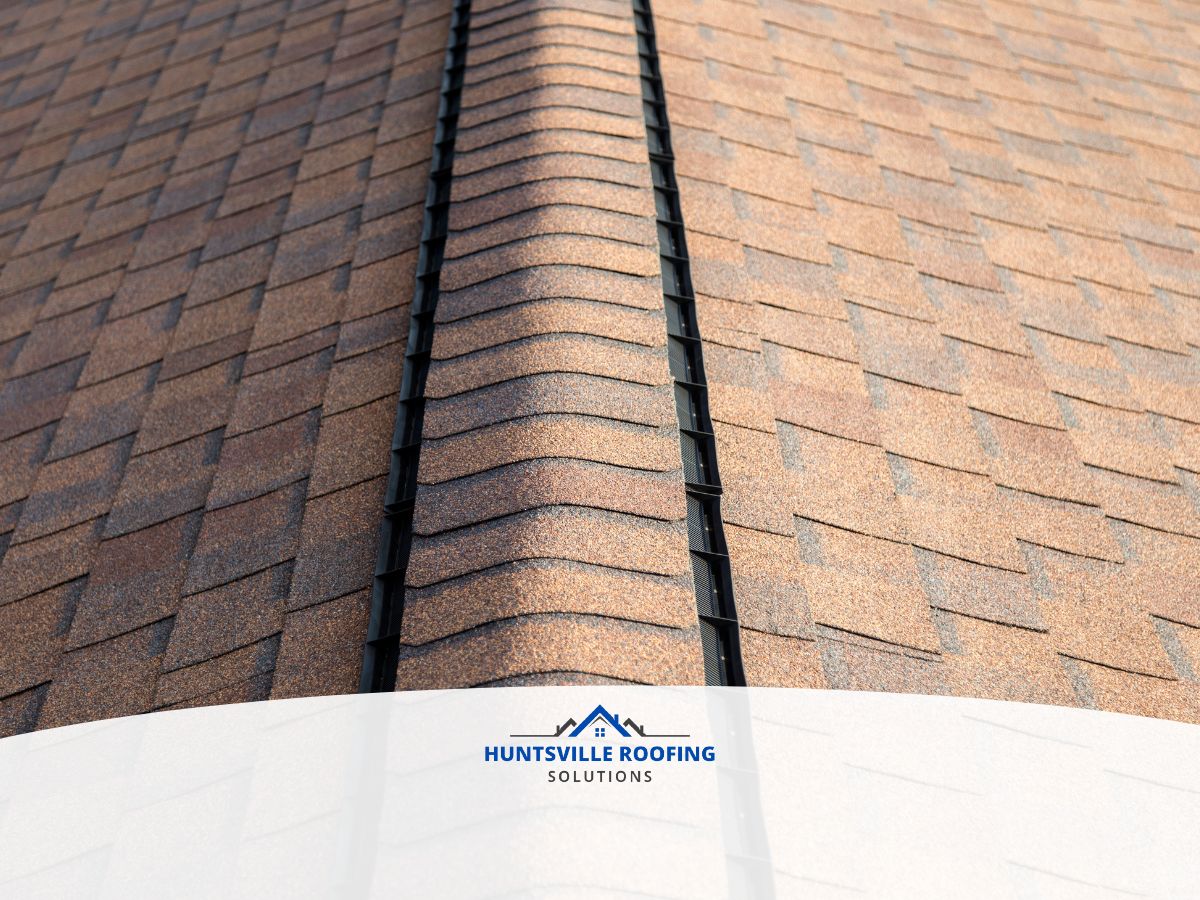
National guidance on roof lifespan tends to run optimistic for the Tennessee Valley, because the failure mode here is different.
Heat is the slow killer. Long, hot summers combined with intense UV drive the volatile oils out of asphalt shingles. They grow brittle, lose granules, and begin to curl at the edges. A poorly ventilated attic amplifies this dramatically — the shingles cook from below as well as above. This is why two identical roofs installed the same year in the same neighbourhood can be in visibly different condition at year fifteen.
Humidity brings algae. Those dark streaks running down north-facing slopes are algae colonies feeding on the limestone filler in the shingles. They’re mostly cosmetic and are not in themselves a reason to replace a roof — a point worth knowing, because streaking is sometimes presented as structural failure by less scrupulous outfits.
Storms concentrate the damage. North Alabama sits in an active severe-weather corridor, and hail and straight-line winds do real harm. But hail damage in particular is easy to miss from the ground and easy to overstate from a ladder — it needs a proper look. If a storm is involved, our insurance claim assistance explains how coverage is usually assessed.
Ventilation is the multiplier. If there’s one thing that separates a roof reaching twenty-five years from one failing at fifteen in this climate, it’s airflow through the attic. It’s also the least visible factor and the one most often skipped.
When a Repair Becomes a False Economy
Repairs are frequently the right answer, and a good contractor should tell you when they are. But there are situations where patching costs more than it saves.
- You’re on your third repair in a few years. Recurring failures on an aging roof mean the material has reached the end of its working life. Each new patch simply relocates the next leak.
- The leak has been active for a while. Water travels. By the time a ceiling stain appears, the moisture has usually been in the decking and insulation for some time, and the true cost is no longer just shingles.
- Matching is impossible and it’s a visible slope. Shingle colours get discontinued, and existing ones fade. A patch on a front-facing plane can look worse than the damage did — which matters if you’re preparing to sell.
- You’re within a year or two of replacing anyway. Money spent on a repair here is money that could have gone toward the replacement, and none of it carries over.
The reverse trap is worth naming too: being pushed into a full replacement when a repair would genuinely serve. If a young roof with damage confined to one small area is quoted as a tear-off, ask why the four tests above point that way. A straight answer should be easy to give.
What an Honest Inspection Should Cover

Whoever you have out, the assessment should include the roof surface and flashings, the attic from underneath, an evaluation of ventilation, a check of the deck where access allows, and photographs of anything they’re asking you to pay to fix.
Two things are reasonable to expect. First, photographs — you shouldn’t have to take a verdict on trust about a surface you can’t see. Second, both options priced where both are viable. If a repair is genuinely reasonable, you should be told so and given the number, even when the replacement is the bigger job.
From there it’s a straightforward comparison: our roof repair service handles leaks, flashing, and storm damage on roofs with life left in them, while a full replacement is the route when the four tests say the material is finished. If the roof passes both but is simply overdue attention, our maintenance program is often the cheapest way to add years to it.
Frequently Asked Questions
How do I know whether to repair or replace my roof?
Apply the four tests together — age, scope, deck and layers, and cost ratio. A young roof with localised damage is a repair; an aging roof with widespread damage or a failing deck is a replacement.
At what age should a roof be replaced rather than repaired?
Asphalt roofs in the Southeast typically run fifteen to twenty-five years. Repairs make sense through the first two-thirds; in the final third they tend to postpone rather than prevent.
How much damage is too much to repair?
Roughly thirty percent of the surface is the common threshold. Beyond that, repeated repair costs approach replacement while the rest of the roof keeps aging.
Can I just put new shingles over the old ones?
Codes allow a limited number of layers, but it’s a short-term saving. Overlaying hides the deck, adds weight, traps heat, and shortens the new shingles’ life.
Will a repair match my existing shingles?
Usually not exactly. Colours get discontinued and existing shingles fade, so patches tend to be visible — most noticeably on front-facing slopes.
Do those black streaks mean I need a new roof?
Generally no. Streaking is algae growth and is largely cosmetic. It can be cleaned, and it isn’t by itself evidence of structural failure.
Does insurance pay for repair or replacement?
It depends on cause, extent, and your policy. Sudden storm damage is more likely covered than gradual wear, and widespread damage or unavailable matching shingles can support a fuller replacement.
Get an Answer You Can Check
The honest position is that this decision can’t be made from a blog post — it can only be narrowed by one. What the four tests give you is the ability to ask better questions and recognise a straight answer when you hear it.
We’ll come out, get on the roof and into the attic, photograph what we find, and tell you which side of the line your roof falls on. If that’s a repair, we’ll say so and price it.
Book a Free Inspection
See Repair Services
Serving Huntsville, Madison, Athens, Decatur, Harvest, Hazel Green, Meridianville, and the greater Tennessee Valley. Service life ranges and damage thresholds on this page are general industry guidance, not a substitute for an on-site assessment of your roof.

Jordan is the founder and owner of Huntsville Roofing Solutions, a locally owned, fully licensed and insured roofing company serving Huntsville and North Alabama. He and roofing supervisor Barry Minor have handled residential and commercial roofs across the region — replacements, repairs, storm damage, and insurance claims — earning a 4.9-star Google rating along the way.