
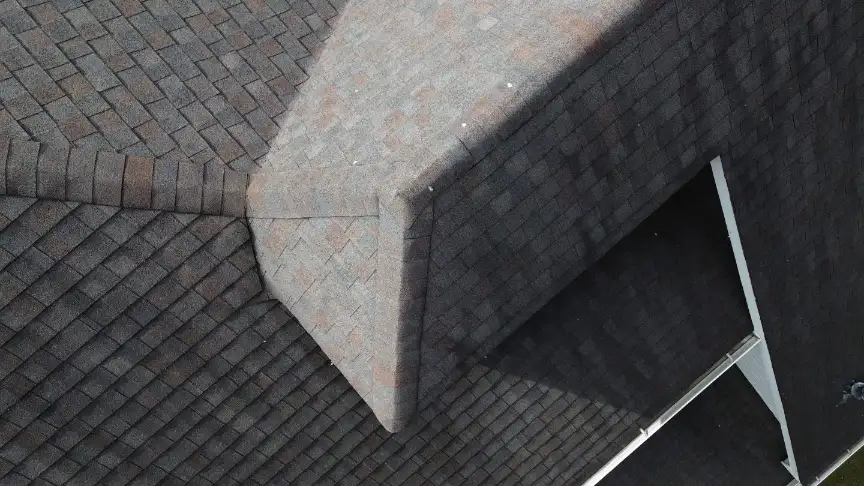
A roof valley can leak because it concentrates water from two slopes into one channel. Blocked debris, damaged valley flashing, poor underlayment overlaps, fasteners placed too near the valley center or worn shingles can allow water beneath the roof covering. A leak may appear lower or sideways from the valley after water travels along the decking. A roofer should inspect the whole valley from its upper end to its outlet, including the roof underlayment and neighboring penetrations, before recommending a repair.
Why valleys are especially vulnerable
During a downpour, a valley handles water from a larger catchment area than an ordinary shingle course. Concentrated flow, wind-driven rain and leaves trapped at the outlet increase the stress on installation details. The valley can look fine from the ground while hidden metal, fasteners or roofing overlaps have failed.
Open-metal versus closed-cut valleys
An open valley exposes a metal channel to carry water; a closed-cut valley uses shingles positioned and trimmed across the joint. Either can work when compatible with the shingle system and installed correctly. The repair approach depends on which design is present and whether the underlying water barrier remains sound.
Common errors to look for
Improperly positioned nails, insufficient underlayment overlap, wrong shingle cuts and debris dams can create leak paths. Roofing manufacturer installation guidance emphasizes correctly installed valley flashing and water barriers. A professional may need to remove shingles to confirm whether the valley was detailed correctly.
When the leak only shows up in storms
Heavy rainfall increases the flow rate through the valley, while wind can push water under laps that normally shed gravity-driven runoff. Record which storms produced stains and whether the problem occurs at a valley outlet near a gutter. This helps distinguish an uphill leak from a blocked drainage edge.
Targeted valley repair or replacement?
A localized issue may permit removing and rebuilding part of the valley, provided adjacent shingles are still workable and sound. Widespread aging, brittle shingle edges or water-damaged decking can make a larger repair more sensible. Ask the roofer to explain the full repaired water path.
Preventive care without climbing the roof
Arrange periodic removal of leaves where trees overhang and verify downspouts drain freely. Do not pressure-wash or walk a steep valley; concentrated foot traffic can damage shingles. After a leak, document the ceiling stain and arrange a roof inspection rather than waiting for the next storm.
Further reading and next steps
These published guides provide additional context for the decision and the parts of your roofing system involved:
- roof flashing and water barriers
- roof leak repair options
- leaks during heavy rainfall
- why clear gutters matter
Huntsville Roofing Solutions serves homeowners in Huntsville and across North Alabama. For a problem that may be causing active water entry, request an inspection before selecting a repair or replacement scope. Observations described here are educational, not a diagnosis of your specific roof.

Jordan is the founder and owner of Huntsville Roofing Solutions, a locally owned, fully licensed and insured roofing company serving Huntsville and North Alabama. He and roofing supervisor Barry Minor have handled residential and commercial roofs across the region — replacements, repairs, storm damage, and insurance claims — earning a 4.9-star Google rating along the way.