
The two common roofing underlayment types are traditional asphalt-saturated felt and newer synthetic underlayment. For many modern residential roofs, synthetic is the stronger all-around choice because it is typically lighter, more resistant to tearing and moisture, and less likely to wrinkle during installation. Felt usually costs less and can still be a valid option when the roofing manufacturer and project requirements allow it. Neither choice should be made by material name alone, however. Underlayment products vary, and the correct product must be compatible with the shingles or metal roof installed above it.
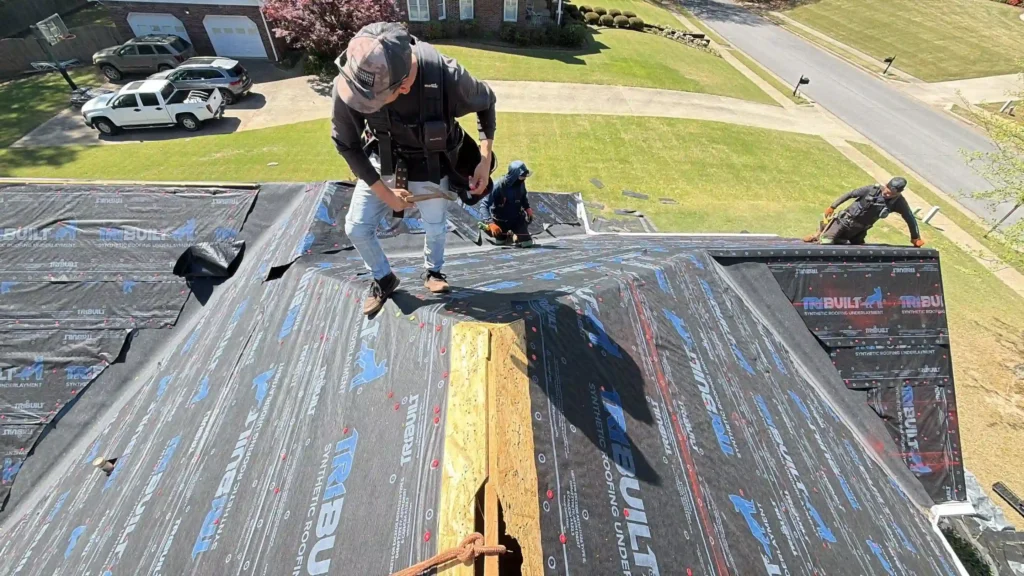
Most homeowners spend much more time choosing the material they will see from the driveway than the layer hidden beneath it.
That is understandable. Shingles and metal panels determine much of the finished roof’s appearance.
But underneath those materials is another important part of the roof assembly: the underlayment.
Its job is to provide a secondary layer of protection over the roof deck beneath the primary roof covering. Once the project is complete, you generally will not see it again—but the choice still matters.
What Is Roofing Underlayment?
Roofing underlayment is installed over the roof deck or sheathing and underneath the finished roofing material.
Think of the roof as a layered system rather than shingles or metal panels alone. The deck provides the structural surface. Underlayment covers that deck. The primary roof covering is then installed above it.
Underlayment is not supposed to replace properly installed shingles, metal panels, flashing or other weatherproofing details. Instead, it adds another water-shedding or moisture-resistant layer beneath the finished roof.
The two categories homeowners are most likely to hear discussed during a residential roof replacement are asphalt-saturated felt and synthetic underlayment.
What Is Felt Roofing Underlayment?
Felt is the traditional underlayment many homeowners associate with the term “roofing felt” or “felt paper.”
It uses a base material saturated with asphalt to create a water-resistant sheet installed across the roof deck.
Felt has been used for generations and remains attractive largely because it is familiar and economical.
That does not make it obsolete. On a project where the specified felt product is permitted by the roofing system and can be installed under appropriate conditions, it can still perform its intended role.
Its disadvantages become more noticeable during handling and installation. Traditional felt is generally heavier relative to its coverage, is easier to tear than many synthetic products, and can absorb moisture. If it becomes wet before the finished roof covering is installed, it can wrinkle or buckle.
What Is Synthetic Roofing Underlayment?
Synthetic underlayment is a newer category generally manufactured from polymer-based materials such as polypropylene or polyethylene.
It is designed to perform the same basic position in the roof assembly—between the deck and finished covering—but manufacturers use engineered sheet construction to improve characteristics such as strength, water resistance, weight and installation handling.
One important warning: “synthetic” is a category, not one standardized product.
Different synthetic underlayments have different construction, exposure ratings, installation requirements, permeability and approved uses. A contractor should therefore be able to tell you which specific underlayment is being installed rather than simply writing “synthetic” on the proposal.
Synthetic vs. Felt Underlayment at a Glance
| Factor | Synthetic Underlayment | Felt Underlayment |
|---|---|---|
| Material | Typically polymer-based | Traditional asphalt-saturated material |
| Initial material cost | Usually higher | Usually lower |
| Weight and handling | Generally lighter | Generally heavier for comparable coverage |
| Tear resistance | Typically higher | More easily torn during handling or exposure |
| Moisture absorption | Typically resists absorbing water | Can absorb moisture |
| Wrinkling when wet | Generally less prone to wrinkling | Can wrinkle or buckle after absorbing moisture |
| Installation surface | Many products include engineered traction surfaces | Traditional installation characteristics |
| Product consistency | Varies substantially by manufacturer and product | Traditional, familiar product category |
| Best reason to choose it | Durability and installation performance | Economy where appropriate |
That table explains why synthetic has become common, but it should not be read as “every synthetic product beats every felt product in every application.”
The roofing system above it still controls the decision.
Which Underlayment Handles Moisture Better?
For moisture exposure during installation, synthetic generally has the advantage.
Traditional felt can absorb water. When it gets wet, it can wrinkle or buckle, which can make it more difficult to maintain a smooth installation beneath the finished roof covering.
Synthetic products are generally engineered to resist water absorption and remain flatter.
That can be particularly useful when a roof is being replaced in an area like North Alabama, where weather can interrupt an installation schedule.
There is an important distinction, though: ordinary synthetic underlayment should not automatically be described as the same thing as a fully waterproof self-adhered membrane.
They are different product categories with different uses.
Which Is Stronger: Felt or Synthetic?
Most modern synthetic underlayments are designed to provide substantially greater tear resistance than traditional felt.
That matters on the jobsite because workers have to carry, roll, position and fasten the material across the roof deck before the finished covering goes down.
A material that is harder to tear can be easier to keep intact around fasteners and while workers move across the roof.
Strength also matters if wind arrives during construction before the primary roof covering has been fully installed.
But again, this is a product-specific characteristic. If durability matters to the homeowner, ask for the actual manufacturer and product name instead of accepting “synthetic underlayment” as the complete specification.
Does Synthetic Underlayment Make Installation Easier?
Often, yes.
Synthetic rolls are generally designed to cover substantial roof area while remaining relatively light. Many also use textured or slip-resistant walking surfaces intended to improve installer traction.
Those features do not change the finished appearance from the street, but they can affect how efficiently and cleanly the roof assembly is installed.
Synthetic material also tends to lie flatter rather than absorbing moisture and developing wrinkles.
That is useful underneath asphalt shingles, where irregularities beneath the finished roofing can sometimes affect how smooth the roof looks.
Why Would Anyone Still Choose Felt?
Because not every project needs the most expensive version of every roof component.
Felt is familiar, widely understood and generally less expensive than synthetic alternatives.
When the selected roofing system allows felt, the roof can be installed promptly, and the material is protected from unnecessary weather exposure, felt can still be a reasonable specification.
A homeowner working within a strict budget may prefer to spend available money on another part of the roof system rather than automatically upgrading every hidden component.
That is a legitimate tradeoff.
The mistake would be choosing felt only because “underlayment does not matter,” or choosing synthetic only because someone says “synthetic is always better.” Neither statement gives you enough information.
Is Synthetic Underlayment Worth the Upgrade?
For many residential reroofs, we would generally lean toward synthetic when the budget and roof-system requirements make it appropriate.
The advantages—lighter handling, stronger tear resistance, better resistance to moisture absorption and a flatter installation—address practical jobsite issues that matter during a replacement.
But homeowners should ask what the upgrade actually includes.
A proposal that simply says “premium synthetic” is less useful than one that identifies the manufacturer and exact product.
That detail lets you verify whether the product is approved for the roofing material being installed and whether it fits the complete manufacturer’s roofing system.
What Underlayment Should Go Under Asphalt Shingles?
Both felt and approved synthetic products can be used under asphalt roofing systems when permitted by the applicable roof-covering manufacturer and installation requirements.
For many current shingle installations, synthetic has become a common choice because of its installation and durability advantages.
But underlayment is only one decision in a shingle roof.
The shingle line, starter material, ridge cap, flashing, ventilation and other system components still matter. Once you have decided on the roof system itself, you can explore the site’s asphalt shingle color options for the part of the roof homeowners actually see.
What Underlayment Should Go Under a Metal Roof?
Metal roofing makes product compatibility especially important.
Do not assume that because a product is labeled synthetic it is automatically appropriate under every metal roof system.
The underlayment should be specifically suitable for the roof covering and installation assembly being used. The metal manufacturer, underlayment manufacturer and project specifications should agree.

If you are considering a concealed-fastener metal system, the site’s standing seam metal roofing guide explains the finished roof system in more detail.
This article deliberately stays focused on the hidden layer beneath it.
What About Ice-and-Water Membrane?
Homeowners sometimes hear “underlayment” and “ice-and-water shield” used in the same conversation, but they should not automatically be treated as interchangeable products.
Self-adhered waterproofing membranes are generally used to provide enhanced protection at particularly vulnerable roof areas or where the roof system calls for them.
The presence of synthetic or felt field underlayment does not tell you whether those additional waterproofing details are included.
That is another reason to review the complete roofing proposal rather than one material line.
Does Underlayment Affect the Roof Warranty?
It can.
Roof-covering manufacturers publish installation instructions and system requirements for their products. Underlayment choice should follow those requirements, along with applicable project and local requirements.
This becomes especially important when a contractor is selling a manufacturer-backed roofing system or enhanced warranty.
Ask whether the quoted underlayment is approved for the roofing material and warranty level being offered.
Do not assume that swapping one underlayment for another has no effect simply because both materials perform the same general job.
What Should Be Written in a Roofing Quote?
The proposal should ideally identify the actual underlayment rather than saying only “felt” or “synthetic.”
| Ask for | Why It Matters |
|---|---|
| Manufacturer | Identifies who produced the material |
| Exact product | Synthetic products do not all have the same specifications |
| Approved roof covering | Confirms compatibility with shingles or metal |
| Installation method | Fastening and overlap requirements are product-specific |
| Additional waterproofing | Clarifies whether self-adhered membranes are used at vulnerable areas |
| Warranty relationship | Confirms the component fits the proposed roofing system |
This is particularly useful when comparing roof estimates. Two contractors can both say they are installing architectural shingles while specifying different materials underneath them.
Does the Underlayment Determine How Long Your Roof Lasts?
Not by itself.
A roof is a system. The condition of the roof deck, installation quality, shingles or metal panels, flashing, ventilation and other components all influence performance.
Installing premium synthetic underlayment cannot compensate for poorly installed flashing or a defective finished roof covering.
Likewise, choosing felt does not automatically make a correctly designed and installed roof a bad roof.
The underlayment should be evaluated as one component of the complete assembly.
If you are comparing the finished roofing materials themselves rather than the layer beneath them, see the site’s guide to roofing materials for North Alabama.
What Would We Choose for a Huntsville Home?
For many typical residential roof replacements in Huntsville and North Alabama, synthetic would be our preferred starting point when it is compatible with the selected roofing system.
North Alabama roofs deal with heat, humidity, heavy rain and severe weather, and synthetic’s resistance to tearing, water absorption and wrinkling provides practical advantages during installation.
That is a preference, not a rule that felt should never be used.
If a quality felt product satisfies the roof-covering manufacturer’s requirements and fits the homeowner’s budget and project conditions, it can still be a defensible choice.
The more important red flag is a proposal that cannot tell you which underlayment is being used or why it was selected.
Frequently Asked Questions About Roofing Underlayment Types
Is synthetic roof underlayment better than felt?
Synthetic is generally stronger, lighter, more resistant to tearing and moisture absorption, and less prone to wrinkling than traditional felt. For many modern residential reroofs, those advantages make it the preferred choice. Felt can still be appropriate where it is allowed by the roofing system and project requirements.
Is felt underlayment bad?
No. Felt is a traditional and economical roofing underlayment that can still perform its intended role when correctly specified and installed. Its main disadvantages compared with many synthetic products are greater susceptibility to tearing, moisture absorption and wrinkling.
Can synthetic underlayment go under asphalt shingles?
Yes, many synthetic underlayments are designed for use beneath asphalt shingles. The specific underlayment should still be checked against the shingle manufacturer’s installation and warranty requirements rather than assuming every synthetic product is interchangeable.
Can synthetic underlayment be used under a metal roof?
Some synthetic underlayments are approved for metal roofing systems, but not every synthetic product should automatically be used under every metal roof. Product compatibility, roof design and manufacturer requirements should determine the specification.
Is roofing underlayment waterproof?
Do not assume ordinary felt or synthetic field underlayment is the same as a fully waterproof self-adhered membrane. Underlayments provide a secondary layer beneath the primary roof covering, while specialized waterproofing membranes are separate products used where the roof system calls for additional protection.
Will I be able to see the underlayment after my roof is finished?
Normally, no. Underlayment is installed over the roof deck and then covered by shingles, metal panels or another finished roof covering. Because it becomes hidden, the best time to verify the product is before or during installation.
The Bottom Line
When comparing roofing underlayment types, synthetic is usually the stronger all-around choice, while felt remains the more economical traditional option.
Synthetic typically offers better tear resistance, lighter handling, less moisture absorption and a flatter installation. Felt can still make sense when it is permitted by the roofing system, properly installed and aligned with the homeowner’s budget.
More important than the category name is the exact product.
Ask your contractor what manufacturer and underlayment product is included, whether it is approved for the roof covering above it, and how it fits into the complete roofing system.
If the underlayment choice is part of a full reroofing project, the broader installation scope belongs on the site’s residential roof replacement page.

Jordan is the founder and owner of Huntsville Roofing Solutions, a locally owned, fully licensed and insured roofing company serving Huntsville and North Alabama. He and roofing supervisor Barry Minor have handled residential and commercial roofs across the region — replacements, repairs, storm damage, and insurance claims — earning a 4.9-star Google rating along the way.