
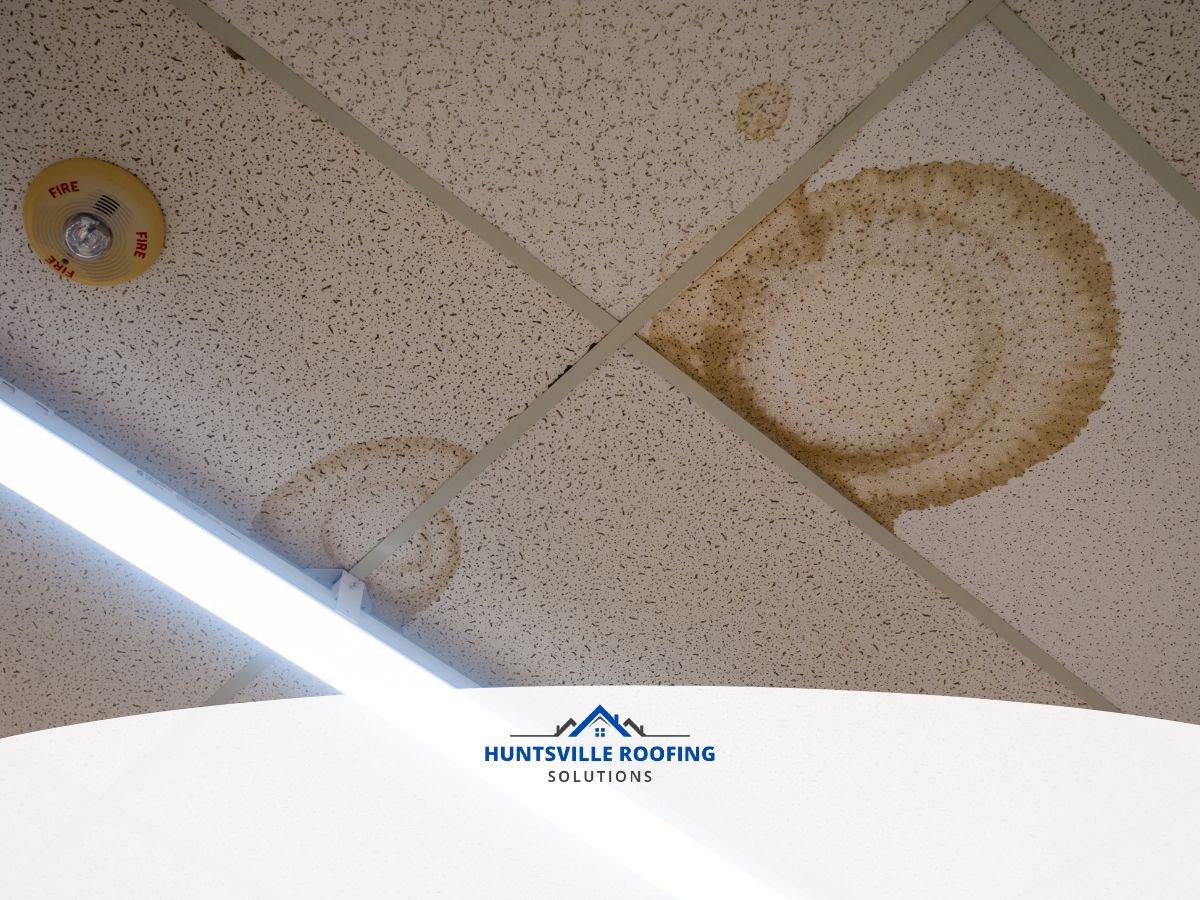
A ceiling can have a brown water stain and feel dry because the leak happened earlier, only occurs during certain storms, or has dried on the room-facing surface while insulation or framing above remains damp. The stain may also come from an old plumbing or HVAC problem rather than the roof. Touch alone cannot confirm that the area is safe or that the cause has been fixed. Photograph the mark, monitor for growth and have the likely moisture source inspected before repainting.
Why a stain can outlast the moisture
Water carries dissolved minerals and dirt through drywall or plaster. After evaporation, discoloration can remain indefinitely even if the original leak has stopped. Conversely, surface paint may feel dry while the back of the ceiling or attic insulation still holds moisture. A professional moisture assessment may be appropriate.
Old stain versus active intermittent leak
A stain that stays exactly the same through several rain events may be historical, but that does not prove the roof is sound. A mark that grows, develops a fresh dark edge, causes paint bubbling or reappears after wind-driven rain deserves prompt attention. Compare dated photos rather than relying on memory.
Roof, plumbing, HVAC or condensation?
Location and timing help narrow possibilities. A stain under a bathroom may relate to plumbing; near an attic air handler it may be a condensate drain; beside an exterior wall it may involve flashing or window details. High indoor humidity can create condensation without an opening in the roof.
What not to do first
Do not immediately cover the stain with primer and paint. Painting conceals a useful symptom and does not stop a leak. Do not press on sagging drywall or touch a wet ceiling light. If the ceiling bulges, a fixture is affected or water is actively dripping, keep clear and seek appropriate professional help.
How an inspection can establish the cause
The inspector may evaluate attic decking, insulation, plumbing, ventilation and roof transitions while documenting damp readings and water paths. A moisture meter can support a diagnosis but is not proof that a specific roof detail failed. Ask for a clear explanation tying evidence to the recommended repair.
When to repair the ceiling
After the moisture source is corrected and affected materials are properly dried, damaged finishes may be repaired or repainted. If insulation, framing or drywall has deteriorated or mold is suspected, additional remediation may be required. Cosmetic treatment should come last, not first.
Further reading and next steps
These published guides provide additional context for the decision and the parts of your roofing system involved:
- roof leak repair options
- leak clues during heavy rainfall
- how roof transitions can leak
- when to have the roof inspected
Huntsville Roofing Solutions serves homeowners in Huntsville and across North Alabama. For a problem that may be causing active water entry, request an inspection before selecting a repair or replacement scope. Observations described here are educational, not a diagnosis of your specific roof.

Jordan is the founder and owner of Huntsville Roofing Solutions, a locally owned, fully licensed and insured roofing company serving Huntsville and North Alabama. He and roofing supervisor Barry Minor have handled residential and commercial roofs across the region — replacements, repairs, storm damage, and insurance claims — earning a 4.9-star Google rating along the way.