
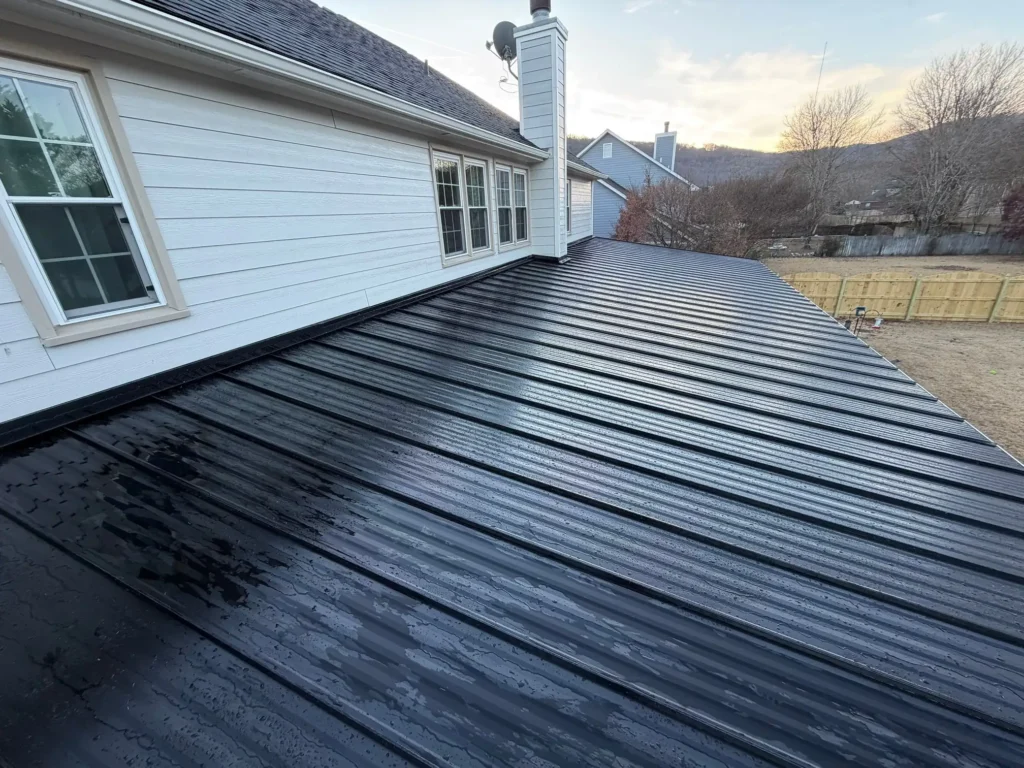
Why Do People Think Metal Roofs Are Loud?
The idea is not completely made up. Rain hitting a sheet of metal does create a distinct sound.
The problem is that many people’s opinions of metal roofing were shaped by what they heard inside barns, sheds, workshops, carports, and agricultural buildings.
In those types of structures, the metal panels may be attached directly to purlins or framing without a solid roof deck, substantial insulation, or a finished drywall ceiling underneath.
That allows the metal panels to vibrate more easily. The large open space underneath can also allow the sound to reverberate.
A residential home is built differently. On a house, the metal roof is only the outer layer. The complete roof and ceiling system underneath it plays a major role in how much sound reaches the rooms below.
What Actually Controls Metal Roof Rain Noise?
If rain noise is one of your concerns, the better question is not simply, “Is the roof metal?”
A better question is: “What is underneath the metal roof?”
1. Solid Roof Decking
Plywood or OSB creates a solid roof deck beneath the metal panels. This gives the roofing material a firm surface to rest on instead of allowing large sections of metal to vibrate freely over open framing.
That is one of the biggest differences between a residential metal roof and the noisy metal roof you may remember from a barn or shed.
2. Roof Underlayment
Roof underlayment sits between the metal roofing and the roof deck. Its main purpose is moisture management, but it also creates another layer between the falling rain and the structure of the home.
Some roofing systems use underlayments with different acoustic and thermal properties. However, homeowners should not choose an underlayment based on sound alone.
Moisture protection, compatibility with the roofing system, and manufacturer requirements are more important.
3. Attic Insulation
Attic insulation is one of the bigger factors that can affect the amount of rain noise you hear inside the home.
Fiberglass, cellulose, and other types of insulation can absorb some of the sound energy created by rainfall before it reaches the ceiling and living space below.
That is why a well-insulated attic will generally sound different from a lightly insulated or unfinished attic during a storm.
4. Ceiling Construction
A bedroom with a drywall ceiling and a full attic above it has more material separating the occupants from the roof.
A vaulted or cathedral ceiling usually has much less space between the living area and the roof deck.
This is one reason two houses with exactly the same metal roof panels can sound very different during rainy weather.
5. Installation and Support of the Metal Roof Panels
Poorly supported panels or loose fasteners can create additional vibration and noise.
The profile of the metal panels can make some difference, but it is only one part of the overall sound performance.
A properly designed and installed roof assembly is usually more important acoustically than simply choosing one metal panel profile over another.
Are Metal Roofs Louder Than Asphalt Shingles?
Metal roofing can produce a slightly different sound than asphalt shingles, but that does not automatically mean a metal roof will be loud inside the home.
Asphalt shingles have more surface mass and texture at the roof covering itself. Metal is harder and smoother, so raindrops striking the surface can produce a sharper sound.
Once roof decking, underlayment, attic insulation, and a finished drywall ceiling are added, the difference becomes much less noticeable inside most homes.
| Roof Situation | What You Are Likely to Hear | Why |
|---|---|---|
| Metal panels installed over open framing | Rain can be clearly loud | The panels can vibrate with very little material underneath to absorb the sound |
| Residential metal roof over solid decking and an insulated attic | Usually moderate and unobtrusive indoors | Decking, underlayment, insulation, and ceiling materials help reduce sound transmission |
| Asphalt shingles over a normal residential roof | Generally quiet indoors | The shingles provide additional mass and surface texture |
| Metal roof above a vaulted or lightly insulated ceiling | Rain can be more noticeable | There is less material separating the room from the roof panels |
If you prefer asphalt shingles for reasons other than sound, such as appearance or design flexibility, you can also explore the available roof shingle color options.
Noise should be one factor in the decision, not the only factor.
How Much Louder Is a Metal Roof?
There is no single decibel number that applies to every metal-roofed home.
Rain intensity, metal panel type, roof pitch, roof decking, insulation, ceiling construction, room dimensions, and even the position of the sound meter can all change the result.
For that reason, a noise measurement taken inside an open metal building should not be used to predict what a finished residential home will sound like.
The National Institute on Deafness and Other Communication Disorders explains that a 10-decibel increase is generally perceived by the human ear as being about twice as loud.
That is worth understanding because relatively small acoustic differences should not automatically be described as a dramatic increase in loudness.
For a homeowner, the more useful comparison is the complete roof assembly rather than the metal panel by itself.
When Can a Metal Roof Actually Be Loud?
There are situations where concerns about metal roof noise are completely reasonable.
- Open-framed buildings: Barns, sheds, detached workshops, carports, and porches may have very little insulation or sound-dampening material.
- Poorly insulated attics: Less insulation means there is less separation between the roof and the rooms below.
- Vaulted ceilings: Rooms directly beneath the roof can make rainfall more noticeable.
- Very heavy rain or hail: Larger impacts create more sound regardless of the roofing material.
- Loose or poorly installed panels: Rattling is usually an installation or maintenance problem rather than an unavoidable characteristic of metal roofing.
This distinction is important because saying “metal roofs are silent” would be just as misleading as saying “metal roofs are always loud.”
A properly built residential metal roof can be comfortable during rainy weather, while an open, lightly insulated, or poorly installed system can be noticeably louder.
Are Standing Seam Metal Roofs Loud?
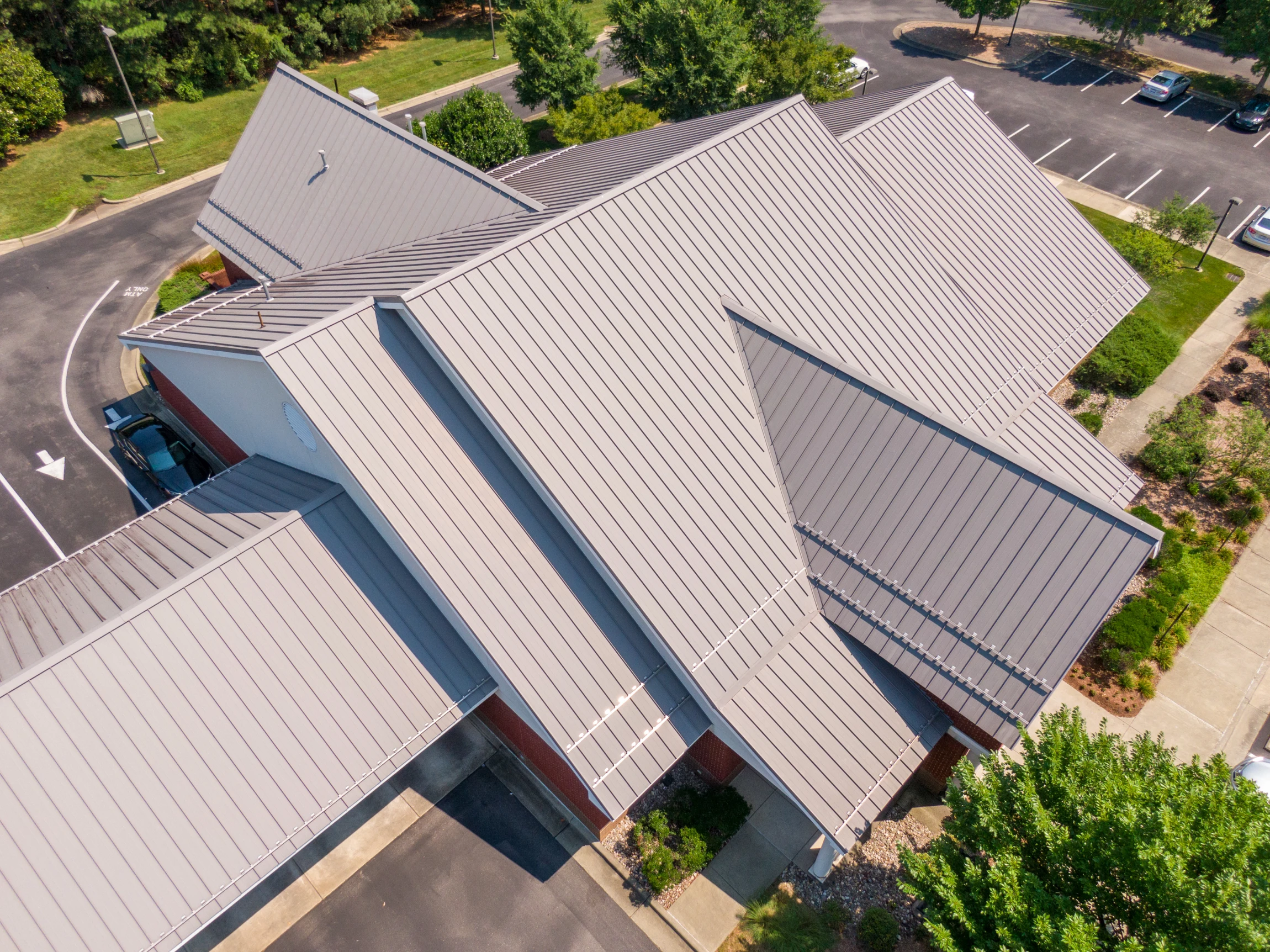
A residential standing seam metal roofing system should not sound like an exposed metal roof on a barn when it is installed over a proper residential roof assembly.
Standing seam systems use long metal panels with raised seams and concealed attachment points.
On a residential home, those panels normally work together with solid roof decking, underlayment, insulation, attic space, and the ceiling below.
A standing seam roof is not a magical solution for eliminating rain noise. The construction underneath the panels still matters.
Roof decking, insulation, ceiling construction, and proper installation are what make the biggest difference between a comfortable residential metal roof and a noisy exposed metal structure.
Will Hail Be Loud on a Metal Roof?
Hail creates more noise than ordinary rainfall on almost every type of roof because each impact carries more energy.
Metal can produce a sharper sound than asphalt shingles during hail, especially in rooms located close to the roof deck.
It would therefore be misleading to describe heavy hail on a metal roof as silent.
As with rain, however, the complete roof assembly matters. Solid decking, attic insulation, and the finished ceiling can significantly reduce the amount of noise that reaches the living space.
If hail performance is an important consideration for your North Alabama home, ask about both the impact resistance and the sound characteristics of the proposed roofing system.
They are related concerns, but they are not the same thing.
Can Metal Roofs Make Popping or Clicking Sounds?
Sometimes, yes.
Metal expands when it gets warmer and contracts as it cools. A properly designed metal roofing system needs to allow for that natural movement.
You may occasionally hear a click or pop during rapid temperature changes.
However, persistent, unusually loud, or newly developed sounds may be worth inspecting. Panel attachment, flashing, clips, or other roofing components may need attention.
This type of sound is different from rain noise and should not automatically be blamed on raindrops.
How Can You Make a Metal Roof Quieter?
If sound is an important factor while you are considering a roof replacement, it is much better to address it during the design and installation process rather than trying to correct it afterward.
- Confirm that there is solid roof decking.
Damaged, deteriorated, or missing roof decking should be addressed as part of the roofing project where necessary. - Use the correct roof underlayment.
Choose the underlayment specified for the roofing system. Acoustic characteristics should never replace proper moisture protection. - Consider attic insulation.
Adequate insulation can improve both sound control and thermal comfort. - Give vaulted rooms extra attention.
Bedrooms, bonus rooms, and living areas located directly beneath the roof deserve a closer look because there is less separation from the roof deck. - Use experienced metal roof installers.
Panels, clips, flashings, fasteners, and penetrations should all be installed correctly so the system can move without unnecessary rattling or vibration.
It is sometimes possible to install a metal roof over existing shingles, which adds another layer to the roof assembly.
However, this should not be done only for the purpose of reducing noise.
The condition of the existing roof, ventilation, manufacturer requirements, local code, and warranty conditions should all be considered first.
Should Rain Noise Stop You From Choosing a Metal Roof?
For most homeowners with a conventional residential roof assembly, rain noise should not be a strong reason to rule out metal roofing.
There are several other factors that deserve just as much attention, including initial cost, lifespan, appearance, maintenance requirements, roof geometry, and how long you expect to own the home.
Metal roofing may not be the right choice for every house or every homeowner.
If you have exposed framing, a vaulted ceiling, limited attic insulation, or you are particularly sensitive to sound, it is reasonable to investigate the roof assembly before making a decision.
If you are still comparing materials, take a look at the company’s roof replacement options rather than making the decision based on rain noise alone.
You can also review the published roofing prices in Huntsville and North Alabama if cost is part of your comparison.
The Bottom Line
Are metal roofs loud in rain? They can be loud on open or lightly insulated structures, but a properly installed residential metal roof over solid decking, underlayment, and adequate insulation is much quieter than the classic “tin roof” sound most people imagine.
The metal roof covering is only one part of what determines the final sound.
Roof decking, insulation, ceiling construction, panel support, and installation quality all influence what you eventually hear inside the home.
For a Huntsville or North Alabama homeowner considering metal roofing, the better question to ask a contractor is not simply, “Will the metal roof be loud?”
Ask: “What will be between the metal panels and the room below?”
Frequently Asked Questions About Metal Roof Noise
Are metal roofs louder than shingles when it rains?
Metal can create a slightly sharper rain sound than asphalt shingles, but inside a finished home much of that sound is reduced by the roof decking, underlayment, attic insulation, and ceiling. An open metal roof on a barn or shed is very different acoustically from a normal residential roof.
Does underlayment make a metal roof quieter?
Underlayment adds another layer underneath the metal roof and can contribute to sound reduction. However, its primary purpose is moisture protection. Roof decking, insulation, attic space, and ceiling construction generally have a greater influence on the amount of rain noise you hear indoors.
Are metal roofs loud in heavy rain?
Heavy rain is more noticeable on every roofing material. Metal can create a more distinct impact sound, particularly in vaulted or lightly insulated rooms, but a properly installed residential metal roof should not sound like an uninsulated barn or shed.
Are metal roofs loud during hail?
Hail can be clearly audible on a metal roof because hailstones strike with more force than raindrops. Solid roof decking and insulation help reduce the sound indoors, but homeowners should not expect heavy hail to be silent.
Why does my metal roof make popping noises?
Metal naturally expands and contracts as temperatures change, which can occasionally create clicking or popping sounds. Frequent, severe, or newly developed noises may justify an inspection to make sure panels, clips, flashings, and other roofing components are moving as intended.
Sources

Jordan is the founder and owner of Huntsville Roofing Solutions, a locally owned, fully licensed and insured roofing company serving Huntsville and North Alabama. He and roofing supervisor Barry Minor have handled residential and commercial roofs across the region — replacements, repairs, storm damage, and insurance claims — earning a 4.9-star Google rating along the way.