
A roof that leaks only when the wind blows from one direction may have a gap that allows wind-driven rain to move sideways or upward beneath roofing components. The likely trouble spot may be on the windward side of a chimney, wall flashing, ridge, vent or valley—not necessarily directly above the stain. Wind direction provides an important diagnostic clue, but it does not identify the exact defect by itself. Record which storms cause leakage and ask a professional roofer to inspect exposed transitions and nearby water paths.
Why rain direction changes the outcome
Roofing is designed primarily to shed water downward. Strong wind can push rain toward the underside of shingles, into siding joints or beneath vulnerable flashing laps. A defect may remain dry in a calm storm yet leak when rain strikes the roof from a particular angle.
Wind direction versus rain intensity
A heavy rain with little wind produces different conditions from a shorter storm with strong sideways rain. If the leak depends on a west wind, record that orientation rather than describing it only as a “heavy rain leak.” The distinction helps separate windward flashing problems from runoff concentration at low roof areas.
Which components should be checked first?
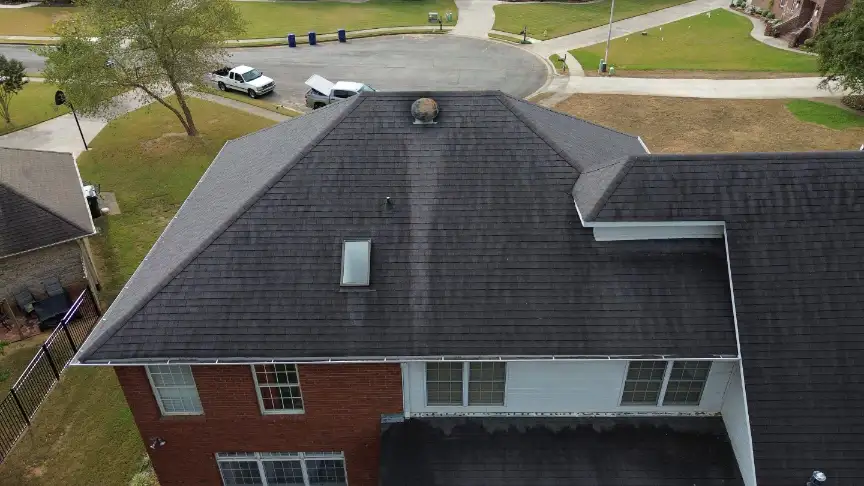
Inspectors often focus on step flashing where roof meets wall, chimney counterflashing, vent boots, ridge or hip details, skylight corners and valley transitions. Adjacent siding and windows can also admit water that appears to be a roof leak. A good diagnosis follows possible pathways rather than replacing shingles without evidence.
How to collect useful weather clues
Keep a short log with date, approximate wind direction, rain duration, affected room and when the first drip appeared. A photo of the exterior wall facing the storm can help orient the discussion. Do not attempt a hose test from a ladder or direct high-pressure water under shingles.
What a roofer may need to inspect
An attic inspection can reveal stains or tracks on rafters and sheathing, while a roof inspection checks overlaps and fastener placement. When appropriate, carefully controlled water testing may help reproduce the path. Dry-weather inspection alone can miss a gap that opens or wets only under specific pressure.
What a good repair should address
The fix should restore the flashing, underlayment or shingle system responsible for the entry path—not simply add sealant at the ceiling stain. Ask for documentation of the defect and a plan to verify the repair in future storms. A recurring pattern after repair merits a broader review of wall and roof intersections.
Further reading and next steps
These published guides provide additional context for the decision and the parts of your roofing system involved:
- leaks that occur during heavy rain
- how step flashing sheds water
- chimney and skylight leak causes
- local roof leak repair help
Huntsville Roofing Solutions serves homeowners in Huntsville and across North Alabama. For a problem that may be causing active water entry, request an inspection before selecting a repair or replacement scope. Observations described here are educational, not a diagnosis of your specific roof.

Jordan is the founder and owner of Huntsville Roofing Solutions, a locally owned, fully licensed and insured roofing company serving Huntsville and North Alabama. He and roofing supervisor Barry Minor have handled residential and commercial roofs across the region — replacements, repairs, storm damage, and insurance claims — earning a 4.9-star Google rating along the way.