
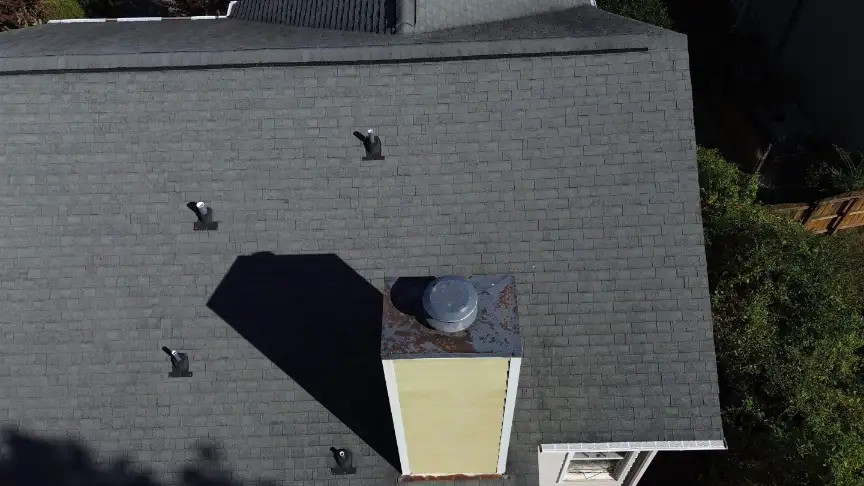
Yes. A roof can leak even when no shingles are missing. Water may enter through cracked pipe-boot seals, deteriorated chimney flashing, an improperly detailed valley, exposed nail holes, failed sealant at a transition or an issue beneath otherwise intact shingles. A leak can also travel before appearing indoors, making the source difficult to spot from the ground. The right response is a targeted professional inspection of roofing, flashing, penetrations and the attic—not an assumption that visible shingle loss must be present.
Why intact shingles are not the whole roof system
Shingles are the main water-shedding surface, but they work together with underlayment, flashing, starter materials, drip edge and vents. Water can exploit a junction where two different materials meet. A roof that looks neat from the street can still have a badly sealed penetration or poorly installed wall flashing.
Leak points hidden from ground view
Plumbing vents, valleys, chimneys, skylights and roof-to-wall junctions are frequent inspection priorities. A nail driven in the wrong location or a shingle tab lifted by wind can also admit water without leaving an obvious bare patch. The actual entry point may be above or beside the ceiling stain.
Roof leak versus condensation or plumbing
Moisture in an attic may come from humid indoor air contacting cool surfaces or from a plumbing line, not from rain penetration. The timing matters: rain-dependent stains suggest roof or wall entry, while moisture during dry weather can point elsewhere. A professional should check both possibilities rather than guessing from color alone.
What you can safely observe
From indoors, record stain location, smell, drip timing and whether insulation seems wet. From ground level, inspect visible flashing and drainage areas without climbing onto the roof. If you can safely access the attic, avoid stepping off structural framing and do not touch wet electrical equipment.
How contractors locate less obvious leaks
A qualified roofer may inspect the roof, attic, flashing laps and likely water paths, sometimes using controlled testing where appropriate. A moisture meter or infrared camera can help locate damp material, but neither proves a precise source without corroborating evidence. Ask for photos of the confirmed failure.
When to repair and when to look more broadly
A sound roof with one failed pipe boot often needs a targeted repair. Several recurring leaks across old brittle shingles may justify considering replacement. The decision should be based on system condition and the cause of leakage, not the presence or absence of a visibly missing shingle.
Further reading and next steps
These published guides provide additional context for the decision and the parts of your roofing system involved:
- flashings and water barriers explained
- common chimney and skylight leaks
- roof repair services
- leak symptoms during heavy rain
Technical reference: GAF: How to Spot and Prevent Roof Vent Pipe Leaks. Manufacturer guidance depends on the product and installation conditions.
Huntsville Roofing Solutions serves homeowners in Huntsville and across North Alabama. For a problem that may be causing active water entry, request an inspection before selecting a repair or replacement scope. Observations described here are educational, not a diagnosis of your specific roof.

Jordan is the founder and owner of Huntsville Roofing Solutions, a locally owned, fully licensed and insured roofing company serving Huntsville and North Alabama. He and roofing supervisor Barry Minor have handled residential and commercial roofs across the region — replacements, repairs, storm damage, and insurance claims — earning a 4.9-star Google rating along the way.