
A roof leaking around a plumbing vent is often caused by a split or weathered rubber pipe boot, a loose metal collar, poorly integrated flashing, or exposed fastener holes. Water can enter around the vent penetration and travel along the roof deck before it shows as a ceiling stain. The shingles may look intact. A professional roofer should inspect the vent boot, surrounding shingles, underlayment and nearby roof transitions to confirm the entry point rather than covering the area with more caulk.
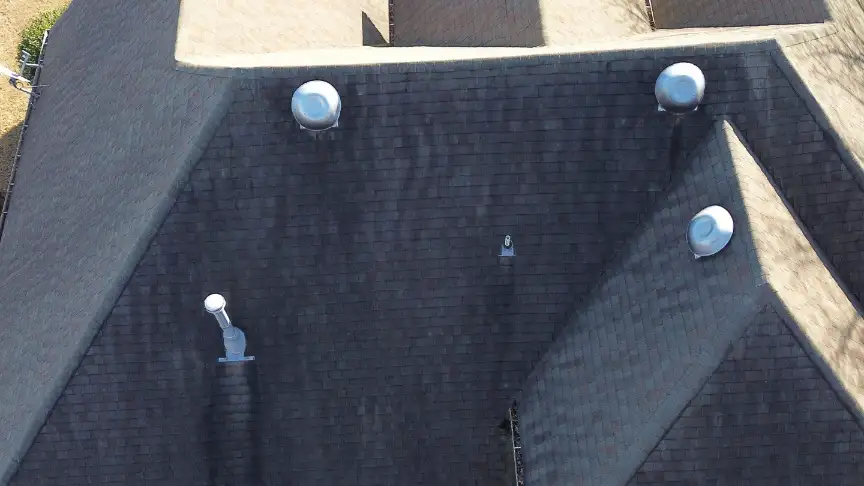
How a vent pipe creates a leak path
A plumbing vent exits through the roof to serve the home’s drainage system. Where the pipe passes through the roof, a flashing boot or collar bridges the gap and sheds rainwater onto the shingles below. Rubber collars can crack with age; metal flashings can corrode or loosen; an improperly installed boot can direct water under roofing.
For an explanation of the individual component rather than a diagnosis of a specific leak, see what a roof pipe boot is and why it can fail. The location of a ceiling stain alone does not confirm that the boot is the entry point.
Pipe boot failure versus another leak
A stain near a bathroom does not prove that the nearby vent is at fault. Water might have entered higher on the roof at a valley, chimney or nail hole before traveling along framing. Plumbing condensation or an actual plumbing leak can also mimic a roof leak. Accurate diagnosis starts with the timing of moisture and a targeted inspection.
These are possibilities for a qualified inspector to compare, not a way to diagnose a roof from inside the house:
| Possible source | Clues that may prompt inspection | What the roofer should check |
|---|---|---|
| Cracked or loose rubber pipe collar | Moisture is associated with rain, and deterioration may be visible around the pipe from a safe vantage point. | Collar condition, fit around the pipe, flashing compatibility and whether the boot assembly needs replacement. |
| Improperly integrated or damaged boot flashing | Staining develops after rain, even when the adjacent shingle surfaces look intact. | Flashing orientation, shingle laps, fasteners, underlayment and the water-shedding path around the penetration. |
| Nearby exposed fasteners or damaged shingles | Damage or repair patches are near the vent, but the entry point may be offset from the ceiling stain. | Surrounding shingle courses, fastener penetrations and adjacent roof details. |
| Leak originating higher up the roof | A stain near the vent appears during wind-driven or heavy rain, potentially after water travels along the deck. | Up-slope valleys, intersections, flashing and any other plausible entry points. |
| Indoor plumbing leak or condensation | Moisture occurs without rain or follows plumbing use or changing indoor conditions. | Whether a plumbing or condensation assessment is needed before attributing the problem to roofing. |
A trained inspector may need to trace the water path beyond the stain. Do not lift shingles or conduct a hose test on a steep or wet roof yourself.
Why another bead of sealant often fails
Applying caulk to the visible top edge may temporarily change the leak, but it does not restore broken flashing laps or an aged gasket. The correct repair often involves removing surrounding shingles, replacing the boot or collar and reinstalling the layered roofing detail. The roofer should also assess any wet decking.
Clues to document before you call
Note whether the stain appears only during rainfall, whether wind direction matters, which ceiling is affected and whether discoloration grows. Photograph the stain and, from ground level, visible damage near the vent. Do not climb onto a wet or steep roof.
Before you call, gather observations that could help narrow the inspection:
- Weather: Record the date and whether the leak followed light rain, heavy rain, or wind-driven rain.
- Location: Note the room and the nearest ceiling or attic staining; water may travel before becoming visible.
- Pattern: Record whether the stain changes between storms or also appears during dry weather.
- Photographs: Take dated photos from a dry, safe indoor or ground-level position. Do not open ceilings or climb the roof.
- History: Tell the contractor about prior flashing repairs, pipe-boot replacement, or recent work near the affected roof area.
What a proper repair estimate includes
Ask about the pipe boot material, any required shingle replacement, weather-barrier integration and inspection of hidden decking. The repairer should explain whether the existing shingles are sufficiently flexible to work around without excessive breakage. Old brittle roofs may require a broader repair.
Request a written explanation identifying the suspected entry point, what will be removed or replaced, how the flashing will shed water into the surrounding roof covering, and how the work will be checked. An estimate for sealant alone should explain why the existing flashing and collar do not require repair or replacement.
When to treat the situation as urgent
Active dripping near electrical fixtures, bulging ceilings or wet insulation warrants immediate professional attention. Keep people clear of affected electrical areas and contact the appropriate licensed professional. Arrange inspection promptly even if the spot dries after the storm.
Further reading and next steps
These published guides provide additional context for the decision and the parts of your roofing system involved:
- roof flashing basics
- professional roof leak repairs
- why a roof can leak during heavy rain
- scheduling a roof inspection
Technical reference: GAF: How to Spot and Prevent Roof Vent Pipe Leaks. Manufacturer guidance depends on the product and installation conditions.
Huntsville Roofing Solutions serves homeowners in Huntsville and across North Alabama. For a problem that may be causing active water entry, request an inspection before selecting a repair or replacement scope. Observations described here are educational, not a diagnosis of your specific roof.

Jordan is the founder and owner of Huntsville Roofing Solutions, a locally owned, fully licensed and insured roofing company serving Huntsville and North Alabama. He and roofing supervisor Barry Minor have handled residential and commercial roofs across the region — replacements, repairs, storm damage, and insurance claims — earning a 4.9-star Google rating along the way.