
During a roof replacement, gutters often remain attached, but the contractor may temporarily detach them if access or flashing work requires it. Roofers should protect gutter edges from ladders, falling debris and heavy material. Existing gutters are not automatically replaced as part of a new roof. After installation, the crew should clear roof debris, check visible gutter damage and confirm that water can flow toward the downspouts. If gutters are sagging, corroded or poorly pitched, discuss replacement separately before the roof work begins.
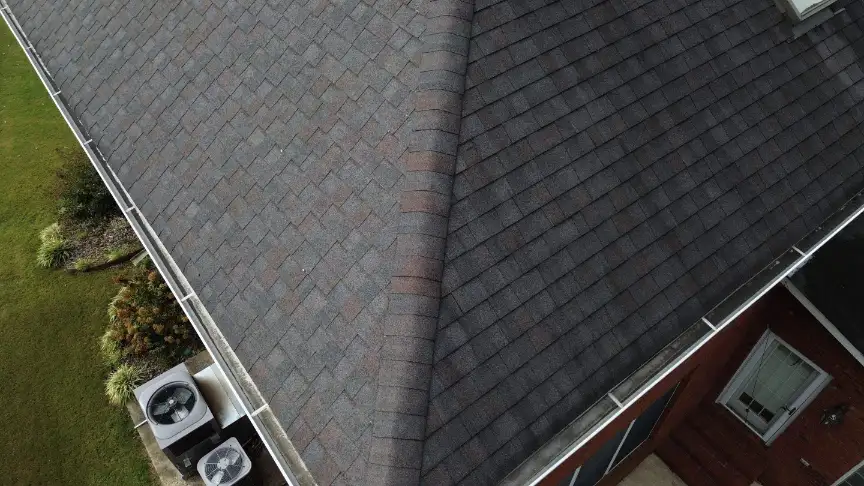
Why gutters are sometimes left in place
Many asphalt-shingle roofs can be reroofed without taking down serviceable gutters. Leaving them saves labor and avoids disturbing downspout joints. However, gutter guards, unusual eave details and rotten fascia can obstruct drip-edge work. Removal should be decided from inspection rather than as a standard sales add-on.
When removing gutters may be helpful
Temporary removal can give better access to fascia repairs or certain edge-flashing arrangements. The downside is potential damage to older sections during detachment and reinstallation. Have the roofer specify who is responsible for reconnecting downspouts, replacing broken hangers and testing drainage if removal is necessary.
How debris can affect the system
Old nails, granules and shingle fragments can fall into open gutters. Clogged outlets can overflow during the next heavy rain, even when new shingles are correctly installed. A cleanup should include looking at accessible troughs and downspout entrances, not merely removing visible pieces from the lawn.
What if your home has gutter guards?
Some guards must be lifted or removed to work around the roof edge. Ask whether they can be reused without bending or warranty problems. If guards are nearing the end of their life, combining the work may be reasonable, but functional guards do not need replacement just because a roof is new.
Drip edge, fascia and gutter alignment
Drip edge is metal flashing along the roof perimeter that directs water off the roofing edge. Fascia is the board behind the gutter; it may conceal rot. The roofer should confirm that the new roof edge sheds water into the gutter rather than behind it, while also preserving intended ventilation details.
Final walk-around checklist
Before final payment, look for dents, loose hangers, blocked downspouts and newly exposed fascia damage. Ask the contractor to explain any pre-existing deficiencies documented in the initial inspection. A clear scope prevents disputes about whether gutter cleaning, reattachment and replacement are included.
Further reading and next steps
These published guides provide additional context for the decision and the parts of your roofing system involved:
- gutter installation and repairs
- how drip edge works
- the role of gutters in roof health
- the roof replacement work sequence
Technical reference: GAF: Should You Remove Gutters When Replacing the Roof?. Manufacturer guidance depends on the product and installation conditions.
Huntsville Roofing Solutions serves homeowners in Huntsville and across North Alabama. For a problem that may be causing active water entry, request an inspection before selecting a repair or replacement scope. Observations described here are educational, not a diagnosis of your specific roof.

Jordan is the founder and owner of Huntsville Roofing Solutions, a locally owned, fully licensed and insured roofing company serving Huntsville and North Alabama. He and roofing supervisor Barry Minor have handled residential and commercial roofs across the region — replacements, repairs, storm damage, and insurance claims — earning a 4.9-star Google rating along the way.