
A roof replacement is usually very noisy inside the house, especially during tear-off and shingle fastening. Hammer strikes, nail guns, scraping, footsteps, and occasional debris impacts transmit through roof decking and framing. The sound level varies by roof construction and distance from the crew; there is no trustworthy universal indoor decibel figure. If you need quiet meetings, naps, or concentration, plan to be elsewhere during the noisiest work. Most of the disruption occurs during active working hours rather than continuously throughout the entire project.
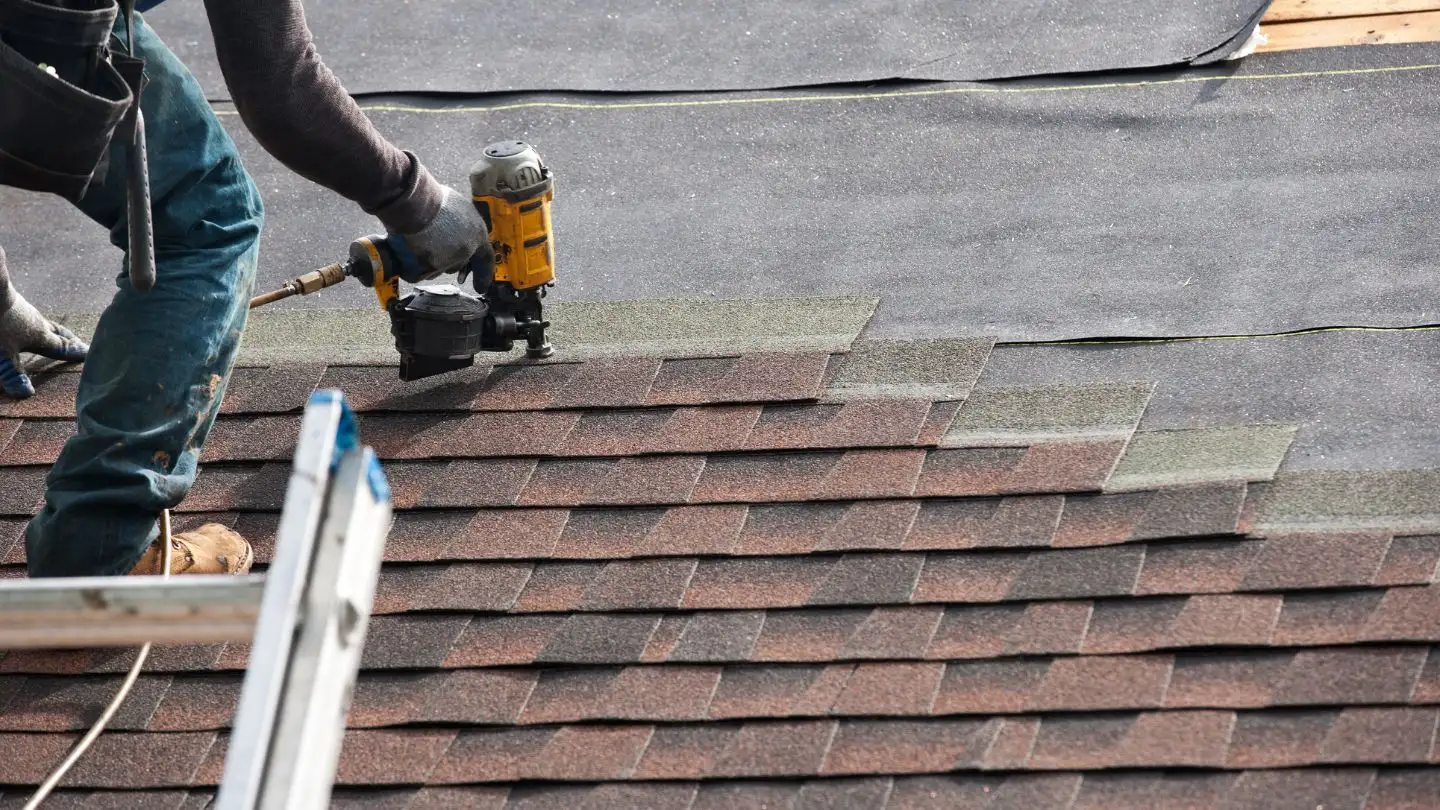
What the noise sounds like from indoors
The sound is more than ordinary outdoor construction noise. Nail-gun impacts can feel like rapid knocks on the ceiling; crews walking across the roof create thuds; old shingles sliding down a protected chute produce scraping and rattling. Some rooms amplify resonance, especially upper-story bedrooms directly below the roof.
Tear-off versus installation noise
Removing existing shingles often creates irregular scraping, banging and debris noise. Installing new material generally produces more repetitive fastening sounds. Roof-deck repairs can add sawing and hammering, sometimes unexpectedly after old materials are removed. Quiet pauses are normal and do not mean the job is finished.
The sound changes as the crew moves through the job. This table gives a planning guide—not a measured noise rating or a fixed schedule.
| Work stage | What you may hear indoors | How to plan |
|---|---|---|
| Arrival and setup | Truck doors, voices, ladders and materials being positioned; intermittent activity. | Keep driveways and agreed access routes clear, and ask when roof work is expected to start. |
| Removing old shingles | Loud, irregular scraping, thuds and debris movement through the roof structure. | Arrange a quiet workspace elsewhere if you have calls, exams or rest time. |
| Deck inspection or repair, if needed | Extra hammering, cutting and movement after the roof covering is removed. | Ask the site supervisor whether repairs change the work window. |
| Underlayment, flashing and preparation | Footsteps, material handling and occasional fastening sounds. | Expect quieter intervals, but do not count on uninterrupted silence. |
| Installing and fastening shingles | Frequent, repetitive impacts from nail guns and tools, often prominent in upper rooms. | Keep important meetings and naps away from active fastening if possible. |
| Cleanup and final checks | Equipment, blowers and movement around the property, generally in shorter bursts. | Keep children and pets away from work zones until the crew confirms they are clear. |
Why the noise can feel unusually intense
The deck and framing conduct vibration into the building. Hard interior surfaces and an unfinished attic may change the perceived sound. Even if no worker enters the house, wall frames, light fixtures and ceiling fans can vibrate. Move delicate display objects and avoid placing important calls in an upstairs room.
Planning for work, school or small children
If you work from home, select an alternate workspace or schedule calls outside roofing hours. Children doing remote schoolwork may struggle to hear lessons. Pets can react to sudden banging; keep them secure or relocate them. If you remain home, use the room with the greatest distance from the currently active roof section.
Before installation day, make a simple noise and access plan:
- Calls and focused work: Schedule quiet tasks away from tear-off and fastening, or use a different location rather than relying on headphones alone.
- Children and anyone sensitive to sudden sounds: Arrange a quieter place if the noise may interrupt learning, rest or daily care.
- Pets: Set up a secure indoor space away from doors used by the crew, or arrange temporary care elsewhere.
- Fragile belongings: Move objects that could shift from vibration, particularly on high shelves and in upstairs rooms.
- Daily access: Confirm which entry and parking spaces will remain available and where debris will be collected.
If your bigger question is whether staying in the home is practical or safe during the project, read whether you can stay home during roof replacement. That decision is separate from how loud the work sounds.
Is the noise a sign of damage?
Noise by itself is expected; new ceiling cracks, falling drywall dust, a sudden leak or unusual movement is not something to dismiss. Photograph any concern and alert the site supervisor promptly. Ask whether the crew discovered weakened decking that requires repair rather than assuming every thud indicates a problem.
What to ask your roofing contractor
Ask for an approximate work window, how long tear-off is expected to last, whether deck replacement may be necessary, and whether a protected entry will remain open. Do not rely on an advertised one-day project if your roof has several layers, steep pitches or concealed wood damage.
Request a brief heads-up before the loudest phases if you need to coordinate calls, childcare or pet care. Confirm who to contact if you notice a new crack, falling interior material or water entry, and keep clear of exterior drop zones while the crew is working.
Further reading and next steps
These published guides provide additional context for the decision and the parts of your roofing system involved:
- a walk-through of the workday
- how roof-deck repairs can change the schedule
- homeowner preparation steps
- how long roof replacement takes
Huntsville Roofing Solutions serves homeowners in Huntsville and across North Alabama. For a problem that may be causing active water entry, request an inspection before selecting a repair or replacement scope. Observations described here are educational, not a diagnosis of your specific roof.

Jordan is the founder and owner of Huntsville Roofing Solutions, a locally owned, fully licensed and insured roofing company serving Huntsville and North Alabama. He and roofing supervisor Barry Minor have handled residential and commercial roofs across the region — replacements, repairs, storm damage, and insurance claims — earning a 4.9-star Google rating along the way.