
Can You Roof Over Existing Shingles?
Yes, you can roof over existing shingles, but only when the existing roof is suitable to become the base for the new one. Huntsville uses the adopted 2018 International Residential Code, which allows a roof recover when the roofing manufacturer’s instructions permit it. However, another layer should not be installed over a roof that is water-soaked, badly deteriorated, structurally questionable, or already has two or more roof-covering applications. The existing shingles should also be reasonably flat and stable. For many roofs, removing the old shingles is still preferable because tear-off allows the decking, flashing, moisture damage, and other hidden conditions to be properly inspected.

What Does Roofing Over Existing Shingles Mean?
Roofing over existing shingles is usually referred to as a roof recover or roof overlay.
Instead of removing the old asphalt shingles from the house, the roofer prepares the existing surface and installs the new shingles over it.
The old shingles then become part of the base beneath the new roofing system.
This approach can save some labor costs and reduce tear-off, hauling, and disposal fees. It can also make the project faster and reduce some of the mess created by removing the old roof.
But there is a tradeoff.
You are building the new roof on top of a roofing system that is already old.
That does not automatically make an overlay wrong. It does mean the condition of the existing roof needs to be considered carefully before it is covered.
Is Roofing Over Existing Shingles Allowed in Huntsville?
Yes, under the right conditions.
The City of Huntsville currently lists the 2018 International Residential Code among its adopted building codes. Section R908 addresses reroofing.
A roof recover is permitted when the new roofing is installed according to the roofing manufacturer’s approved instructions.
However, Section R908 also identifies situations where a roof recover is not permitted.
These include situations where:
- The existing roof or roof covering is water-soaked.
- The existing roofing has deteriorated to the point that it cannot provide a suitable base.
- The existing covering is slate, clay, cement, or asbestos-cement tile.
- The roof already has two or more applications of roof covering.
That means a roof with one existing layer may potentially qualify for a second roofing application, while a roof that already has two or more applications should generally be stripped instead.
Local permitting requirements and the roofing manufacturer’s instructions still need to be checked for the individual project.
When Can Installing New Shingles Over Old Shingles Make Sense?
An overlay makes the most sense when the existing roof is in unusually good condition to serve as the base for the new roof.
Several conditions should normally be met.
There Is Only One Existing Layer
This is one of the first things to determine.
If the house already has two roof-covering applications, adding another layer is a very different situation from installing a second roofing application over one existing layer.
A roofer can usually identify multiple layers by inspecting the roof edge, looking around penetrations, or checking other accessible parts of the roof assembly.
The Existing Roof Is Relatively Flat
New shingles need a reasonably smooth surface underneath them.
Curled, buckled, warped, lifted, or uneven shingles can create irregularities that may show through the new layer.
GAF’s reroofing guidance says the existing shingles should provide a smooth surface and that loose, curled, or lifted shingles need to be corrected before reroofing.
If preparing the old surface requires repairs across much of the roof, tear-off starts becoming the more sensible option.
The Roof Has Not Had Major or Recurring Leaks
This is important.
If a roof is being replaced because water has repeatedly entered the roofing system, installing another layer can conceal what is happening underneath.
The roof decking could contain:
- Rot.
- Soft areas.
- Delamination.
- Previous patches.
- Damaged fastener areas.
- Moisture deterioration around penetrations or valleys.
Another layer of shingles will not repair any of these problems.
If the roof has experienced significant leakage, exposing the roof deck is usually more useful than covering the existing roofing.
The Roof Deck Is Believed to Be Sound
The roof deck supports the roofing system and provides the surface into which the roofing fasteners are secured.
The problem with an overlay is that much of the deck cannot be inspected beforehand.
That creates uncertainty.
A homeowner with a relatively young, dry roof and a known decking condition is in a very different situation from someone who buys a 25-year-old home and has no idea what condition the decking is in.
When Should You Not Roof Over Existing Shingles?
There are several situations where the money saved by avoiding tear-off may not compensate for what remains hidden underneath.
The Old Shingles Are Curled or Severely Deteriorated
The new shingles need a solid and reasonably smooth surface.
If the existing roof is rough, uneven, brittle, curled, or heavily weathered, putting another roof over it does not make those problems disappear.
The new roof can follow the irregular shape of the shingles underneath.
The Roof Has Active or Recurring Leaks
A leaking roof should be diagnosed before another roofing layer is installed.
If the problem is one isolated defect, you may not need a new roof at all.
Huntsville Roofing Solutions provides residential roof repair services for localized problems such as damaged shingles, flashing issues, leaks, and storm-related defects.
On the other hand, a roof with widespread leakage or deterioration may need to be stripped so the condition underneath can be properly inspected.
There May Be Damaged Decking
This is probably one of the strongest arguments for removing the old shingles.
The roof deck can look completely different once the roofing material is removed.

Soft decking, rot, deterioration around roof penetrations or valleys, and previous repairs may remain invisible until the old roofing is removed.
Installing another roofing layer does not correct these problems.
There Are Already Two Roofing Applications
A third roofing layer should not simply be installed.
The 2018 IRC does not permit a roof recover when the existing roof already has two or more applications of roofing.
Manufacturer requirements may be even more restrictive.
For example, GAF’s reroofing guidance calls for only one existing roofing application when its shingles are installed over an existing asphalt-shingle roof.
There Are Significant Flashing Problems
A roof is more than shingles.
Water protection also depends on flashing around:
- Chimneys.
- Walls.
- Skylights.
- Plumbing vents.
- Roof-to-wall transitions.
- Valleys.
- Eaves and rakes.
An overlay can make some of these transitions more complicated because the height of the finished roof surface increases.
If the existing roof already has serious flashing problems, removing the old roofing may make it easier to rebuild these details correctly.
Why Do Some Homeowners Choose a Roof Overlay?
The answer is fairly simple.
The main reason is cost.
Removing an old roof requires additional labor, hauling, disposal, property protection, and cleanup.
Leaving one existing roofing layer in place can avoid some of those expenses.
An overlay can also reduce the time needed for demolition work.
That can be attractive to a homeowner trying to lower the initial project cost.
However, a lower initial cost does not automatically mean better long-term value.
You save money because certain steps are being skipped.
The important question is whether skipping those steps makes sense for your particular roof.
What Do You Gain by Removing the Old Roof?
A full tear-off gives the contractor access to parts of the roof that are difficult or impossible to inspect while the existing shingles remain in place.
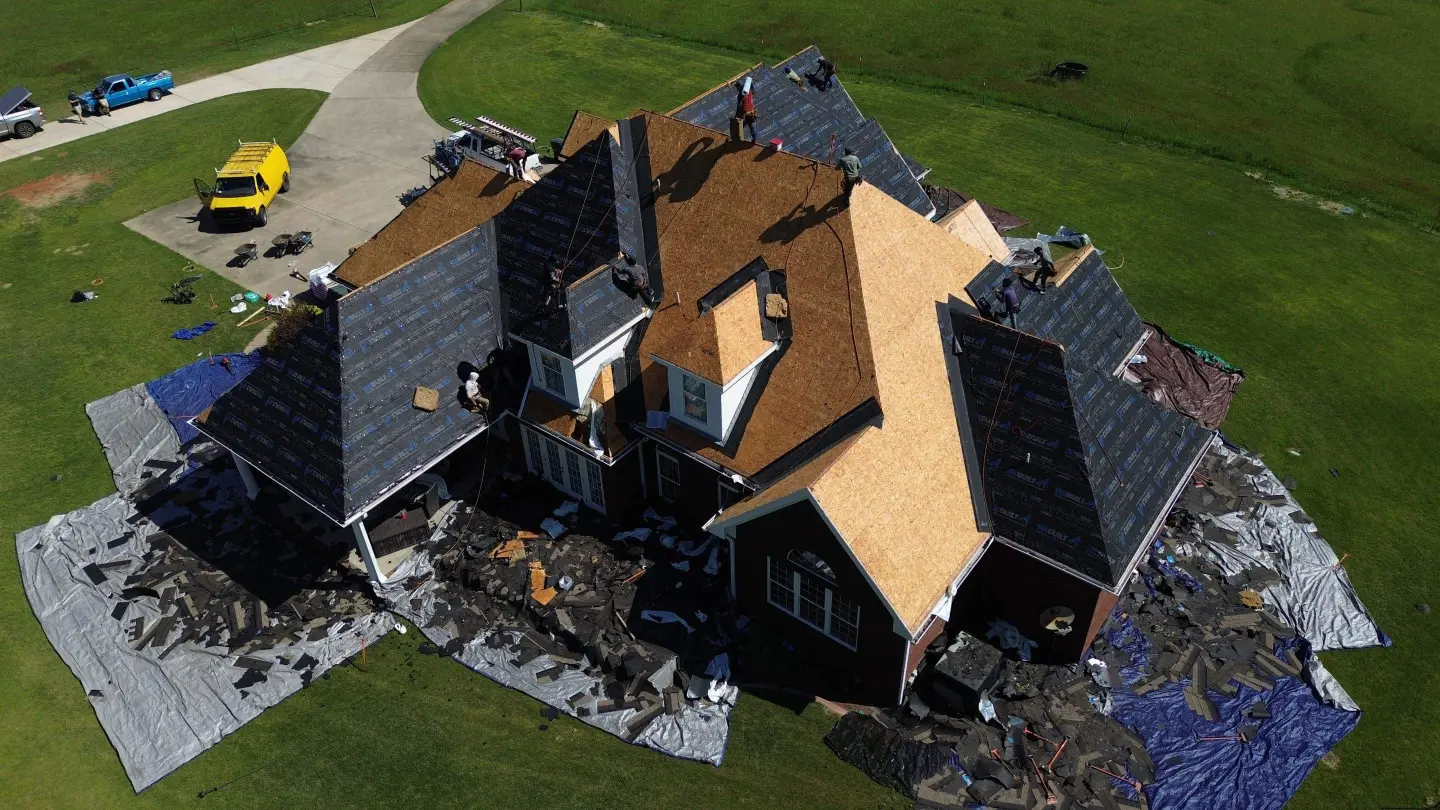
Tear-off allows the roofer to:
- Inspect the roof decking.
- Replace damaged plywood or OSB.
- Identify old water damage.
- Install new underlayment directly over the deck.
- Build new leak-protection details.
- Replace deteriorated flashing.
- Inspect roof penetrations.
- Create a smoother base for the new shingles.
- Correct certain problems hidden under the old roof.
That is why full roof replacement is often preferred when the condition of the existing roof deck is unknown.
Does Roofing Over Old Shingles Conceal Roof Damage?
It can.
This does not mean every roof overlay is hiding major damage.
But an overlay limits how much of the roof deck can be inspected.
A contractor may inspect the attic side of the decking where access is available. Soft areas may sometimes be detected during an inspection, and previous leak locations can provide useful clues.
But none of these methods provides the same level of access as removing the shingles and underlayment.
If there is a good reason to suspect roof-deck damage, tear-off gives the contractor a much clearer view of the actual condition.
What About the Underlayment?
Underlayment is an important part of a shingle roofing system.
During a conventional roof replacement, the old shingles and underlayment are removed so new underlayment can be installed directly over the roof deck according to the requirements of the new roofing system.
With an overlay, the existing roofing assembly stays in place.
The exact reroofing procedure depends on the manufacturer and the specific roofing product being installed.
That is another reason not to assume that every shingle manufacturer allows new shingles to be installed over every old roof in exactly the same way.
Do the Nails Reach the Roof Deck?
They should.
This is a practical point that is sometimes overlooked when people think of an overlay as simply placing one shingle over another.
The fasteners still need to meet the penetration requirements specified by the roofing manufacturer.
GAF’s reroofing requirements state that fasteners need to be long enough to adequately penetrate the wood roof deck.
Adding another roofing layer increases the distance between the new roof surface and the decking, which makes the correct fastener length important.
Does a Roof Overlay Affect the Appearance of the New Roof?
Potentially.
New asphalt shingles tend to follow the surface underneath them.
If the existing shingles have pronounced edges, curling, humps, patched areas, or uneven transitions, some of those irregularities may affect the finished appearance of the new roof.
That is why manufacturers want the existing surface to be reasonably smooth before reroofing.
If appearance is an important part of the replacement project, exposing the deck gives the contractor greater control over the surface underneath the new shingles.
Homeowners who are choosing a completely new roof appearance can also compare available shingle colors and styles.
What About Roof Ventilation?
A roof overlay does not automatically damage the home’s ventilation system, but the existing ventilation still needs to be evaluated.
Ridge vents, intake ventilation, exhaust vents, and other roof penetrations are part of the overall roofing system.
If ridge materials or vents are removed and rebuilt during reroofing, they need to be installed correctly with the new roof.
Existing attic ventilation problems should not be ignored simply because the project is being completed as an overlay.
If the roof already has moisture or ventilation problems, adding another layer of shingles will not solve them.
Will Roofing Over Existing Shingles Affect the Warranty?
It depends on the manufacturer and the roofing product.
Do not assume that every overlay automatically voids a warranty.
At the same time, do not assume that because one manufacturer permits reroofing, every roofing product can be installed over every old roof.
For example, GAF publishes instructions allowing certain asphalt shingles to be installed over existing shingles when the roof meets its requirements.
The contractor should verify:
- The exact shingles being installed.
- The manufacturer’s reroofing instructions.
- Surface-preparation requirements.
- Fastener length.
- Underlayment requirements.
- Flashing requirements.
- Warranty requirements for the specific project.
The manufacturer’s written instructions are more important than a general statement such as “roof overlays are allowed.”
Is Roofing Over Existing Shingles Cheaper?
Usually, the initial project cost is lower because much of the tear-off, hauling, and disposal work is avoided.
However, there are two different costs to consider:
What does the roof cost today?
And:
What could this decision cost when the roof needs work again?
If you install a second roofing layer now, both layers will eventually need to be removed when the next roof replacement is completed.
Hidden decking damage can also affect future repair costs.
When estimating the project budget, homeowners can review typical roofing prices in Huntsville and North Alabama. However, the actual difference between overlay and tear-off depends on roof size, pitch, access, disposal, decking repairs, material choice, and project complexity.
Is Roofing Over Existing Shingles Faster?
Usually, yes.
Roof tear-off takes time.
Skipping much of the demolition can shorten the project.
But speed should not be the reason to recover a roof that really needs to be opened up.
A project that takes a little longer but reveals damaged decking is better than a quicker installation that simply leaves the problem underneath.
Can You Roof Over Existing Shingles if the Roof Has Leaked?
It depends on the cause of the leaks and what damage they created.
One isolated leak around a vent does not automatically mean the entire roof has to be stripped.
But repeated leaks in several areas should be treated more cautiously.
Important questions include:
- Was the source of the leak identified?
- Was the leak actually repaired?
- Did the roof decking get wet?
- Is any wood soft or deteriorated?
- Is the flashing still usable?
- Are moisture problems visible from the attic?
If these questions cannot be answered confidently, roofing over the old shingles can increase uncertainty rather than reduce it.
Can You Put New Shingles Over Storm-Damaged Shingles?
Sometimes the better question is whether the whole roof needs replacement at all.
If a storm damaged only a limited number of shingles and the rest of the roof is still in good condition, repairing the affected area may make more sense than installing an entire second layer.
If storm damage is widespread enough that replacement is needed, the condition of the old roof and roof deck should still be considered before choosing an overlay.
Storm damage by itself is not a reason to hide the original roof beneath another roofing layer.
Does a Second Layer Increase Roof Weight?
Yes.
Another roofing layer permanently adds weight to the structure.
The 2018 IRC requires the roof structure to be able to support the roofing system and applicable construction loads.
On many conventional homes, a professional inspection may determine that a second asphalt-shingle layer is structurally acceptable.
However, roof structure, existing materials, prior modifications, and unusual construction can affect that conclusion.
This is another reason the decision should be based on the actual house rather than a general rule.
Roof Overlay vs. Tear-Off: Quick Comparison
| Factor | Overlay Existing Shingles | Full Tear-Off |
|---|---|---|
| Initial cost | Generally lower | Generally higher |
| Installation time | Can be quicker | More demolition work is required |
| Deck inspection | Limited | Roof deck becomes accessible |
| Hidden damage | May remain concealed | Can be identified during tear-off |
| Surface for new shingles | Depends on existing shingles | Can be prepared from the deck upward |
| Old roofing removal | Minimal | Existing roofing is removed |
| Roof layers afterward | Two roofing applications | One new roofing system |
| Future tear-off | Both roofing layers eventually need removal | Only the new roofing system remains |
How Do You Decide if Your Roof Can Be Overlaid?
Do not make the decision based only on cost without having the roof inspected first.
A practical evaluation should answer:
- How many roofing layers are already on the house?
- Are the existing shingles smooth enough to provide a suitable base?
- Has the roof experienced recurring leaks?
- Is there evidence of decking damage?
- Can the attic side of the deck be inspected?
- Are the flashing systems still in good condition?
- Does the manufacturer of the new shingles allow an overlay?
- Will the fasteners adequately penetrate the roof deck?
- Does the project comply with Huntsville’s applicable building-code and permitting requirements?
- Does the money saved by avoiding tear-off justify the uncertainty of leaving the old roofing in place?
That final question is often the most important one.
Is Roofing Over Existing Shingles a Good Idea?
Sometimes—but not simply because it is cheaper.
A one-layer asphalt roof that is dry, reasonably smooth, properly installed, structurally sound, and free from suspected decking problems may be a suitable candidate if the shingle manufacturer permits reroofing and the project meets applicable code requirements.
If the roof has curling shingles, recurring leaks, questionable decking, extensive deterioration, flashing problems, or several roofing layers, tear-off is usually the better choice.
Removing the old shingles gives you something an overlay cannot:
certainty about what the new roof is being installed over.
The Bottom Line
Roofing over existing shingles is possible in Huntsville when the conditions are right, but it should not be treated as a universal way to save money on every roof.
The existing roof should generally have only one roofing application, remain dry and stable, provide a suitable base, and comply with the new shingle manufacturer’s installation requirements.
If the roof has recurring leaks, badly deteriorated shingles, questionable decking, serious flashing problems, or multiple roofing layers, removing the existing roof is usually the better approach.
The lowest initial cost is not necessarily the best value. Before choosing an overlay, make sure you understand exactly what will remain hidden underneath the new shingles.
Frequently Asked Questions About Roofing Over Existing Shingles
Can you put new shingles over old shingles?
Yes, sometimes. The existing roof needs to be suitable for reroofing, local code must allow the roof recover, and the new shingle manufacturer’s installation requirements must permit installation over the existing roofing.
How many layers of shingles can you have in Huntsville?
Huntsville currently uses the 2018 International Residential Code. Under its reroofing provisions, a roof recover is not permitted when the existing roof already has two or more applications of roof covering. In general, one existing layer may potentially receive one additional layer if the other requirements are satisfied.
Should old shingles be removed before roofing?
Often, yes. Removing the existing roofing allows the contractor to inspect the roof deck, replace damaged wood, install the new roofing system on a clean surface, and properly address flashing and leak-protection details. An overlay can still be appropriate when a one-layer roof is a suitable candidate.
Can you roof over curled shingles?
Badly curled, warped, or uneven shingles are poor candidates for reroofing because the new shingles need a reasonably smooth base. Manufacturer guidance may require loose or curled shingles to be corrected, while extensive deterioration may make tear-off the better solution.
Can you roof over shingles if the roof has been leaking?
A minor isolated leak does not automatically rule out reroofing, but recurring or extensive leakage raises concerns about wet or damaged decking. When the condition of the deck is uncertain, removing the old roof allows a more complete inspection.
Is roofing over existing shingles cheaper?
It can reduce the initial cost because less tear-off, hauling, and disposal are required. However, it also leaves the existing roofing underneath the new system, limits deck inspection, and means multiple roofing layers will eventually need to be removed.
Does putting shingles over shingles void the warranty?
Not automatically. Warranty and installation requirements depend on the manufacturer and roofing product. Some manufacturers permit reroofing over an existing asphalt-shingle roof under specific conditions, so the contractor should follow the written instructions for the exact shingles being installed.
Sources Consulted
- City of Huntsville Inspection Department — adopted building codes and roofing permitting information.
- 2018 International Residential Code — Section R908, Reroofing.
- GAF Technical Advisory Bulletin R-145 — Roofing Over Existing Shingles.
- GAF residential reroofing guidance — Can You Put New Shingles Over Old Shingles?

Jordan is the founder and owner of Huntsville Roofing Solutions, a locally owned, fully licensed and insured roofing company serving Huntsville and North Alabama. He and roofing supervisor Barry Minor have handled residential and commercial roofs across the region — replacements, repairs, storm damage, and insurance claims — earning a 4.9-star Google rating along the way.